
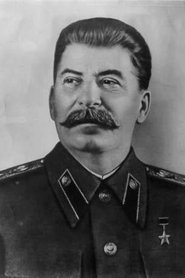
Joseph Stalin
Actor
Born: December 18, 1878 in Gori, Russian Empire (now Georgia) Died: March 5, 1953 Active: Not applicable as an actor (political leader: 1924-1953) Birth Name: Ioseb Besarionis dze Jughashvili
Films
2 films

About Joseph Stalin
Joseph Stalin was not an actor but the totalitarian leader of the Soviet Union from the mid-1920s until his death in 1953. Born Ioseb Besarionis dze Jughashvili, he rose to power after the Russian Revolution and became controversial figures of the 20th century. Stalin appeared in Soviet propaganda films not as an actor playing roles, but as himself - the leader of the Soviet state. These films were part of extensive state propaganda efforts to cultivate his personality cult. The films mentioned, 'Three Songs About Lenin' (1934) and 'The Fall of Berlin' (1945), featured Stalin in archival footage or staged appearances as the Soviet leader, not in fictional acting roles. His presence in cinema was entirely political, serving to reinforce his image as the wise leader of the Soviet people.
The Craft
Milestones
- Became General Secretary of the Communist Party (1922)
- Led Soviet Union through WWII (1941-1945)
- Established totalitarian state
- Industrialization of the Soviet Union
- Great Purge (1936-1938)
Best Known For
Iconic Roles
Must-See Films
Accolades
Won
- Hero of the Soviet Union
- Order of Lenin
- Order of Victory
- Time Magazine Man of the Year (1939, 1942)
Special Recognition
- Mausoleum entombment (1953-1961)
- Numerous cities and locations named after him
Working Relationships
Worked Often With
Studios
Why They Matter
Impact on Culture
Stalin's impact on cinema was through state control and propaganda rather than artistic contribution. Under his rule, Soviet cinema became a tool for political indoctrination and personality cult cultivation. Socialist Realism was enforced as the only acceptable artistic style, severely limiting creative freedom. His image appeared in countless films, newsreels, and documentaries, creating an omnipresent cult of personality. This state-controlled cinema model influenced other communist countries' film industries.
Lasting Legacy
Stalin's legacy in film history is primarily as a subject of propaganda rather than a creative contributor. His regime's control over Soviet cinema led to the production of numerous ideologically-driven films that served political rather than artistic purposes. After his death, the Soviet film industry underwent de-Stalinization, though the state control he established persisted. Modern historical films continue to grapple with portraying his complex and brutal legacy.
Who They Inspired
Stalin influenced cinema through totalitarian control rather than artistic innovation. His enforcement of Socialist Realism as the only acceptable style severely limited creative expression in Soviet film. The cult of personality he cultivated through cinema became a template for other authoritarian regimes. His use of film as propaganda influenced how governments worldwide would later utilize cinema for political messaging.
Off Screen
Stalin's personal life was marked by tragedy and turmoil. He married twice and had three children, though his relationships with them were often strained. His first wife Ekaterina Svanidze died of typhus in 1907, a loss that deeply affected him. His second wife Nadezhda Alliluyeva died under mysterious circumstances in 1932, possibly by suicide. Stalin was known to be paranoid and cruel even to his family members.
Education
Tiflis Spiritual Seminary (expelled 1899)
Family
- Ekaterina Svanidze (1906-1907)
- Nadezhda Alliluyeva (1919-1932)
Did You Know?
- His name 'Stalin' means 'Man of Steel'
- He was originally trained to be a priest
- He had a 12-inch left arm due to a childhood injury
- He was an avid film enthusiast and maintained personal cinemas
- He personally censored and edited many Soviet films
- He ordered the creation of the first Soviet animated films
- His favorite film was 'The Battleship Potemkin'
- He banned several Hollywood films from being shown in the USSR
- He had a private film collection of over 2,000 movies
- He occasionally gave notes on film scripts and productions
In Their Own Words
Death is the solution to all problems. No man - no problem.
It is not heroes that make history, but history that makes heroes.
The people who cast the votes decide nothing. The people who count the votes decide everything.
Ideas are more powerful than guns. We would not let our enemies have guns, why should we let them have ideas?
A single death is a tragedy; a million deaths is a statistic.
Frequently Asked Questions
Who was Joseph Stalin?
Joseph Stalin was the totalitarian leader of the Soviet Union from 1924 to 1953, not an actor. He appeared in propaganda films as himself, the Soviet leader, as part of extensive state efforts to cultivate his personality cult.
What films is Joseph Stalin best known for?
Stalin appeared in Soviet propaganda films including 'Three Songs About Lenin' (1934) and 'The Fall of Berlin' (1945), but these were political appearances, not acting roles.
When was Joseph Stalin born and when did he die?
Joseph Stalin was born on December 18, 1878, in Gori, Russian Empire (now Georgia), and died on March 5, 1953, in Moscow, Soviet Union.
What awards did Joseph Stalin win?
Stalin received numerous Soviet honors including Hero of the Soviet Union, Order of Lenin, Order of Victory, and was named Time Magazine's Man of the Year twice.
What was Joseph Stalin's acting style?
Joseph Stalin was not an actor and had no acting style. His appearances in films were as the political leader of the Soviet Union in state-sponsored propaganda.
How did Stalin influence cinema?
Stalin influenced cinema through totalitarian control, enforcing Socialist Realism as the only acceptable style and using film extensively for propaganda and personality cult creation.
Was Joseph Stalin really an actor?
No, Joseph Stalin was not an actor. He was the dictator of the Soviet Union who appeared in propaganda films as himself, not as an actor playing fictional roles.