A Great Love
"Kenneth Reynolds recounts lost love to a child."
Keys: Space play/pause · ←/→ 10s · F fullscreen · M mute · </> speed
About this film
Kenneth Reynolds recounts to Nelly's daughter the tragic story of his great love for her mother Nelly. Kenneth and Nelly were deeply in love until the mysterious arrival of a stranger created a rift between them, leading Nelly to abandon Kenneth and run away with this new lover. The betrayal proved devastating for Nelly's father, who died from grief over his daughter's actions. Years later, Nelly returned with a child in tow, only to collapse and die in Kenneth's arms, leaving him to carry the burden of their tragic love story. The emotional weight of this tale moves Nelly's daughter to tears…
Cast & crew
More films like this
More Drama films
View all →







More about this film
About the production
Release dateMarch 1916
ProductionAmerican Film Company
Filmed inLos Angeles, California
the production was produced during the early years of American cinema when the industry was rapidly establishing itself in California. The American Film Company was one of the early production houses that operated during the silent era. The film was shot on location in the burgeoning film community of Los Angeles, taking advantage of the favorable climate and diverse landscapes that attracted many early filmmakers to the region.
Themes
Themes & topics
Historical background
A Great Love (1916) reached screens through American Film Company. Exhibitors of the time built silent-era bills that mixed shorts, features, and live acts, so a clear premise helped A Great Love travel between cities and exchange markets.
Why this film matters
Archivists and revival programmers still cite A Great Love (1916) when tracing studio habits, casting pools, and the visual rhetoric audiences once took for granted. Even modest surviving prints help map how A Great Love fit beside competing releases of its day.
Making of
The production of 'A Great Love' took place during a transformative period in American cinema when the industry was consolidating its move from the East Coast to California. Director Clifford S. Elfelt was part of the wave of filmmakers who established themselves in Los Angeles during this era. The film was shot on location in and around Los Angeles, taking advantage of the diverse scenery that California offered. The cast was assembled from the pool of regular actors working for the American Film Company, who often worked on multiple productions simultaneously. The film was likely shot in a matter of days, as was typical for productions of this length during the silent era. The emotional scenes required the actors to use exaggerated gestures and facial expressions to convey the story's dramatic elements, which was standard practice in silent film acting.
What critics said
Trade coverage around 1916 discussed A Great Love for pacing, clarity, and program fit rather than blockbuster grosses. Later writers value it as evidence of period style and as a reference point beside other films from the same era.
Did you know?
- Director Clifford S. Elfelt was also known as Clifford S. Elfe and worked primarily as a director during the silent film era from 1915 to 1920.
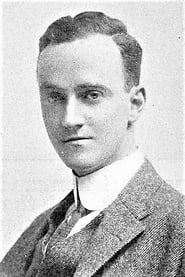
- Hayward Mack, who played Kenneth Reynolds, was a prolific character actor who appeared in over 200 films between 1910 and 1930.
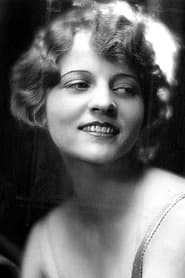
- Mina Cunard, who portrayed Nelly, was a popular leading lady in silent films and appeared in more than 80 films during her career.
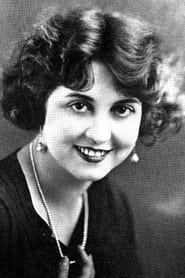
- Vola Vale, who played Nelly's daughter, was discovered by director D.W. Griffith and worked as an actress for nearly two decades.
- The film was released during World War I, a time when melodramatic love stories with tragic elements were particularly popular with audiences seeking emotional escape.
- At 30 minutes, this was considered a feature-length film in 1916, as most films of the era were much shorter.
- The American Film Company, which produced the production, was also known as the Flying 'A' Studios and was prolific early film production companies.
- the production is now considered lost, as is the case with approximately 75% of American silent films.
- The film's themes of lost love and redemption were common in silent cinema, where visual storytelling had to convey complex emotions without dialogue.
Visual style
The cinematography for 'A Great Love' would have been typical of American films from 1916, utilizing stationary cameras with occasional movement through panning or tilting. The film would have been shot on 35mm black and white film stock, with lighting provided primarily by natural light supplemented by arc lamps when filming indoors. Close-ups would have been used selectively for emotional moments, particularly in the death scenes and emotional revelations. The visual storytelling would have relied on composition and staging to convey the narrative and emotional states of the characters, as was standard practice before the advent of sound cinema.
Innovations
No specific technical achievements are documented for 'A Great Love.' The film would have utilized the standard technology and techniques of 1916 American cinema production. The film was likely shot on standard 35mm film at the typical frame rate of 16-18 frames per second for silent films. The editing would have followed the continuity editing practices that were becoming standard in the industry, with clear narrative sequencing and logical scene transitions. The film represents the state of mainstream American filmmaking technology during the mid-1910s rather than pushing technical boundaries.
Music
As a silent film, 'A Great Love' would have been accompanied by live musical performance during its theatrical run. The specific musical score is not documented, but it would have typically been provided by a theater organist or small ensemble. The music would have been selected to match the emotional tone of each scene, with romantic themes for the love scenes, dramatic music for the confrontations, and mournful melodies for the death scenes. Some theaters might have used cue sheets provided by the film's distributor, while others would have relied on the musicians' discretion to choose appropriate musical pieces.
Memorable scenes
- The emotional climax where Kenneth recounts the story to Nelly's daughter, the death scene where Nelly dies in Kenneth's arms, the arrival of the mysterious stranger who drives the lovers apart, the revelation of Nelly's return with her child, the opening scene establishing the frame narrative of Kenneth telling the story
What audiences thought
Audience reception for 'A Great Love' in 1916 is not specifically recorded, but the film's themes of tragic romance and moral consequences were popular with contemporary moviegoers. The story's emotional arc, following the pattern of love, betrayal, suffering, and redemption, would have resonated with audiences who attended films for both entertainment and emotional catharsis. The film's runtime of 30 minutes made it suitable for theater programs that typically included multiple short features. The presence of established actors like Hayward Mack and Mina Cunard would have been a draw for audiences familiar with their previous work.
Film connections
Influenced by
- Victorian literature
- Stage melodrama
- Contemporary romantic fiction
- Earlier silent film melodramas
Film restoration
Lost film - No known copies of 'A Great Love' (1916) exist in any film archives or private collections. The film is considered one of the approximately 75% of American silent films that have been lost due to nitrate film decomposition, improper storage, or neglect during the transition to sound cinema.
Where to watch
- Not available - The film is considered lost and there are no known surviving copies or fragments