A Plantation Act
"Jolson's first synchronized songs"
Keys: Space play/pause · ←/→ 10s · F fullscreen · M mute · </> speed
About this film
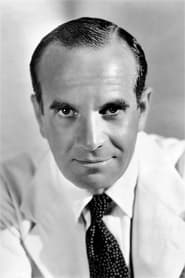
Al Jolson performs three songs in blackface for Warner's first Vitaphone short. A 1926 sound experiment that previewed the talkie revolution.
Cast & crew
More films like this

More Music films
View all →


More about this film
About the production
Release dateOctober 6, 1926
Box officeNot tracked separately (shown as part of Vitaphone programs)
ProductionWarner Bros., Vitaphone Corporation
Filmed inWarner Bros. Studios, Burbank, California
Filmed using the Vitaphone sound-on-disc system, which required careful synchronization between the film projector and separate phonograph records. The recording was done live on set with orchestra accompaniment, as post-production dubbing was not yet possible. Jolson performed with his usual theatrical energy, which posed challenges for the primitive microphones of the era that had limited range and sensitivity. The entire production was completed in a single day, typical for these early shorts.
Themes
Themes & topics
sound filmmusical shortblackfaceVitaphoneperformancepioneering filmorchestrasynchronized sound
Historical background
Released in 1926, A Plantation Act belongs to the silent feature period and reflects production norms of its release season.
Why this film matters
A Plantation Act contributes to understanding regional output and audience tastes around 1926.
Making of
The production of 'A Plantation Act' was a groundbreaking technical achievement that pushed the boundaries of early cinema. Warner Bros. had recently acquired the Vitaphone sound-on-disc system and was eager to demonstrate its commercial potential. The filming took place in a specially soundproofed stage at Warner Bros. Studios, where enormous microphones were hidden in various props to capture Jolson's powerful voice. The orchestra played live off-camera, with musicians carefully positioned to avoid bleeding into the vocal microphones. Jolson, accustomed to performing for live theater audiences, had to adapt his style to accommodate the technical limitations of the recording equipment. The entire process required multiple takes to achieve satisfactory synchronization between the audio and visual elements, as the technology was still in its experimental phase. The film's successful completion proved that popular entertainment could be effectively transferred to the new medium of sound cinema.
What critics said
Review records for A Plantation Act are typical of 1926: brief for shorts, more sustained for features.
Did you know?
- This was Al Jolson's first appearance in a sound film, predating his starring role in 'The Jazz Singer' by nearly a year
- The film was part of Warner Bros.' experimental Vitaphone program, which included shorts featuring vaudeville acts and musical performances
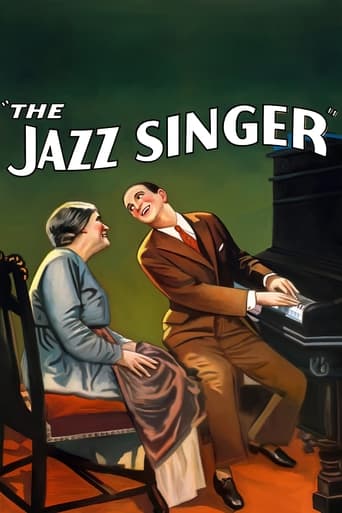
- Jolson's performance in this short directly led to his casting in 'The Jazz Singer', the first feature-length 'talkie'
- The film was shown as part of the first Vitaphone program at the Warner Theatre in New York, which also featured the feature film 'Don Juan' with synchronized musical score
- Only three complete copies of the film are known to survive today, preserved at the Library of Congress, UCLA Film and Television Archive, and the British Film Institute
- The Vitaphone discs for the release ran at 33 1/3 RPM, unusually slow for the era, to accommodate the longer playing time needed for the nine-minute short
- Jolson was paid $5,000 for this single day's work, equivalent to approximately $80,000 in today's currency
- The blackface makeup Jolson wore was standard for his performances at the time, though it is now widely recognized as offensive and racist
- The film's success convinced Warner Bros. to invest more heavily in sound technology, leading to their dominance in the early sound era
- The recording equipment used was so primitive that Jolson had to remain relatively stationary during his performance, limiting his usual dynamic stage movements
Visual style
The cinematography in 'A Plantation Act' was necessarily static due to the technical limitations of early sound recording. The camera remained largely fixed to accommodate the large, insensitive microphones that had to be hidden in the set. Lighting was flat and even to avoid shadows that might interfere with microphone placement, resulting in a theatrical rather than cinematic appearance. The film was shot in black and white at standard silent film speed (24 frames per second), though the Vitaphone system required precise synchronization between the film and the audio discs. The visual composition was straightforward, focusing primarily on medium shots of Jolson performing, with occasional wider shots to show his full body movements. Despite these limitations, the cinematography effectively captured Jolson's charismatic performance style and provided a clear visual record of his stage presence.
Innovations
'A Plantation Act' represents a significant technical milestone as one of the first successful demonstrations of the Vitaphone sound-on-disc system. The film proved that synchronized sound could be reliably achieved for commercial exhibition, overcoming the synchronization problems that had plagued earlier attempts. The recording process used large acoustic horns to capture sound, which were then mechanically transferred to wax masters for disc pressing. The system achieved remarkable frequency response for its time, capturing Jolson's voice with sufficient clarity to convey his emotional nuances. The film also demonstrated that popular entertainment could be successfully adapted to the new medium, influencing the development of the film musical genre. The technical success of this short directly contributed to Warner Bros.' decision to produce 'The Jazz Singer' as their first feature with synchronized dialogue sequences.
Music
The soundtrack consists of three songs performed by Al Jolson with orchestral accompaniment: 'When the Red, Red, Robin Comes Bob, Bob, Bobbin' Along' (composed by Harry Woods), 'April Showers' (composed by Louis Silvers with lyrics by B.G. De Sylva), and 'Rock-a-Bye Your Baby with a Dixie Melody' (composed by Sam M. Lewis and Joe Young). All three songs were major hits for Jolson in his stage and recording career. The musical arrangements were adapted for film performance, with the orchestra conducted by Louis Silvers, who would later become Warner Bros.' first music director. The audio was recorded directly to Vitaphone discs using the acoustic recording process, as electrical microphones were not yet in use for film recording. The sound quality was remarkably clear for the era, though it lacked the dynamic range and frequency response of later electrical recordings.
Famous quotes
When the red, red robin comes bob, bob, bobbin' along, along, There'll be no more sobbin' when he starts throbbin' his old sweet song
Though April showers may come your way, They bring the flowers that bloom in May
Rock-a-bye your baby with a Dixie melody, When you croon, croon a tune from the land of cotton
Memorable scenes
- Jolson's energetic performance of 'When the Red, Red, Robin Comes Bob, Bob, Bobbin' Along' where he breaks into his signature knee-slapping and hand-clapping routine, barely containing his theatrical exuberance within the constraints of the primitive recording equipment
- The emotional delivery of 'April Showers' where Jolson demonstrates the vocal power and sensitivity that made him a Broadway star, despite the technical limitations of early sound recording
- The finale performance of 'Rock-a-Bye Your Baby with a Dixie Melody' where Jolson fully embraces his minstrel persona, delivering the song with the charisma and showmanship that would make him a film icon
What audiences thought
Audiences responded enthusiastically to 'A Plantation Act' when it premiered as part of the first Vitaphone program. The novelty of hearing a familiar voice synchronized with moving images created a sensation, with many theatergoers reporting that they felt as though they were watching a live performance. The film's success at the box office encouraged Warner Bros. to produce more Vitaphone shorts and ultimately to invest in feature-length talking pictures. Contemporary audience members were particularly impressed by the quality of the sound reproduction, which was far superior to what most had experienced through radio or phonograph records. The film helped establish Al Jolson as a major film star and demonstrated that musical entertainment had a place in the new sound cinema.
Film connections
Influenced by
- Vaudeville theater
- Minstrel shows
- Broadway musical revues
- Radio broadcasting
This film influenced
- The Jazz Singer (1927)
- The Singing Fool (1928)
- Say It with Songs (1929)
- Mammy (1930)
Film restoration
The film is partially preserved with three known complete copies existing in major archives. The Library of Congress holds a 35mm print with accompanying Vitaphone discs, while UCLA Film and Television Archive and the British Film Institute maintain additional copies. The surviving elements show some deterioration but remain viewable. The Vitaphone discs are particularly fragile, with some surface noise present but the audio content largely intact. The film has been digitally restored by the UCLA Film and Television Archive in collaboration with Warner Bros., ensuring its preservation for future generations. Some original elements remain lost, including outtakes and alternative takes that may have been filmed during production.
Where to watch
- The film is included in the Warner Bros. Home Entertainment DVD collection 'The Jazz Singer' (2007) as a bonus feature
- Available for streaming on the Warner Archive Instant service
- Screened occasionally at film retrospectives and museums specializing in early cinema
- Accessible through academic film archives and specialized cinema research institutions
- Featured in the Library of Congress's National Film Registry online collection for educational purposes