A Romance of the Western Hills
"A young Indian girl is adopted by a white couple who treat her"
Keys: Space play/pause · ←/→ 10s · F fullscreen · M mute · </> speed
About this film
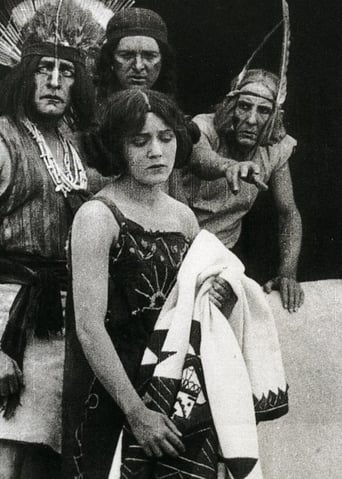
A young Indian girl is adopted by a white couple who treat her almost as their daughter, educating her and showering on her every attention. She is happy and falls in love with the couple's nephew, but she finds the young man with his fiancée, a young lady of his own race. Back t.
Cast & crew
More films like this

More Western films
View all →

More from D.W. Griffith
View all →
More about this film
About the production
Release dateFebruary 17, 1910
ProductionBiograph Company
Filmed inCalifornia, New York
This film was produced during D.W. Griffith's prolific period at the Biograph Company, where he directed hundreds of short films. The production utilized natural outdoor locations, which was becoming increasingly common for Westerns of this era. The film was shot on 35mm black and white film stock typical of the period, with intertitles to convey dialogue and narrative progression.
Themes
Interracial romanceCultural identityBetrayal and deceptionRacial prejudiceFamily and adoption
Themes & topics
Native AmericanAdoptionForbidden loveBetrayalWesternRevengeInterracial relationshipHeartbreakSocial classFamily drama
Historical background
Silent-era production in 1910 relied on intertitles, live accompaniment, and studio systems that were rapidly consolidating into national industries.
Why this film matters
Early works like A Romance of the Western Hills help map how filmmakers, exhibitors, and viewers developed the visual language of cinema during the medium's first decades. Later revivals, archive screenings, and digitization have kept such titles accessible to researchers and dedicated viewers long after their first commercial runs.
Making of
The film was made during D.W. Griffith's transformative period at Biograph, where he was developing the language of cinema as we know it today. Working with Mary Pickford, Griffith was discovering how to elicit naturalistic performances from his actors, a rarity in the highly theatrical style of early cinema. The production would have been challenging due to the primitive conditions of filmmaking in 1910 - cameras were hand-cranked, lighting was natural or basic, and outdoor shooting meant dealing with weather and location issues. The film's interracial romance theme was daring for its time, and Griffith's handling of such sensitive subjects would evolve throughout his career, sometimes controversially. Pickford's performance demonstrates the star quality that would soon make her the most famous actress in the world.
What critics said
Trade and newspaper reviews from the silent period for A Romance of the Western Hills survive only in fragments, making precise reception history difficult to reconstruct. Modern assessment tends to emphasize historical value, craft, and cultural context rather than box-office performance.
Did you know?
- This film was one of over 300 short films D.W. Griffith directed for the Biograph Company between 1908 and 1913
- Mary Pickford was only 17 years old when she starred in this film, early in her career before becoming 'America's Sweetheart'
- The film was released just as Pickford was beginning to establish herself as a major star in silent cinema
- Like many films of this era, it was likely filmed in just a few days due to the rapid production schedule at Biograph
- The film's theme of racial romance was controversial for its time, though Griffith would later face much greater criticism for his racial portrayals in 'The Birth of a Nation' (1915)
- This was one of the earliest films to portray Native American characters with some degree of sympathy, though still through stereotypical lenses
- The Biograph Company typically released two films per week, making this one of many quickly produced but artistically significant works
- Griffith's cross-cutting techniques, which he was pioneering during this period, may have been used in the film's dramatic sequences
Visual style
The cinematography was typical of Biograph productions of 1910, utilizing stationary cameras with occasional movement through panning or tracking. The film was shot in black and white on 35mm film, with natural lighting for outdoor scenes and basic artificial lighting for interiors. G.W. Bitzer, Griffith's regular cinematographer at Biograph, likely handled the camera work. The visual style emphasized clear compositions and medium shots, though Griffith was beginning to experiment with closer shots for emotional emphasis. The Western setting would have provided opportunities for scenic exteriors, which were becoming increasingly popular with audiences.
Innovations
While not technically groundbreaking, this film benefited from D.W. Griffith's ongoing experiments with cinematic language during his Biograph period. The film likely employed cross-cutting between parallel actions, a technique Griffith was refining during this era. The use of location shooting for Western scenes was becoming more common but still represented an advancement over purely studio-bound productions. The film's narrative structure, with its emotional complexity and moral resolution, showed the increasing sophistication of short-form storytelling in early cinema.
Music
Like all films of 1910, this was a silent film accompanied by live musical performance. Theaters would typically employ pianists or small orchestras to provide musical accompaniment, often using cue sheets provided by the studio or improvising based on the action on screen. The music would have ranged from popular songs of the era to classical pieces, with dramatic moments heightened by appropriate musical selections. No original score was composed specifically for this film, as was standard practice until the late 1920s.
Famous quotes
(Intertitle) She had learned the ways of the white man, but her heart remained true to her people.
(Intertitle) Love knows no color, but society builds walls that even love cannot scale.
(Intertitle) Betrayed by the one she trusted, she returns to the only home that will have her.
Memorable scenes
- The emotional moment when the young Native American girl discovers her lover with his white fiancée, leading to her heartbreak and decision to return to her people
- The confrontation scene where the Native American character seeks revenge on her former lover, demonstrating the film's dramatic tension
- The final scene where the white fiancée breaks off her engagement upon learning of her betrothed's duplicity, providing moral resolution
What audiences thought
Audiences in 1910 would have viewed this film as part of a program of short subjects, typically shown alongside other films, live acts, or musical performances. The combination of Western action and romantic drama would have appealed to the diverse audiences of nickelodeons and early movie theaters. Mary Pickford's growing popularity would have been a significant draw, and the film's emotional story and moral resolution would have satisfied contemporary audience expectations. The film's themes of romance and betrayal were universally understood, making it accessible to the increasingly diverse immigrant audiences of early American cinema.
Film connections
Influenced by
- Stage melodramas of the late 19th century
- Contemporary literature about the American West
- Earlier Biograph Westerns
- Popular dime novels about frontier life
This film influenced
- Later Griffith films dealing with racial themes
- Subsequent Westerns with interracial romance elements
- Mary Pickford's later dramatic roles
Film restoration
This film is considered lost, as are approximately 90% of American silent films made before 1920. No complete prints or significant fragments are known to exist in major film archives. The film exists only through written descriptions, contemporary reviews, and production records from the Biograph Company. Its loss is representative of the broader tragedy of silent film preservation, with early nitrate film stock being highly flammable and prone to decomposition.
Where to watch
- This film is currently unavailable for viewing as it is considered lost. No known copies exist in film archives or private collections. Film historians can access information about the film through the American Film Institute Catalog, the Library of Congress's paper print collection records, and contemporary trade publications like The Moving Picture World.