Alice's Wild West Show
"Alice and her friends put on a show."
Keys: Space play/pause · ←/→ 10s · F fullscreen · M mute · </> speed
About this film
Alice and her friends put on a show.
Cast & crew
More films like this


More Animation films
View all →



More from Walt Disney
View all →

More about this film
About the production
Release dateMarch 1, 1924
Box officeUnknown (short films of this era typically earned modest returns)
ProductionDisney Brothers Cartoon Studio, Margaret J. Winkler Productions
Filmed inLos Angeles, California
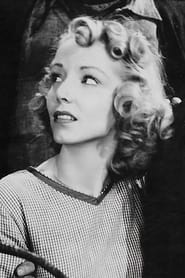
Alice's Wild West Show was part of the innovative Alice Comedies series that pioneered the combination of live-action with animation. The film was shot using a special process where Virginia Davis would perform against a plain background, which was then combined with animated sequences. This technique required precise timing and multiple exposures, making it technically challenging for 1924 standards. The production team often worked long hours to complete each short, with Walt Disney personally overseeing both the animation and live-action elements.
Themes
Friendship and cooperationChildhood imagination and playCourage in the face of adversityThe power of performance and storytellingGood versus evil
Themes & topics
wild west showchildren playinglive-action animationbackyard performancebulliesfriendshipcowboys and Indiansstuffed animals come to lifecourageteamwork
Historical background
By 1924, distribution was widening and Alice's Wild West Show reached audiences through the theatrical channels dominant before television.
Why this film matters
Surviving prints of Alice's Wild West Show document how 1924-era filmmakers solved story problems with limited means.
Making of
The making of Alice's Wild West Show exemplified Walt Disney's early innovation and determination. The production required Virginia Davis to perform her scenes first, after which animators would carefully craft the animated elements around her performance. Disney and his small team worked in a modest studio in Los Angeles, often sleeping at the office to meet deadlines. The film's combination of live-action and animation was achieved through a laborious process of multiple exposures and careful matte work. Virginia Davis recalled that Walt Disney was very patient with her as a child actor, often playing games between takes to keep her spirits up. The animated character Julius the cat was animated by Ub Iwerks, Disney's longtime collaborator who would later co-create Mickey Mouse. The production team faced constant technical challenges, including ensuring that the lighting matched between live-action and animated scenes, a problem they solved through careful planning and experimentation.
What critics said
Audience data from 1924 is sparse; reception for Alice's Wild West Show is inferred from reissue and archival interest.
Did you know?
- This was the 8th film in the Alice Comedies series, which ran from 1923 to 1927 and produced 57 shorts total.
- Virginia Davis was paid $100 per month for her role as Alice, a substantial salary for a child actor in the 1920s.
- The film was one of the first to successfully combine live-action with animation on a regular basis, predating Disney's later more famous experiments.
- Walt Disney personally directed both the live-action and animated portions, demonstrating his dual talents as a filmmaker.
- The wild west theme was popular in the 1920s, reflecting America's fascination with frontier mythology.
- Alice's stuffed cat, Julius, who appears in the animated sequences, was an early precursor to Mickey Mouse in terms of personality and design.
- The film was distributed by Margaret J. Winkler, one of the few female film distributors of the era and a crucial early supporter of Disney.
- Production took approximately 3-4 weeks, which was standard for these shorts but incredibly fast compared to modern animation.
- The bullies in the film were played by local children recruited from the neighborhood near the Disney studio.
- This short helped establish the formula that would make the Alice Comedies successful: a real girl in an animated world.
Visual style
The cinematography of Alice's Wild West Show was groundbreaking for its time, requiring innovative techniques to seamlessly blend live-action and animation elements. The live-action portions were filmed using standard cameras of the era, but with careful attention to lighting and composition that would facilitate the later integration of animation. The cinematographers had to maintain consistent lighting levels and camera angles that could be replicated in the animated sequences. The film employed matte painting techniques and multiple exposures to create the illusion of interaction between Virginia Davis and the animated characters. The animated sequences were drawn on paper and then transferred to celluloid, a process that allowed for greater fluidity and consistency than earlier animation methods. The visual style of the animation was influenced by contemporary comic strips, with bold lines and expressive character designs. The cinematography also made effective use of perspective to create depth in the animated world, making it feel more three-dimensional and real. The wild west scenes featured dynamic camera movements and compositions that enhanced the action sequences, demonstrating early mastery of visual storytelling techniques.
Innovations
Alice's Wild West Show represented several significant technical achievements for 1924, most notably in its pioneering combination of live-action and animation. The film employed an innovative process where live-action footage was carefully matched with animated sequences, requiring precise timing and technical coordination. Disney's team developed special techniques for ensuring that the animated characters appeared to realistically interact with the live-action environment and performers. The animation itself showed improvements in fluidity and consistency compared to earlier works, with more natural character movements and expressions. The film also demonstrated early mastery of perspective and depth in animated scenes, creating a more immersive visual experience. The production process involved multiple exposures and careful matte work to seamlessly blend the different elements. The technical team also solved the challenge of matching lighting between live-action and animated scenes, creating a more convincing integration. These innovations laid groundwork for later developments in special effects and animation techniques. The film's success proved that complex mixed-media productions were technically feasible and commercially viable, encouraging further experimentation in the field.
Music
As a silent film from 1924, Alice's Wild West Show originally had no synchronized soundtrack. However, like most films of the era, it would have been accompanied by live musical performance in theaters. The typical score would have included popular songs of the 1920s, classical pieces, and improvised music that matched the on-screen action. For the wild west theme, theaters often used cowboy songs and frontier-inspired melodies. The musical accompaniment was crucial for conveying emotion and enhancing the comedy, particularly during the animated sequences. Some theaters used compiled cue sheets that suggested specific pieces for different scenes, while others relied on the improvisational skills of their house musicians. The rhythm of the animation was carefully timed to work with musical accompaniment, with movements designed to match musical beats. Modern restorations of the film have sometimes added period-appropriate scores to recreate the original viewing experience. The absence of dialogue meant that the visual storytelling and music had to work together to convey the narrative, a challenge that Disney and his team met with considerable skill.
Famous quotes
Alice: 'We'll put on the best wild west show anyone has ever seen!'
Alice: 'Julius, we need your help to save our show!'
Narrator: 'In a world where imagination knows no bounds, one little girl's dreams come to life.'
Memorable scenes
- The opening scene where Alice and her friends transform their backyard into a wild west arena, complete with homemade costumes and props. The sequence where Alice's stuffed cat Julius comes to life and joins the wild west adventure, showcasing the innovative blend of live-action and animation. The climactic showdown scene where Alice and her animated friends work together to outsmart the bullies and save their performance, demonstrating the themes of courage and friendship.
What audiences thought
Audiences in 1924 responded positively to Alice's Wild West Show and the Alice Comedies series, which helped establish a loyal following for Disney's early work. Theater owners reported that children particularly enjoyed the films, while adults appreciated the technical novelty of combining live-action with animation. The series became popular enough that Margaret Winkler, Disney's distributor, requested more films in the series. Contemporary audience letters preserved in Disney archives show that viewers were fascinated by how Alice could interact with animated characters, a magical effect that seemed like wizardry to 1920s audiences. The wild west theme resonated strongly with American audiences of the era, who were still captivated by frontier stories despite the modernization of the 1920s. Modern audiences viewing the film today often express surprise at the sophistication of the early animation techniques and the charm of Virginia Davis's performance. The film has developed a cult following among animation enthusiasts and Disney historians who appreciate its historical significance and pioneering spirit.
Film connections
Influenced by
- Contemporary comic strips
- Vaudeville performance traditions
- Wild west shows like Buffalo Bill's
- Earlier silent comedy shorts
- Fairy tale traditions
- Contemporary children's literature
This film influenced
- Later Alice Comedies
- Oswald the Lucky Rabbit shorts
- Mickey Mouse cartoons
- Who Framed Roger Rabbit
- Space Jam
- Mary Poppins
- Bedknobs and Broomsticks
- The Adventures of Rocky and Bullwinkle
Film restoration
Alice's Wild West Show has been preserved and is part of the Disney archives. The film has been restored as part of various Disney home video releases, including the Walt Disney Treasures collection 'Disney Rarities: Celebrated Shorts: 1920s-1960s'. The restoration process involved cleaning and repairing the original film elements, though some degradation from age is still visible. The film exists in its complete form and is considered to be in good preservation condition for a film of its age. Several archives, including the Library of Congress and the UCLA Film and Television Archive, hold copies of the film for preservation and study purposes.
Where to watch
- Disney+ (as part of classic shorts collection)
- Walt Disney Treasures: Disney Rarities DVD
- Various public domain animation collections
- Film archives and museums
- Classic film streaming services specializing in silent cinema
- Educational institutions with film studies programs