Assiettes tournantes
"Félicien Trewey, performing his spinning plates routine"
Keys: Space play/pause · ←/→ 10s · F fullscreen · M mute · </> speed
About this film
Félicien Trewey, performing his spinning plates routine. Thomas Cyrill Demand (born 1964) is a German sculptor and photographer. He currently lives and works in Berlin and Los Angeles, and teaches at the University of Fine Arts, Hamburg. He makes photographs of three-dimensional models that look like real images of rooms and other spaces, often sites loaded with social and political meanings.
Cast & crew
More films like this
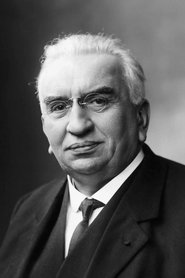
More from Louis Lumière
View all →


More about this film
About the production
Release date1896
ProductionLumière Company
Filmed inLyon, France
This film was shot using the Lumière Cinématographe, a revolutionary camera that also served as a projector and developer. The single continuous take captures Trewey's complete performance without cuts, typical of early Lumière productions. The film was likely shot in a single take in one of the Lumière studios or in an outdoor setting with controlled lighting.
Themes
Performance documentationSkill and dexterityPreservation of ephemeral artTechnology meeting tradition
Themes & topics
spinning platesperformancevaudevilleskill demonstrationsingle take
Historical background
Photography and projected motion were still experimental in 1896, when short actualities and staged scenes competed for public curiosity. Archival sources describe Assiettes tournantes as german sculptor and photographer. Contemporary context can be traced through sources such as the Wikipedia article on Thomas Demand.
Why this film matters
Early works like Assiettes tournantes help map how filmmakers, exhibitors, and viewers developed the visual language of cinema during the medium's first decades. Later revivals, archive screenings, and digitization have kept such titles accessible to researchers and dedicated viewers long after their first commercial runs.
Making of
The filming of 'Assiettes tournantes' represents the collaborative relationship between the Lumière brothers and professional entertainers of the era. Félicien Trewey, being a friend and associate of the Lumières, was one of the first performers to recognize the potential of cinema for documenting and preserving artistic performances. The film was likely shot in a single continuous take, as was common for early Lumière productions, using their innovative Cinématographe device. This camera could capture about 16-17 frames per second, resulting in the slightly jerky motion characteristic of films from this period. The production required careful staging to ensure Trewey's performance was clearly visible within the camera's limited field of view, and the lighting had to be sufficient for the relatively insensitive film stock of the time.
What critics said
Trade and newspaper reviews from the silent period for Assiettes tournantes survive only in fragments, making precise reception history difficult to reconstruct. Modern assessment tends to emphasize historical value, craft, and cultural context rather than box-office performance.
Did you know?
- Félicien Trewey was a famous music hall performer and close associate of the Lumière brothers
- This film is one of the earliest examples of capturing a live performance on camera
- The spinning plates act was a popular vaudeville routine in the late 19th century
- Trewey was also known for his work in developing early film projection techniques
- The film was part of the Lumière brothers' first public film screening on December 28, 1895
- Trewey performed this routine for many years and became among the leading documented entertainers of early cinema
- The film demonstrates the Lumière brothers' interest in capturing real-life performances and events
- This is one of the few surviving films featuring Félicien Trewey's performances
- The spinning plates technique requires exceptional balance and timing skills
- Early films like this were often shown as part of variety programs alongside live performances
Visual style
The cinematography of 'Assiettes tournantes' is characteristic of early Lumière productions, featuring a fixed camera position that captures the entire performance in a single continuous shot. The camera is positioned at an optimal distance to frame Trewey and his spinning plates clearly, demonstrating the Lumières' understanding of composition even in these early days of filmmaking. The lighting appears to be natural or basic studio lighting, sufficient to illuminate the performer but creating the high contrast typical of films from this period. The camera work is static and observational, reflecting the Lumière brothers' documentary approach to filmmaking and their interest in capturing reality rather than creating cinematic effects.
Innovations
The film represents several important technical achievements of early cinema, including the successful capture of rapid motion using the Lumière Cinématographe. The ability to record the spinning plates without excessive motion blur demonstrated the camera's relatively advanced shutter mechanism for the time. The film showcases the practical application of 35mm film with perforations, a format that would become the industry standard. The single-take filming approach, while technically simple, required precise planning to ensure the entire performance fit within the camera's limited film capacity. The preservation of such a dynamic performance on film was itself a significant technical accomplishment in 1896.
Memorable scenes
- The entire film consists of Trewey's mesmerizing spinning plates routine, where he expertly balances and spins multiple plates on thin sticks, moving between them to maintain their rotation in a display of remarkable dexterity and concentration.
What audiences thought
Early audiences were reportedly mesmerized by 'Assiettes tournantes' and similar performance films, as they had never before seen such acts captured on film. The novelty of watching a recorded performance was a major attraction, and many viewers were amazed by the clarity with which the film preserved Trewey's intricate routine. The film was particularly popular among those who had seen Trewey perform live, as it allowed them to study his technique in detail. Modern audiences viewing the film today often express fascination with both the historical significance and the impressive skill demonstrated by Trewey, despite the primitive nature of the recording technology.
Film connections
Influenced by
- Live vaudeville performances
- Music hall entertainment traditions
- The Lumière brothers' documentary approach
This film influenced
- Other Lumière performance documentaries
- Early trick films by Georges Méliès
- Performance art documentation films
Film restoration
The film is preserved and available through various film archives and institutions dedicated to early cinema. It has been digitized and is accessible through several online platforms specializing in classic films. The Lumière Institute in Lyon maintains copies of this and other early Lumière productions. The film has undergone restoration to preserve its historical significance, though some degradation from age is visible in surviving prints.
Where to watch
- YouTube
- Lumière Institute website
- Early cinema archives
- Film preservation websites
- Museum collections with film departments