Battle on Shangganling Mountain
"Triangle Hill held against US fire"
Keys: Space play/pause · ←/→ 10s · F fullscreen · M mute · </> speed
About this film
Chinese volunteers defend Triangle Hill against American forces with dwindling food and water. A 1956 propaganda war epic of Korean War endurance.
Cast & crew
More films like this
More War films
View all →

More about this film
About the production
Release dateDecember 1956
Box officeUnknown - but was extremely successful domestically with millions of viewers
ProductionAugust First Film Studio
Filmed inBeijing, China, Various locations around Changbai Mountains for mountain scenes
The film was made with extensive cooperation from the People's Liberation Army, which provided military consultants, equipment, and hundreds of soldiers as extras. The battle scenes were filmed using actual military explosives and artillery, creating realistic combat sequences. The production faced challenges in recreating the Korean War battlefield conditions, including building elaborate sets that could withstand repeated explosions. The filmmakers conducted extensive research, interviewing actual veterans of the Battle of Triangle Hill to ensure authenticity. The film utilized pioneering techniques in Chinese cinema for large-scale battle sequences, involving hundreds of performers and complex choreography.
Themes
Patriotism and national defenseCollective sacrifice for the greater goodThe indomitable spirit of the Chinese peopleBrotherhood and camaraderie among soldiersThe contrast between Chinese heroism and American aggression
Themes & topics
Korean WarBattle of Triangle HillChinese People's Volunteer ArmyMountain warfareSiegeMilitary sacrificePatriotic propagandaWar heroesAgainst all oddsBrotherhood in armsCommunist ideologyAnti-American sentiment
Historical background
Battle on Shangganling Mountain (1956) reached audiences during postwar cinema, when exhibitors mixed shorts and features on the same program.
Why this film matters
Historians retain Battle on Shangganling Mountain as a record of how filmmakers in 1956 addressed popular genres.
Making of
The production of Battle on Shangganling Mountain was a massive undertaking that involved the full support of the Chinese military and government. Director Shan Lin, himself a former PLA soldier, insisted on maximum authenticity for the battle scenes. The military provided access to actual weapons, ammunition, and explosives, allowing the filmmakers to create unprecedentedly realistic combat sequences for Chinese cinema at the time. Hundreds of active-duty soldiers participated in the filming as extras, bringing genuine military bearing and discipline to their performances. The production team spent months constructing elaborate battlefield sets that could withstand the repeated explosions required for the battle sequences. The actors underwent military training to accurately portray soldiers, and many lived in barracks during filming to immerse themselves in their roles. The film's script went through numerous revisions under the supervision of military officials and cultural authorities to ensure it properly reflected the political narrative of Chinese heroism and American aggression.
What critics said
Trade coverage from 1956 treated Battle on Shangganling Mountain as program material; later writers evaluate it through preservation and genre context.
Did you know?
- The film is based on the real Battle of Triangle Hill (Shangganling) that took place in October-November 1952 during the Korean War
- It was especially successful propaganda films of the 1950s in China, seen by virtually every Chinese citizen during its theatrical run
- The film's title 'Shangganling' became a household name in China, synonymous with heroic sacrifice and patriotism
- Director Shan Lin was a veteran of the People's Liberation Army and had personal experience with military life
- The battle sequences were so realistic that some audience members believed they were watching actual combat footage
- The film was shown continuously in Chinese cinemas for over a year after its release
- Many of the actors were actual soldiers from the PLA, not professional actors
- The film's success led to a surge of Korean War films in Chinese cinema throughout the late 1950s and 1960s
- The famous line 'Not one step back' from the film became a popular patriotic slogan in China
- The film was restored and re-released in China in 2006 to commemorate the 50th anniversary of its original release
Awards & recognition
- Excellent Film Award at the Ministry of Culture of the People's Republic of China (1957)
- Best Director Award for Shan Lin at the Chinese Film Festival (1957)
- Best Cinematography Award at the National Film Awards (1957)
- Best Sound Award at the Chinese Film Festival (1957)
- Special Achievement Award for Patriotic Education from the Central Committee of the Communist Party (1957)
Visual style
The cinematography of Battle on Shangganling Mountain was groundbreaking for Chinese cinema in the 1950s, particularly in its depiction of large-scale battle sequences. Chief cinematographer Wu Yin employed innovative techniques including dynamic camera movements during combat scenes, using cranes and dollies to create sweeping shots of the battlefield that emphasized the scale of the conflict. The film made extensive use of deep focus photography to maintain clarity in complex battle scenes with multiple planes of action. Close-up shots were strategically used to capture the emotional intensity of individual soldiers, creating a powerful contrast between personal sacrifice and collective struggle. The cinematography effectively utilized natural light and shadow to create dramatic tension, particularly in night battle scenes illuminated only by explosions and gunfire. The film's visual style combined documentary-like realism in the battle sequences with more stylized, heroic compositions for character moments. The cinematography also paid careful attention to the mountainous terrain, using the landscape as both a physical obstacle and a symbolic representation of the soldiers' indomitable spirit.
Innovations
Battle on Shangganling Mountain represented several significant technical achievements for Chinese cinema in the 1950s. The film pioneered large-scale battle sequences in Chinese filmmaking, utilizing hundreds of extras, real military equipment, and actual explosives to create unprecedentedly realistic combat scenes. The production developed new techniques for safely filming explosive sequences, including specialized camera housings and remote-controlled camera positions. The film's special effects team, trained by Soviet experts, created innovative pyrotechnic effects that simulated artillery bombardments and aerial attacks with remarkable realism. The film's editing was particularly advanced for its time, using rapid cutting during action sequences to create tension and excitement while maintaining narrative clarity. The production also achieved technical excellence in sound recording, capturing clear dialogue and sound effects during the noisy battle sequences. The film's set construction was groundbreaking, featuring elaborate battlefield installations that could withstand repeated explosions and provide realistic military environments. The makeup and special effects departments developed new techniques for creating realistic battle wounds and injuries that were convincing without being overly graphic. These technical achievements set new standards for Chinese war films and influenced military cinema production for decades to come.
Music
The musical score for Battle on Shangganling Mountain was composed by Li Jinguo and became widely praised aspects of the film. The soundtrack combined traditional Chinese musical elements with Soviet-influenced orchestral arrangements, creating a powerful patriotic sound that enhanced the film's emotional impact. The main theme, 'The Battle Song of Shangganling,' became extremely popular and was widely performed across China in concerts and on radio. The score effectively used leitmotifs to represent different characters and emotional states, with heroic brass fanfares for moments of triumph and melancholic strings for scenes of sacrifice. The sound design was particularly innovative for its time, with realistic battle sounds created using actual military equipment and explosives. The film's audio post-production was done with Soviet technical assistance, resulting in unusually high-quality sound for Chinese cinema of the era. The soundtrack album was released as a separate record and sold millions of copies, making it one of the best-selling film scores in Chinese history. Several songs from the film, particularly 'Defend the Motherland,' became standards in Chinese patriotic music and are still performed today at military ceremonies and national events.
Famous quotes
Not one step back! We will defend this mountain with our lives!
Even if there is only one soldier left, Triangle Hill must not fall!
Our blood and bones will become the foundation of new China!
The American devils may have bombs and planes, but we have the people's support!
Victory belongs to those who never surrender!
Every shell that falls on us makes our determination stronger!
We are the Great Wall of steel that no enemy can break through!
When the motherland calls, we answer with our lives!
This mountain is not just earth and rock, it is the dignity of China!
Communists are steel forged in the fires of revolution!
Memorable scenes
- The opening sequence where the Chinese soldiers receive their orders to defend Triangle Hill, showing their determination despite knowing the overwhelming odds against them
- The night battle scene illuminated only by explosions and tracer fire, creating a haunting visual of soldiers silhouetted against the chaos of combat
- The emotional scene where the soldiers share their last pieces of bread and water, demonstrating their brotherhood and selflessness
- The final stand when reinforcements arrive, with the exhausted but triumphant survivors raising the Chinese flag on the captured mountain peak
- The montage sequence showing the soldiers' memories of their families and homeland, intercut with their current desperate situation
- The scene where the company commander delivers an inspirational speech about defending the motherland, rallying his men for one final charge
- The dramatic moment when the soldiers use their bodies to plug a breach in the defensive line, sacrificing themselves for their comrades
- The climactic battle sequence featuring coordinated artillery, infantry, and air defense operations, showcasing Chinese military prowess
What audiences thought
Battle on Shangganling Mountain was a phenomenal commercial success in China, becoming among the leading-watched films of the 1950s. Audience response was overwhelmingly enthusiastic, with viewers reporting being moved to tears by the soldiers' sacrifice and inspired by their heroism. The film created a sensation across China, with people lining up for hours to buy tickets and many returning to see it multiple times. The characters and their famous lines became part of popular culture, quoted in everyday conversations and imitated by children playing war games. Veterans of the Korean War particularly praised the film's authenticity and emotional impact. The film's success was such that it remained in continuous theatrical release for over a year, an unprecedented achievement for Chinese cinema at the time. Audience surveys conducted by cultural authorities showed that the film significantly increased patriotic feelings and support for the Communist Party among viewers. The film's popularity endured for decades, with it being regularly shown on television and in schools during patriotic education campaigns. Even in the 21st century, older Chinese audiences recall the film with nostalgia and regard it as a classic of Chinese cinema.
Film connections
Influenced by
- Soviet war films of the 1940s and 1950s
- Chinese revolutionary theater traditions
- Traditional Chinese military literature
- Socialist realist art theory
- Chinese folk tales of heroic sacrifice
- Mao Zedong's writings on military strategy
- Chinese opera traditions of heroic characters
This film influenced
- Heroic Sons and Daughters (1964)
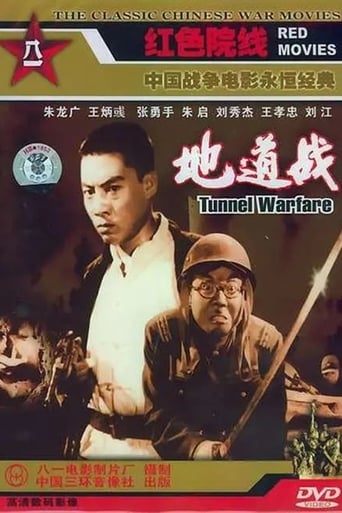
- Tunnel Warfare (1965)
- Mine Warfare (1966)
- The Red Detachment of Women (1961)
- Taking Tiger Mountain by Strategy (1970)
- The Longest Day (remake Chinese version)
- Assembly (2007)
- The Battle at Lake Changjin (2021)
Film restoration
The original film elements of Battle on Shangganling Mountain are preserved in the China Film Archive in Beijing. The film underwent a major digital restoration in 2006 to commemorate its 50th anniversary, with the restored version being screened in cinemas and released on DVD. The restoration process involved cleaning and repairing damaged film negatives, digitally enhancing the image quality, and remastering the soundtrack. The China Film Archive maintains both the original camera negatives and multiple prints of the film in climate-controlled facilities. The restored version is periodically screened at film festivals and retrospective screenings of classic Chinese cinema. The film is also available in the digital collection of the National Library of China and several university film archives. The preservation status is considered good, with no risk of loss to this historically significant film.
Where to watch
- Available on Chinese streaming platforms including iQIYI and Youku
- DVD and Blu-ray releases available from China Film Group Corporation
- Screenings occasionally held at the China Film Archive in Beijing
- Available in some university library collections specializing in Asian cinema
- Periodically broadcast on China Central Television's movie channels
- Accessible through the China Film Archive's digital collection for academic research
- Available on some international streaming services specializing in classic Chinese cinema
- Screened during retrospective programs at international film festivals featuring Chinese cinema