
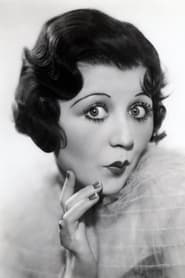

Betty Boop and Grampy
"Betty Boop and some friends go to Grampy's house for a party"
Keys: Space play/pause · ←/→ 10s · F fullscreen · M mute · </> speed
About this film
The short features Grampy in his first appearance.
Cast & crew
More films like this
More Animation films
View all →



More from Dave Fleischer
View all →

More about this film
About the production
Release dateAugust 23, 1935
ProductionFleischer Studios, Paramount Pictures
Filmed inNew York, New York (Fleischer Studios)
This cartoon was produced during the transition period when the Hays Code was being enforced, causing Betty Boop's character to become more conservative and family-friendly. The animation was created using the rotoscope technique for some scenes, and the Fleischers' patented Stereoptical process for 3D backgrounds. Grampy's character was designed to appeal to Depression-era audiences with his resourceful, inventive nature.
Themes
Innovation and creativityThe power of friendshipResourcefulness during hardshipThe joy of inventionIntergenerational relationships
Themes & topics
Historical background
Betty Boop and Grampy (1935) circulated in studio-era and wartime programming. The short features Grampy in his first appearance. Contemporary trade papers and later preservation notes document its place among theatrical and archive releases.
Why this film matters
Betty Boop and Grampy remains accessible to researchers and viewers as a animated short in museum, archive, and streaming collections. The short features Grampy in his first appearance.
Making of
The production of 'Betty Boop and Grampy' represented a significant creative expansion for the Betty Boop series. Grampy was created as a new supporting character to add variety to the cartoons and provide a positive, inventive role model. The animators at Fleischer Studios spent considerable time designing the various mechanical contraptions, with many inspired by actual patents and inventions of the 1930s. The cartoon was animated in New York City, unlike many other studios that had moved to California. The voice recording sessions were done live to picture, a common practice at the time, with Mae Questel and Everett Clark performing together to create natural chemistry. The background artists used the Stereoptical process, creating miniature 3D sets that were photographed to give the cartoon depth and dimension.
What critics said
Day-one reviews for Betty Boop and Grampy are sparse in digitized press archives; later criticism treats it as a reference point for 1935 cinema programming and preservation.
Did you know?
- This was the first cartoon to feature Grampy as a main character, who would become a recurring figure in the Betty Boop series.
- Grampy's signature 'thinking cap' (a hat with a lightbulb on top) became an iconic animation trope that influenced many later cartoons.
- The cartoon features among the leading elaborate sequences of mechanical inventions in Fleischer Studios' history.
- Mae Questel, who voiced Betty Boop, also provided voices for other characters including Olive Oyl in Popeye cartoons.
- The letter that initially makes Grampy sad is never shown or explained, leaving it to audience interpretation.
- This cartoon was released during the height of the Great Depression, and Grampy's resourcefulness resonated with audiences facing economic hardship.
- The mechanical contraptions in this cartoon were inspired by Rube Goldberg's complex invention drawings.
- Grampy was voiced by veteran character actor Everett Clark, who brought a warm, grandfatherly quality to the character.
- This short was one of the last Betty Boop cartoons to feature jazz music prominently before the series became more conservative.
- The party sequence contains over 50 different mechanical gags and inventions, all animated by hand.
Visual style
The cartoon utilized Fleischer Studios' innovative Stereoptical process, which involved photographing animation cels against three-dimensional miniature sets. This technique gave the cartoon a remarkable depth and dimension that was unusual for the time. The animation featured fluid character movement and elaborate mechanical sequences that required precise timing and multiple layers of animation. The black and white photography made excellent use of contrast and shadow, particularly in the scenes showing Grampy's workshop and the various contraptions in motion.
Innovations
The cartoon demonstrated several technical innovations for its time, including the complex animation of multiple mechanical devices operating simultaneously. The Fleischer Studios' patented Stereoptical process was used to create three-dimensional backgrounds that added depth to the scenes. The animation team developed new techniques for showing the inner workings of Grampy's inventions, using cutaway views and transparent effects. The synchronization of sound with the numerous mechanical actions represented a significant technical challenge that was successfully overcome through careful planning and execution.
Music
The cartoon features a lively jazz-influenced score typical of the Fleischer style, composed by Sammy Timberg. The music includes original compositions alongside popular melodies of the era. The soundtrack makes creative use of sound effects to enhance the mechanical inventions, with each contraption having its own distinctive audio signature. The musical numbers during the party sequence showcase the syncopated rhythms that were hallmarks of early Betty Boop cartoons, though slightly toned down to comply with the Hays Code.
Famous quotes
Grampy: 'I've got it! I'll put on my thinking cap!'
Betty Boop: 'Oh Grampy, you're wonderful!'
Memorable scenes
- The sequence where Grampy puts on his thinking cap and his entire house transforms into an automated party machine with dozens of interconnected contraptions serving food, playing music, and entertaining guests in a spectacular mechanical ballet.
What audiences thought
The cartoon was well-received by audiences of 1935, who found Grampy's inventions both amusing and inspiring during difficult economic times. The character became popular enough to appear in several subsequent Betty Boop cartoons. Theater owners reported positive audience reactions, particularly to the elaborate party sequence. Children especially enjoyed the mechanical gags, while adults appreciated the cartoon's optimistic message about creativity and problem-solving. The film's success helped establish Grampy as a beloved character in the Fleischer roster.
Film connections
Influenced by
- Rube Goldberg cartoons
- Charlie Chaplin's 'Modern Times'
- The Three Stooges comedy style
- Depression-era ingenuity stories
This film influenced
- Later Looney Tunes mechanical gag cartoons
- Disney's 'The Absent-Minded Professor'
- Modern animated series featuring inventors like 'Phineas and Ferb'
Film restoration
The film has been preserved by the Library of Congress and various film archives. It has been restored and remastered for home video releases and digital distribution. The original 35mm nitrate negatives are stored in climate-controlled facilities, and high-quality digital copies ensure the cartoon's continued accessibility.
Where to watch
- The cartoon is available on various Betty Boop compilation DVD sets
- Public domain streaming platforms
- The Official Betty Boop YouTube channel
- Classic animation streaming services like Boomerang
- Digital purchase on Amazon Prime Video and iTunes