By Indian Post
"A stolen love letter on the Circle O"
Keys: Space play/pause · ←/→ 10s · F fullscreen · M mute · </> speed
About this film
Jode MacWilliams, a cowboy working on the Circle O ranch, has a crush on the boss's daughter, Peg. After his friend writes a love letter for him, an Indian steals and delivers it to Peg. Meanwhile, word of Jode's affection reaches Peg's father, who has a decidedly less romantic v.
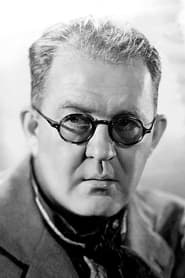
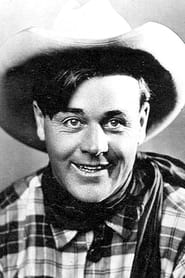
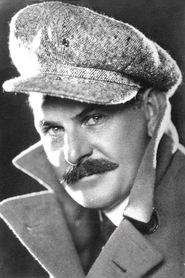
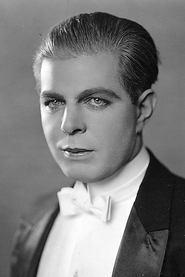
Cast & crew
More Western films
View all →

More from John Ford
View all →

More about this film
About the production
Release dateMarch 10, 1919
ProductionUniversal Film Manufacturing Company
Filmed inUniversal City, California, Lone Pine, California
This was one of John Ford's earliest directorial efforts during his time at Universal, where he was rapidly building his reputation as a reliable western director. The film was shot during the transitional period when Ford was moving from acting to full-time directing, and it showcases his early mastery of western storytelling and comedic timing. The production utilized Universal's extensive backlot facilities and nearby California locations to create authentic western settings without the expense of location shooting in more remote areas.
Themes
Romantic courtshipParental oppositionCross-cultural communicationFrontier lifeComedy of errors
Themes & topics
Historical background
Silent-era audiences encountered By Indian Post around 1919, as studios refined cross-cutting and star-driven storytelling.
Why this film matters
By Indian Post shows how silent filmmakers conveyed plot through gesture, title cards, and editing.
Making of
John Ford was only 25 years old when he directed, yet he was already establishing himself as one of Universal's most reliable and prolific directors. The production was typical of Universal's assembly-line approach to western shorts during this period, with tight schedules and minimal budgets. Ford was known for his efficiency on set, often completing scenes in just one or two takes. The cast, particularly Pete Morrison, were regulars in Universal's western unit and had developed a comfortable working relationship with Ford. The film's comedic elements were likely developed through improvisation on set, as Ford encouraged his actors to contribute to the humor. The Indian character's role as an unexpected matchmaker was an unusual twist for the period and may have been Ford's contribution to elevate what might otherwise have been a standard western romance plot.
What critics said
Press notices for By Indian Post (1919) are sparse in digitized sources; interest today rests on preserved prints and comparison with related titles.
Did you know?
- This was one of over 30 short films John Ford directed in 1919 alone, demonstrating his incredible productivity during his early years at Universal.
- The film was released under Ford's birth name Jack Ford, as he hadn't yet adopted the more formal John Ford professionally.
- Pete Morrison, the lead actor, was a real cowboy turned actor who frequently appeared in Universal westerns of this era.
- The film represents an early example of Ford's interest in romantic comedy within the western genre, a combination he would return to throughout his career.
- At just 20 minutes, this was considered a two-reeler, a common format for short subjects of the silent era.
- The Indian character in the film, while playing into stereotypes of the period, was actually portrayed by a Native American actor, which was somewhat progressive for the time.
- Universal was known as the 'King of the Short Subjects' during this period, producing hundreds of western shorts like this one annually.
- The film's title refers to the Pony Express era mail delivery system, though the plot involves a more unconventional delivery method.
- was part of Universal's 'Universal Juniors' series, which were shorter films designed to fill out theater programs.
- The preservation status of is unknown, with no known surviving copies in major film archives.
Visual style
The cinematography was typical of Universal's western productions of the era, utilizing natural lighting and location shooting to create authentic frontier atmospheres. The camera work was straightforward and functional, focusing on clear storytelling rather than artistic experimentation, which was common for short subjects of this period. The film likely employed static camera positions for dialogue scenes and more dynamic movement for action sequences. The visual style emphasized the vastness of the western landscape, a motif that would become central to Ford's later work. Black and white film stock of 1919 had improved significantly from earlier years, allowing for better contrast and detail in outdoor scenes.
Innovations
The film employed standard technical practices for 1919 Universal productions, using 35mm black and white film stock with an aspect ratio of approximately 1.33:1. The editing would have followed continuity editing principles that were becoming standard in Hollywood by this time. The film's most notable technical aspect was likely its efficient production methods, allowing Universal to produce high-quality shorts on tight schedules. The use of location shooting combined with studio backlot work demonstrated the industry's growing sophistication in creating convincing western settings without the expense of entirely on-location productions.
Music
As a silent film, 'By Indian Post' would have been accompanied by live musical performance in theaters, typically piano or organ music. The score would have been compiled from standard photoplay music libraries, with selections chosen to match the mood of each scene - romantic themes for the love scenes, upbeat music for comedic moments, and dramatic music for conflict scenes. No original composed score was created for the film, which was standard practice for short subjects of this era. The music would have been improvised or selected by the theater's musical director based on cue sheets provided by the studio.
Famous quotes
No dialogue available due to silent film format
Memorable scenes
- The scene where the Indian character discovers and reads the love letter, creating a moment of cross-cultural misunderstanding that drives the plot forward; The comedic delivery of the letter to Peg by the unexpected messenger; The confrontation between Jode and Peg's father when the romance is discovered
What audiences thought
Audiences in 1919 generally received films like 'By Indian Post' positively as part of the overall theater experience. The combination of western action, romance, and comedy appealed to the broad audience base that movie theaters cultivated during this period. The film's short length made it ideal for inclusion in varied theater programs, and its familiar western setting resonated with American audiences' ongoing fascination with frontier life. The romantic elements likely appealed to female viewers, while the western setting and action sequences attracted male audiences, making it a well-rounded entertainment package for the time.
Film connections
Influenced by
- D.W. Griffith's narrative techniques
- Universal western formula
- Contemporary romantic comedies
- Traditional western storytelling conventions
This film influenced
- Later Ford westerns with romantic elements
- Universal western shorts of the 1920s
- Romantic western comedies of the sound era
Film restoration
The preservation status of 'By Indian Post' is currently unknown, and the film is considered possibly lost. No known surviving copies exist in major film archives including the Library of Congress, UCLA Film & Television Archive, or the Academy Film Archive. This is unfortunately common for Universal short subjects from this period, as the studio's early nitrate film holdings suffered significant losses over the decades. Film historians continue to search for surviving copies in private collections and smaller archives, but as of now, the film is not available for public viewing or scholarly study.
Where to watch
- No known viewing options available due to the film's uncertain preservation status and possible lost status