Censored
"Snafu vs. the censor"
Keys: Space play/pause · ←/→ 10s · F fullscreen · M mute · </> speed
About this film
Private Snafu's love letter to Sally Lou is blocked by an obsessive censor in this 1944 Warner Bros. instructional cartoon directed by Chuck Jones for the U.S. Army.
Cast & crew
More films like this
More Comedy films
View all →







More from Frank Tashlin
View all →
More about this film
About the production
Release dateJuly 17, 1944
BudgetApproximately $10,000 per short (Warner Bros. underbid Disney's $30,000 estimate)
ProductionWarner Bros. Cartoons, U.S. Army Signal Corps
Filmed inWarner Bros. Studios, Burbank, California
The Private Snafu series was produced under high security; staff members were fingerprinted, given FBI clearances, and required to wear identification badges. Unlike theatrical cartoons, these were not subject to the Motion Picture Production Code (Hays Code), allowing for racy humor and mild profanity intended for adult soldiers. Each short was typically produced on a tight six-week schedule to keep up with the bi-weekly Army-Navy Screen Magazine newsreel releases.
Themes
Operational Security (OPSEC)Consequences of CarelessnessThe Necessity of CensorshipHomefront vs. Battlefront ConnectionResponsibility to Fellow Soldiers
Themes & topics
World War IIMilitary TrainingCensorshipEspionageNightmare SequenceSouth PacificDr. SeussInstructional Cartoon
Historical background
Censored taught troops about mail security; Snafu series was created by Frank Capra's unit.
Why this film matters
The Snafu series represents a unique moment where top-tier Hollywood talent (Capra, Geisel, Blanc, Jones, Tashlin) worked directly for the government without the constraints of commercial censorship. It bridged the gap between entertainment and propaganda, creating a character that resonated with the cynicism and humor of the common soldier. It is also a significant part of the 'adult' history of American animation, featuring themes and visuals that would have been banned from general theaters.
Making of
The creation of Private Snafu was a collaboration between Frank Capra's First Motion Picture Unit and the Warner Bros. animation department. Leon Schlesinger won the contract by significantly underbidding Walt Disney, who wanted to retain the rights to the character. The writers, including Dr. Seuss and P.D. Eastman, used Snafu as a 'negative role model'—a character who did everything wrong so soldiers would learn the consequences of poor discipline. Frank Tashlin, the director of 'Censored,' was known for his 'cinematic' style of animation, using camera angles and rapid cutting that mimicked live-action films.
What critics said
Animation historians prize Jones gags; military historians note training function.
Did you know?
- The character's name is an acronym for the military slang 'Situation Normal: All Fouled Up' (or a more profane version).
- The script was co-written by Theodor Geisel, better known as Dr. Seuss, which is evident in the rhythmic dialogue.
- The series was a military secret during the war and was only shown to service personnel.
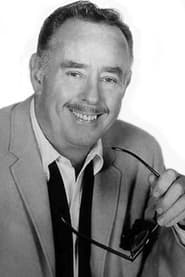
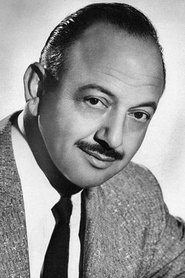
- Mel Blanc, the voice of Bugs Bunny, provided the voice for Private Snafu and the Technical Fairy.
- Ironically, a scene featuring a topless image of Sally Lou was actually censored and edited out of some versions of about censorship.
- The Technical Fairy, First Class, is a parody of a high-ranking NCO, complete with a cigar and five-o'clock shadow.
- The island mentioned in the film, 'Bingo Bango,' became a recurring joke name for mysterious Pacific locations in later media.
- Surveys at the time showed that Private Snafu was the most popular film series among GIs, often beating out major Hollywood features.
Awards & recognition
- Public Domain Recognition (Post-War)
- National Film Registry (Series recognized for cultural significance)
Visual style
Tashlin utilized high-contrast black-and-white animation to create a 'film noir' atmosphere during the nighttime opening. The use of 'electric eye' beams and mechanical traps for the censorship office shows a creative, almost Rube Goldberg-esque visual style. The nightmare sequence uses distorted perspectives and frantic pacing to heighten the sense of panic.
Innovations
The film successfully integrated complex mechanical gags with character-driven comedy. It also demonstrated the power of 'negative reinforcement' in educational psychology—showing the disastrous result of an action to encourage the opposite behavior. The animation quality rivaled the best theatrical shorts of the era despite the classified status and lower budget.
Music
The score was composed by Carl Stalling, the Looney Tunes composer. Stalling used his signature 'mickey-mousing' technique, where the music perfectly syncs with every physical action on screen. The film also features the recurring 'Private Snafu' theme song and rhythmic, rhyming dialogue characteristic of Dr. Seuss's writing.
Famous quotes
Technical Fairy: 'But have you forgotten the censor?' Snafu: 'Ah, it's okay, we got a private code!'
Technical Fairy: 'I'll hate myself in the morning.'
Snafu: 'Now I can fight in peace!'
Sally Lou's Mother: 'Bingo Bango Island! Big surprise! Don't tell a soul!'
Memorable scenes
- The opening sequence where Snafu tries to sneak past the 'Censor' office, triggering a series of high-tech alarms and mechanical hands that snatch his letters.
- The 'Gossip Chain' scene where a secret whispered by Sally Lou travels through various civilians until it reaches a Japanese spy in a comically stereotypical disguise.
- The nightmare climax where the Japanese army, fully prepared for the 'surprise' attack, ambushes the Allied fleet at Bingo Bango island.
- The final scene where Snafu, having learned his lesson, aggressively censors his own letter with a large black brush.
What audiences thought
Soldiers loved the Snafu shorts because they felt the character shared their frustrations with army life. The inclusion of 'racy' elements like pin-up girls and mild swearing made the films feel like they were 'for the men' rather than just another dry lecture from the brass.
Film connections
Influenced by
- The 'Loose Lips Sink Ships' propaganda campaign
- Looney Tunes (visual style and humor)
- Dr. Seuss's rhythmic poetry
This film influenced
- The 'A Few Quick Facts' series
- Modern military training films
- Animaniacs (which featured a Snafu cameo)
Film restoration
The film is in the public domain and is well-preserved. It has been remastered and included in various Looney Tunes and Private Snafu DVD collections, such as the 'Private Snafu Golden Classics' by Thunderbean Animation.
Where to watch
- YouTube (Public Domain)
- Internet Archive
- Looney Tunes Golden Collection (DVD Extras)
- Thunderbean Animation: Private Snafu Golden Classics DVD