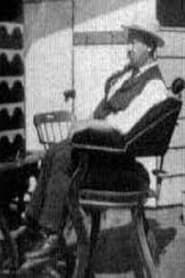
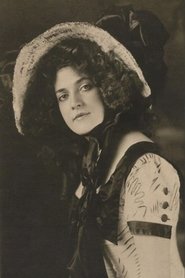

Danse serpentine (Annabelle)
"Annabelle Moore's skirt becomes flowing sculpture"
Keys: Space play/pause · ←/→ 10s · F fullscreen · M mute · </> speed
About this film
In a long, diaphanous skirt, held out by her hands with arms extended, Broadway dancer Annabelle Moore performs. Her dance emphasizes the movement of the flowing cloth. She moves to her right and left across an unadorned stage.
Cast & crew
More films like this
More Documentary films
View all →
More from William Heise
View all →
More about this film
About the production
Release date1895
Box officeNot tracked (films were sold directly to exhibitors rather than earning box office revenue)
ProductionEdison Manufacturing Company
Filmed inEdison's Black Maria Studio, West Orange, New Jersey
Filmed in Edison's revolutionary Black Maria studio, which featured a retractable roof to allow natural sunlight for filming. The camera was hand-cranked at approximately 16 frames per second. Many copies of this film were distributed with hand-tinted color, a labor-intensive process where each frame was individually colored by artists, typically women employed by Edison. The film was shot on 35mm film using Edison's Kinetograph camera. The entire production likely took only a few minutes to film, as the camera could only hold limited film stock.
Themes
Dance and movementTransformation and metamorphosisArt Nouveau aestheticsTechnology preserving artFemale performance and spectacle
Themes & topics
danceserpentine danceBroadwayperformerflowing fabrichand-coloredsilent filmearly cinemaBlack MariaEdisonvaudeville
Historical background
Made during the nickelodeon years around 1895, Danse serpentine (Annabelle) reached audiences through theatrical programs, fairground booths, or specialized distribution channels typical of its generation. In a long, diaphanous skirt, held out by her hands with arms extended, Broadway dancer Annabelle Moore performs. Her. Historians now read such works for what they reveal about production methods, national taste, and the expanding vocabulary of screen narrative.
Why this film matters
Archivists and programmers still screen Danse serpentine (Annabelle) when tracing how popular entertainment evolved. Its subject—in a long, diaphanous skirt, held out by her hands with arms extended, broadway dancer annabelle—gives later viewers tangible evidence of what drew crowds in the silent period. Home video, restorations, and festival sidebars keep the title circulating among students of film history.
Making of
The filming took place in Edison's innovative Black Maria studio, a tar-paper-covered building designed specifically for movie production. The studio featured a unique retractable roof that could be opened to allow maximum sunlight to illuminate the performers, as electric lighting was not yet suitable for filming. William Heise, Edison's principal cameraman, operated the hand-cranked Kinetograph camera, carefully timing the cranking to maintain consistent speed. Annabelle Moore had to perform her entire dance in one continuous take, as editing technology did not yet exist. The hand-coloring process was particularly laborious - artists would carefully apply color to each individual frame using tiny brushes, often working on an assembly line basis. The film was shot on celluloid film stock, a relatively new and expensive medium at the time. Edison's team experimented with various camera angles and distances to best capture the flowing movement of the fabric.
What critics said
Original trade coverage treated Danse serpentine (Annabelle) as routine program filler rather than a landmark production—common for shorts. Later criticism emphasizes preservation, stylistic comparison with contemporaries, and whatever cast or crew names later gained prominence. Contemporary writing is mostly historical: assessing completeness, influence, and place in a director's or studio's catalog.
Did you know?
- Annabelle Moore was one of the first celebrities of the cinema age, becoming among the leading frequently filmed performers in the 1890s
- The serpentine dance was originally created and popularized by Loïe Fuller, though Annabelle Moore became its most famous film interpreter
- This film was part of a series of dance films Edison produced to showcase the new technology's ability to capture motion
- The hand-tinted versions were among the earliest examples of color in cinema history
- Edison's studio produced multiple versions of Annabelle's serpentine dance to meet public demand
- The Black Maria studio where this was filmed was the world's first movie production studio
- Annabelle Moore was only 16-17 years old when these films were made, though she was already an established Broadway performer
- The film was exhibited on Edison's Kinetoscope, a device that allowed one person at a time to view moving pictures
- Many early viewers believed the films were magical rather than technological achievements
- The serpentine dance films were among Edison's most profitable early productions
Visual style
The cinematography was revolutionary for its time, utilizing the fixed camera position typical of early Edison productions. The camera was positioned at approximately eye level to best capture the full figure of the dancer and the movement of her costume. The use of natural sunlight from the Black Maria's open roof created bright, clear images that showcased the translucent quality of the fabric. The camera's ability to capture the rapid, flowing movement of the skirt demonstrated the new technology's potential for preserving dynamic performances. The framing was carefully composed to show Annabelle's entire body while emphasizing the dramatic patterns created by the flowing fabric. The hand-tinted versions added another layer of visual appeal, with colors carefully applied to enhance the ethereal quality of the dance.
Innovations
This film represents several important technical achievements for early cinema. The successful capture of rapid, flowing movement demonstrated the Kinetograph camera's ability to preserve complex motion. The hand-tinting process, while labor-intensive, was an early attempt to bring color to motion pictures, predating proper color film by decades. The filming in the Black Maria studio showcased the advantages of a dedicated production facility with controlled lighting. The film also demonstrated the commercial viability of recording and distributing popular performances. The preservation of dance movements on film was groundbreaking, allowing for the study and enjoyment of performance art in ways previously impossible.
Music
Originally silent, as all films of this period were. When exhibited in Kinetoscope parlors, musical accompaniment was typically provided by live musicians in the viewing area. The music would have been popular songs or classical pieces of the era, chosen to complement the flowing, graceful movements of the dance. Modern restorations and presentations often feature period-appropriate music, typically waltzes or other flowing compositions that match the rhythm of Annabelle's movements. Some contemporary presentations use original 1890s sheet music to maintain historical authenticity.
Memorable scenes
- The entire film consists of one continuous scene featuring Annabelle Moore's mesmerizing serpentine dance, with her flowing skirt creating hypnotic patterns as she moves gracefully across the stage, the fabric billowing and transforming in ways that seemed magical to 1890s audiences
What audiences thought
Audiences of the 1890s were fascinated by these films, with Kinetoscope parlors often having long lines of people waiting to view Annabelle's dance. The novelty of seeing moving images was itself a draw, but the beauty of the performance and the mesmerizing movement of the fabric made these films particularly popular. Many viewers returned multiple times to watch the same film, something that was unusual for the period. The hand-tinted versions were especially sought after, commanding higher viewing fees. The films were so popular that Edison produced multiple versions to meet demand. Contemporary accounts describe audiences as being 'spellbound' and 'enchanted' by the performance.
Film connections
Influenced by
- Loïe Fuller's original serpentine dance performances
- Art Nouveau movement's emphasis on organic forms
- Stage magic and theatrical effects
- Photographic studies of motion by Eadweard Muyvey
- Contemporary dance and performance art
This film influenced
- Other Edison dance films featuring Annabelle Moore
- Early dance films by Georges Méliès
- The development of dance as a cinema genre
- Later color experiments in silent cinema
- Art films focusing on movement and fabric
Film restoration
Preserved in the Library of Congress and other film archives. Multiple versions exist, including both black and white and hand-tinted copies. The film has been digitally restored and is available through various archival collections. It is considered one of the best-preserved examples of early Edison films due to its popularity and multiple original copies.
Where to watch
- Library of Congress National Film Registry website
- Museum of Modern Art (MoMA) online collection
- Edison National Historic Site digital archives
- Various public domain film websites
- Kino Lorber's 'The Movies Begin' DVD collection
- YouTube through official archive channels
- British Film Institute (BFI) Player