
Keys: Space play/pause · ←/→ 10s · F fullscreen · M mute · </> speed
Plot
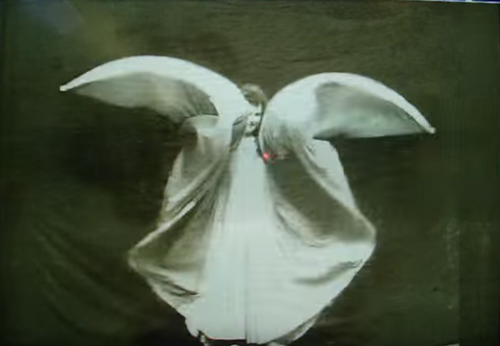
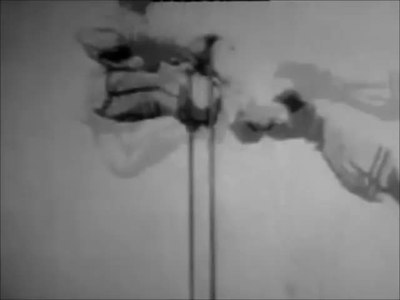
Die Serpentintänzerin (The Serpentine Dancer) captures a brief but mesmerizing performance featuring a young woman named Ancion, who gracefully spins while wearing large, flowing robes. As she twirls rapidly, her light fabric billows and flows around her body, creating a beautiful butterfly-wing effect that showcases the early potential of cinema to capture motion and dance. The entire sequence demonstrates the Skladanowsky brothers' interest in recording performing arts and their technical ability to capture fluid movement in their early film experiments. This short performance piece exemplifies the fascination of early filmmakers with capturing ephemeral moments of beauty and motion that would otherwise be lost to time.
Director
 Max Skladanowsky
Cast
About the Production
Release Date November 1, 1895
Budget Not documented - early films were experimental productions without formal budgeting
Box Office Not documented - commercial exhibition was limited to early cinema demonstrations
Production Skladanowsky Brothers
Filmed In Berlin, Germany
Filmed using the Skladanowsky brothers' proprietary Bioscope camera and projector system. The film was shot outdoors or in a studio with natural lighting, as artificial lighting for film was not yet developed. The dancer Ancion was likely a stage performer recruited by the brothers to demonstrate their new technology. The flowing robes were specifically chosen to maximize the visual impact of motion on film, showcasing the medium's ability to capture movement that might be missed in live performance.





Themes & Topics
dancespinningflowing robesbutterfly effectserpentine danceearly cinemashort filmsilent filmperformanceexperimental film
Historical Background
Die Serpentintänzerin was created during the birth of cinema, a period of intense innovation and competition among inventors worldwide. In 1895, multiple pioneers were working independently on motion picture technology - the Lumière Brothers in France, Thomas Edison and William Kennedy Laurie Dickson in America, and the Skladanowsky brothers in Germany. This film emerged just before the public debut of cinema and represents the German contribution to early film history. The late 19th century was characterized by fascination with technology, scientific discovery, and new forms of entertainment. Urban centers like Berlin were experiencing rapid modernization, and audiences were eager for novel attractions. The serpentine dance itself was a popular stage act of the period, reflecting the era's interest in visual spectacle, movement, and the emerging aesthetic of modernism. The film was created before the establishment of film as an industry, when moving pictures were still considered a technological curiosity rather than an art form.
Why This Film Matters
Die Serpentintänzerin holds immense cultural significance as one of the earliest surviving examples of dance on film and a testament to the immediate recognition of cinema's potential to capture and preserve performance art. The film represents the German contribution to the birth of cinema, demonstrating that film development was happening simultaneously across multiple countries. As an early dance film, it predates the countless dance films that would become a staple of cinema history. The choice of a serpentine dance was particularly significant, as these performances symbolized the modern, liberated woman of the 1890s and were associated with artistic movements like Art Nouveau. The film's preservation allows modern audiences to witness the very beginnings of cinematic language and understand how early filmmakers explored the unique capabilities of their new medium. It also serves as a reminder of the Skladanowsky brothers' important but often overlooked role in cinema history, which has been largely overshadowed by the Lumière Brothers' more successful commercial venture.
Making Of
The Skladanowsky brothers, Max and Emil, were German inventors who developed their own film projection system independently of other pioneers. They had previously worked in optical entertainment and magic lantern shows, which gave them the technical background to experiment with moving images. The brothers filmed their shorts in 1895 using a camera they built themselves, and Die Serpentintänzerin was likely filmed in a makeshift studio in Berlin. The dancer Ancion was probably recruited from local variety theatres where the brothers had connections. The filming process would have been cumbersome, requiring hand-cranking of the camera and careful choreography to fit within the extremely limited film capacity. The brothers' Bioscope system used a continuous loop of film rather than the intermittent movement later standardized by other inventors, which technical limitations influenced the length and style of their films.
What Critics Said
Contemporary critical reception of Die Serpentintänzerin and the Skladanowsky brothers' program was generally positive, with Berlin newspapers noting the novelty and wonder of the moving images. The Berliner Tageblatt praised the 'living photographs' as a remarkable technical achievement. However, some critics noted that the Bioscope projector produced flickering images compared to later systems. Modern film historians and critics recognize the film as historically significant, though technically primitive. Critics appreciate its role in early cinema history and its documentation of 19th-century performance styles. The film is now studied as an example of early cinematic experimentation and the initial exploration of dance as a film subject. Contemporary critics often note the film's aesthetic qualities despite its technical limitations, finding beauty in the flowing motion captured by the primitive equipment.
Did You Know?
- This film was part of the first-ever commercial film screening program presented by the Skladanowsky brothers at the Wintergarten theatre in Berlin on November 1, 1895
- The film predates the famous Lumière Brothers' first public screening by nearly two months, making it one of the very first films ever shown to a paying audience
- The dancer's name 'Ancion' may have been a stage name, as complete records of early film performers are scarce
- The flowing robe technique was inspired by the popular serpentine dances of the 1890s, particularly those performed by Loïe Fuller
- The Bioscope projector used for this film could show two films simultaneously by using two separate film loops
- Only one copy of this film is known to survive, preserved in the German Federal Film Archive
- The film was shot on 35mm film, the same gauge that would become the industry standard
- The Skladanowsky brothers initially worked as glass blowers and magic lantern show operators before inventing their film projector
- The short runtime was typical of early films, as the technology could only capture brief sequences
- This film was part of a program of eight short films shown continuously throughout the evening at the Wintergarten
More film details Visual style, music, quotes, restoration, and more
Visual Style
The cinematography of Die Serpentintänzerin represents the most basic techniques available in 1895. The camera was stationary, positioned to capture the full figure of the dancer as she performed. The framing is a medium shot, allowing viewers to see both the dancer's movements and the effect of the flowing robes. The lighting would have been natural, either daylight or studio skylights, as artificial lighting for film had not yet been developed. The film was shot at approximately 16 frames per second, the standard speed for early cameras. Despite these limitations, the cinematography successfully captures the fluidity of the dance and creates a sense of movement that was revolutionary for the time. The contrast between the dancer's figure and the flowing fabric creates visual interest, demonstrating early awareness of composition and visual dynamics.
Innovations
Die Serpentintänzerin represents several important technical achievements in early cinema. The film was created using the Skladanowsky brothers' Bioscope system, which was one of the first successful film projection devices. Their camera used a unique mechanism with two lenses that alternately exposed the film, allowing for smoother motion capture. The film was shot on 35mm celluloid, establishing what would become the industry standard gauge. The Bioscope projector could show two films simultaneously using a double projector system, though this film would have been shown as part of a sequential program. The ability to capture fluid motion, particularly the flowing robes of the dancer, demonstrated the early potential of cinema to document movement that might be too quick for the human eye to fully appreciate in live performance. Despite being quickly superseded by more advanced systems, the Skladanowsky brothers' technology represented a crucial step in the development of cinema.
Music
As a silent film, Die Serpentintänzerin had no synchronized soundtrack. During its original exhibition at the Wintergarten, the film would have been accompanied by live music provided by the theatre's orchestra or pianist. The musical accompaniment would likely have been light, popular music of the period, possibly waltzes or other dance music that complemented the visual performance. The choice of music would have been left to the musical director of each venue where the film was shown. Modern screenings of the film typically feature period-appropriate music or specially composed scores that evoke the 1890s aesthetic. Some contemporary presentations use minimalist piano music, while others employ small ensembles playing popular music from the late 19th century to recreate the original viewing experience as authentically as possible.
Memorable Scenes
- The entire film consists of one continuous shot where the dancer Ancion spins gracefully, her flowing robes creating a mesmerizing butterfly-wing effect that showcases the early ability of cinema to capture and preserve beautiful moments of motion
What Audiences Thought
The Wintergarten theatre audiences who first saw Die Serpentintänzerin in November 1895 were reportedly astonished and delighted by the moving images. Contemporary accounts describe gasps and applause from the audience as the dancer appeared to come to life on screen. The novelty of seeing recorded movement was a revelation to most viewers, who had never experienced anything similar. The serpentine dance was particularly effective at demonstrating the magic of cinema, as the flowing robes created a hypnotic visual effect that captivated viewers. The film was part of a successful run at the Wintergarten, though the Skladanowsky brothers' technology was soon surpassed by competitors. Modern audiences viewing the film in archives or retrospectives appreciate it as a historical artifact, finding fascination in its glimpse of 19th-century performance and the very beginnings of cinema.
Film Connections
Influenced By
- Stage serpentine dances popular in the 1890s
- Magic lantern shows
- Chronophotography experiments by Étienne-Jules Marey
- Stage performances at Berlin variety theatres
- Loïe Fuller's famous serpentine dances
This Film Influenced
- Annabelle Serpentine Dance (1894, Edison)
- Serpentine Dance by Annabelle (1895, Edison Manufacturing Company)
- Various early dance films by the Lumière Brothers
- Later Art Nouveau influenced films
Film Restoration
The film is preserved in the German Federal Film Archive (Bundesarchiv-Filmarchiv) in Berlin. While many early films from this period have been lost, Die Serpentintänzerin survives as part of the collection of Skladanowsky brothers' films. The surviving print has been restored and digitized for preservation purposes. The film is considered to be in good condition for its age, though some deterioration is inevitable given its age and the primitive nature of early film stock. The preservation of this film is particularly significant due to its historical importance as one of the first films ever shown to a paying audience.
Where to Watch
- German Federal Film Archive (Bundesarchiv-Filmarchiv) - research access
- Museum of Modern Art (MoMA) Film Collection - occasional screenings
- Early cinema festivals and retrospectives
- Some online archives specializing in early cinema
- Film history educational platforms
- European Film Gateway - digital access for research purposes