
Emak-Bakia
"Man Ray’s Basque poem in moving images"
Keys: Space play/pause · ←/→ 10s · F fullscreen · M mute · </> speed
About this film
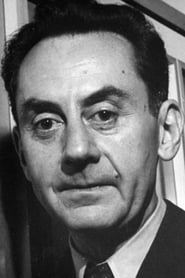
Subtitled as a cinépoéme, it features many techniques Man Ray used in his still photography (for which he is better known), including Rayographs, double exposure, soft focus and ambiguous features.
Cast & crew
More Documentary films
View all →
More from Man Ray
View all →
More about this film
About the production
Release date1926
Box officeNot commercially released
ProductionMan Ray Productions
Filmed inParis, France
Man Ray created this film as a personal artistic experiment, funding it himself. The production involved innovative techniques including placing objects directly on film stock to create Rayographs, using multiple exposures to create ghostly effects, and pioneering stop-motion animation with three-dimensional objects. The film was shot without a script, following Surrealist principles of automatic creation and chance operations.
Themes
Dreams and the subconsciousThe intersection of art formsTransformation and metamorphosisThe beauty of abstractionTime and motion
Themes & topics
surrealismexperimentalavant-gardeabstractnon-narrativepoeticdreamlikeRayographsstop-motionmultiple exposureartisticmathematical objectsPicasso sculptures
Historical background
Emak-Bakia appeared in 1926, when the late silent period and the transition to sound shaped how movies were financed, distributed, and discussed. Audiences of the day encountered the work amid shifting tastes in acting, pacing, and spectacle. Its focus on emak-bakia (basque for leave me alone) is a 1926 film directed by man ray mirrors themes circulating in popular culture of that moment.
Why this film matters
Emak-Bakia (1926) belongs to the wider archive of world cinema, documenting emak-bakia (basque for leave me alone) is a. Archivists and historians value such titles for what they reveal about craft, genre, and audience expectations. Restorations and festival screenings keep the work visible to viewers far beyond its first run.
Making of
Man Ray created Emak-Bakia during a intensely productive period in 1920s Paris, where he was simultaneously working as a photographer, painter, and filmmaker. The production was highly experimental, with Man Ray often improvising techniques in the darkroom. He would place objects directly on film strips, expose them to light, and develop them to create the Rayograph effects. The stop-motion sequences required painstaking frame-by-frame photography of mathematical models and Picasso sculptures. Kiki of Montparnasse's appearances were achieved through multiple exposures, with Man Ray superimposing different takes to create ethereal, dreamlike effects. The film was essentially a solo project, with Man Ray handling all aspects of production, from cinematography to editing, in his Paris studio.
What critics said
Press coverage from 1926 is fragmentary for many titles of this vintage; surviving notices for Emak-Bakia tend to stress novelty, star power, or topical appeal. Later writing places the picture within its national and generic context, weighing both period conventions and moments that still land for modern viewers. Streaming and disc releases have revived discussion among classic-film audiences.
Did you know?
- The title 'Emak-Bakia' means 'Leave me alone' in Basque, a language Man Ray chose for its exotic sound rather than any personal connection to the region
- Man Ray considered this film a failure initially and withdrew it from circulation, only allowing it to be shown again decades later
- The film features one of the earliest uses of stop-motion animation in avant-garde cinema
- Kiki of Montparnasse, who appears in the film, was Man Ray's lover and muse during this period
- The mathematical objects featured in the film were based on models Man Ray had photographed for a 1936 issue of Cahiers d'Art
- Pablo Picasso allowed Man Ray to film his sculptures, a rare privilege at the time
- The film was created during the same period as Man Ray's most famous photograph 'Le Violon d'Ingres'
- Man Ray destroyed the original negative at one point, believing the film was unsuccessful, though copies survived
- The film was part of the 1920s Parisian avant-garde movement that included artists like Luis Buñuel, Salvador Dalí, and Germaine Dulac
- The Rayograph technique used in the film was invented by Man Ray accidentally when he placed objects on photosensitive paper in the darkroom
Visual style
The cinematography of Emak-Bakia is groundbreaking for its experimental techniques. Man Ray employed Rayographs (cameraless photographs) by placing objects directly on film stock, creating ghostly silhouettes and abstract patterns. He used multiple exposure to layer images, creating dreamlike superimpositions of faces, objects, and textures. The film features soft focus and prismatic effects that distort reality, reflecting the Surrealist interest in altered perception. The stop-motion sequences of mathematical objects and Picasso sculptures demonstrate innovative approaches to animation. Man Ray also utilized solarization techniques, reversing tones to create stark, otherworldly contrasts. The visual style is deliberately poetic rather than realistic, emphasizing texture, light, and shadow over conventional representation.
Innovations
Emak-Bakia pioneered several technical innovations in cinema. The successful adaptation of Rayograph techniques to motion pictures was groundbreaking, creating entirely new visual possibilities. The film's sophisticated use of multiple exposure and superimposition pushed the boundaries of what was technically possible in 1926. The stop-motion animation of three-dimensional objects, particularly the mathematical models, demonstrated an early understanding of dimensional movement in film. Man Ray's experiments with solarization and negative reversal in moving images were technically ambitious for the time. The film also represents an early example of the integration of sculpture and cinema, using Picasso's artworks as moving subjects rather than static objects.
Music
Emak-Bakia was created as a silent film, as was standard for 1926. During its original screenings, it was often accompanied by live music, typically avant-garde compositions or improvisations that matched its experimental nature. In modern screenings, various musical scores have been composed to accompany the film, ranging from classical to electronic. Some contemporary presentations feature original scores by experimental musicians who respond to the film's visual rhythms and abstract imagery. The lack of synchronized sound actually enhances the film's dreamlike quality, allowing viewers to focus entirely on its visual poetry without narrative guidance.
Famous quotes
'Leave me alone' - the Basque translation of the title
'Cinépoéme' - the subtitle describing the film as a cinematic poem
Memorable scenes
- The opening spiral sequence that transforms into abstract shapes
- Kiki of Montparnasse's face appearing and disappearing through double exposure
- The animated mathematical objects moving in geometric patterns
- Picasso's sculptures dancing through stop-motion photography
- The Rayograph sequences showing ghostly silhouettes floating in darkness
What audiences thought
Contemporary audiences in 1926 found Emak-Bakia challenging and perplexing, as it defied all conventions of narrative cinema. The film was primarily shown in avant-garde circles and artistic salons rather than commercial theaters. Many viewers were fascinated by its visual effects but confused by its lack of story. In the decades following its creation, the film developed a cult following among film students, artists, and experimental cinema enthusiasts. Modern audiences, more accustomed to non-traditional film forms, often appreciate its visual beauty and historical significance, though it remains a specialized taste rather than mainstream entertainment.
Film connections
Influenced by
- The abstract films of Viking Eggeling
- Hans Richter's Rhythmus films
- Dadaist performance art
- Freud's theories of dreams
- André Breton's Surrealist manifestos
- Marcel Duchamp's readymades
- The photographic experiments of László Moholy-Nagy
This film influenced
- Meshes of the Afternoon (1943) by Maya Deren
- Anemic Cinema (1926) by Marcel Duchamp
- Un Chien Andalou (1929) by Luis Buñuel and Salvador Dalí
- Entr'acte (1924) by René Clair
- L'Âge d'Or (1930) by Luis Buñuel
Film restoration
The film has been preserved and restored by various film archives, including the Cinémathèque Française. While Man Ray destroyed the original negative, several copies survived in private collections and archives. The film has been digitally restored and is available in high-quality versions for scholarly and exhibition purposes. It is considered well-preserved for an experimental film of its era.
Where to watch
- The Criterion Collection
- Museum of Modern Art (MoMA) film screenings
- Anthology Film Archives
- Cinémathèque Française
- Various streaming platforms specializing in classic and avant-garde cinema
- University film studies programs
- Museum retrospectives of Man Ray's work