Fishing for Goldfish
"Holding a baby up in his hands"
Keys: Space play/pause · ←/→ 10s · F fullscreen · M mute · </> speed
About this film
A man, holding a baby up in his hands, is standing next to a fishbowl. The baby is trying, in vain, to catch a goldfish with her bare hands.
Cast & crew
More films like this
More Documentary films
View all →


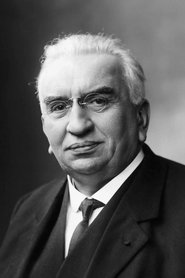
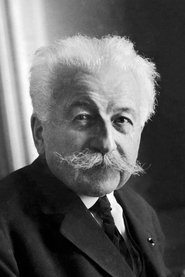
More from Louis Lumière
View all →



More about this film
About the production
Release date1895
ProductionSociété Lumière
Filmed inLyon, France
This film was shot in the Lumière family home or garden in Lyon using the Cinématographe device, which served as both camera and projector. The scene features actual family members, with Auguste Lumière holding his daughter Andrée, who was approximately one year old at the time of filming. The goldfish bowl was likely a common household item, selected for its visual interest and the natural interaction it would create. The film was shot in natural light, as artificial lighting was not yet practical for motion pictures. Like most early Lumière films, it was captured in a single take without any editing or special effects.
Themes
Childhood innocence and curiosityFamily bonds and paternal careThe universal experience of futile pursuitThe beauty of everyday momentsThe contrast between human effort and natural freedom
Themes & topics
babygoldfishfamilychildhoodinnocencedomestic scenefather-daughter relationshippersistencecuriosityeveryday life
Historical background
Fishing for Goldfish (1895) emerged during the earliest years of projected motion pictures, when exhibition habits and national film industries were still taking shape.
Why this film matters
Fishing for Goldfish remains accessible through digital archives, giving modern viewers a direct link to 1895 screen culture.
Making of
The creation of 'Fishing for Goldfish' exemplifies the Lumière brothers' philosophy of capturing 'life itself' through their invention. Louis Lumière, who directed most of the early films, likely set up the camera himself and may have coached his brother Auguste on how to position the baby for the best visual effect. The filming would have been a quick affair, as the early cameras were cumbersome and the film stock extremely limited. Family members often served as subjects in these early experiments, as they were readily available and comfortable with the new technology. The goldfish bowl was probably chosen for its reflective qualities and the contrast between the baby's small hands and the swimming fish. The entire family likely gathered to watch the filming, making it both a technical experiment and a family memory. The film was processed and developed by the Lumière factory workers, who were becoming increasingly skilled in the new art of motion picture development.
What critics said
Where contemporary reviews survive, Fishing for Goldfish is discussed in terms of audience appeal at release; later criticism often reframes it through archive restoration and festival programming.
Did you know?
- This film is one of the earliest examples of cinema featuring a child as the main subject, predating the concept of child actors in cinema.
- Andrée Lumière, the baby in the film, was the daughter of Auguste Lumière, making this a genuine family moment captured on film.
- The goldfish in the bowl were likely real, as the Lumière brothers prioritized authenticity in their actualités.
- This film was part of the first public screening of motion pictures by the Lumière brothers on December 28, 1895, at the Grand Café in Paris.
- The Cinématographe camera used to film this could only hold about 17 meters of film, limiting each shot to approximately 50 seconds.
- Unlike many early films that featured public scenes or workers, this was an intimate domestic setting, showing the Lumières' interest in all aspects of daily life.
- The film's simple concept of a baby trying to catch fish demonstrates the Lumière brothers' understanding of universal human experiences.
- This actualité was shown alongside other famous early films like 'Workers Leaving the Lumière Factory' and 'The Arrival of a Train' in that historic first screening.
- The baby's failed attempts to catch the fish created an early example of comic relief in cinema, though it was unintentional.
- The film was shot on 35mm film with an aspect ratio of approximately 1.33:1, which would become the standard for silent films.
Visual style
The cinematography of 'Fishing for Goldfish' represents the foundational techniques of early cinema. The film was shot using the Cinématographe with a fixed camera position, creating a single, uninterrupted perspective on the scene. The composition places the subjects centrally in the frame, with the fishbowl serving as the focal point of interest. Natural lighting illuminates the scene, creating soft shadows that add depth to the image. The camera was likely positioned at eye level with the standing adult, creating a natural viewpoint that makes viewers feel like observers of an intimate family moment. The limited depth of field characteristic of early cameras keeps the focus sharp on the main subjects while the background remains slightly soft. The frame rate of approximately 16 frames per second gives the motion a slightly staccato quality that is typical of films from this era. The visual simplicity of the shot demonstrates the Lumière brothers' philosophy that the camera should observe rather than intrude, setting a precedent for documentary filmmaking.
Memorable scenes
- The entire 45-second sequence of baby Andrée Lumière repeatedly reaching into the fishbowl while her father Auguste holds her, her tiny hands splashing in the water as the goldfish swim away from her grasp, creating a timeless image of childhood determination and parental patience.
What audiences thought
The first audiences to see 'Fishing for Goldfish' in 1895 were reportedly delighted and amused by the baby's antics. The sight of a real child moving on screen was a novelty that many found magical, and the universal theme of a child's innocent struggle resonated with viewers of all ages. Some early accounts mention audience members laughing at the baby's failed attempts to catch the fish, showing that even in these first films, humor was present. The film's domestic setting made it particularly relatable to middle-class audiences who could see aspects of their own family lives reflected on screen. Unlike some early films that shocked or frightened viewers (such as 'The Arrival of a Train'), this gentle scene was universally appealing. The film was so popular that it was included in the Lumière brothers' traveling exhibitions throughout Europe and eventually shown around the world, helping to establish cinema as a form of entertainment that could cross cultural boundaries.
Film connections
Influenced by
- Early photography
- Family portrait tradition
- The Lumière brothers' interest in capturing reality
- Victorian era fascination with childhood
- The tradition of genre painting depicting domestic scenes
This film influenced
- The Lumière brothers' subsequent family scenes
- Early child-centered films in cinema
- Documentary films focusing on everyday life
- Home movie tradition
- Modern 'slice of life' films
Film restoration
The film is preserved in the Lumière Institute archives in Lyon, France, and has been digitally restored as part of the Lumière brothers' complete works collection. It remains accessible to scholars and the public through various film archives and museum collections.
Where to watch
- The film is available on the Lumière Institute's official website
- Included in various collections of early cinema on DVD and Blu-ray
- Available through some streaming services specializing in classic films
- Can be viewed at film museums and archives that house Lumière brothers' works
- Often featured in retrospectives of early cinema at film festivals and special screenings