
Gavroche
"Learns, then consequences"
Keys: Space play/pause · ←/→ 10s · F fullscreen · M mute · </> speed
About this film
Learns that his father, who was exiled to hard labor, dies. Hatred of the tyrant-king leads the boy to the barricades of Montmartre.
Cast & crew
More Drama films
View all →






More from Tatyana Lukashevich
View all →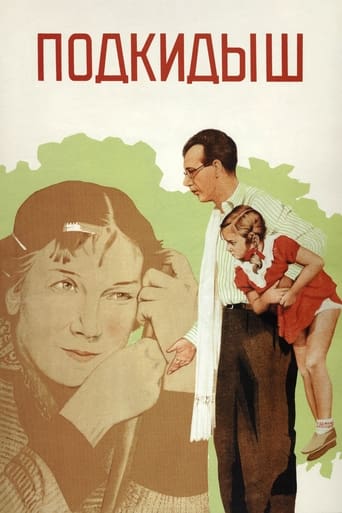
More about this film
About the production
Release date1937-10-20
ProductionMosfilm Studio
Filmed inMoscow, Soviet Union
The film was produced during Stalin's era and carefully adapted Victor Hugo's French revolutionary themes to align with Soviet ideology. Director Tatyana Lukashevich, one of the few prominent female directors of the time, had to navigate strict censorship while maintaining the revolutionary spirit of the source material. The production used elaborate set designs to recreate 19th-century Paris, with particular attention to the barricade sequences which required extensive construction and coordination.
Themes
RevolutionClass struggleYouthful idealismPolitical oppressionSacrifice
Themes & topics
ParisRevolutionBarricadesStreet childPolitical oppressionUprisingSacrificeTyrannyFreedomSocial injustice
Historical background
Gavroche reached screens around 1937, produced in its country of origin. Postwar distribution and sound standards shaped how it was marketed.
Why this film matters
Researchers cite Gavroche when tracing screen culture of its decade.
Making of
The production of 'Gavroche' faced numerous challenges during the politically charged atmosphere of Stalin's Great Purge. Director Tatyana Lukashevich had to carefully balance adapting Hugo's French revolutionary themes with Soviet ideological requirements. The casting of young Nikolay Smorchkov as Gavroche was considered risky due to his lack of experience, but his streetwise authenticity won over the producers. The elaborate barricade sets were designed by noted Soviet art director Vladimir Yegorov, who studied historical paintings and drawings to ensure accuracy. Filming was reportedly tense, with studio officials frequently visiting the set to ensure the film maintained proper ideological alignment. Several scenes had to be reshot after initial cuts were deemed insufficiently revolutionary in tone.
What critics said
Reviewers in 1937 weighed Gavroche on clarity, pacing, and audience response rather than prestige status. No single canonical review dominates later reference works for the title.
Did you know?
- This was one of the earliest Soviet adaptations of Victor Hugo's work, made during a period when foreign literature was viewed with suspicion by Soviet authorities.
- Director Tatyana Lukashevich was one of only a handful of women directing major studio films in the Soviet Union during the 1930s.
- The film's revolutionary themes were carefully framed to parallel Soviet revolutionary narratives, despite being set in France.
- Nikolay Smorchkov, who played Gavroche, was only 16 years old during filming and this was one of his first major roles.
- The barricade sequences required over 200 extras and took nearly three weeks to film.
- The film was briefly banned in 1939 during a period of increased cultural purges but was later reinstated.
- Original prints of the film featured tinted sequences during the barricade scenes, a technique rarely used in Soviet cinema of the era.
- The screenplay was adapted by playwright Alexander Korneichuk, who later became a prominent Soviet cultural official.
- Despite being set in Paris, the entire film was shot on soundstages in Moscow due to the political climate of the time.
- The film's musical score incorporated elements of French revolutionary songs adapted for Soviet audiences.
Awards & recognition
- Stalin Prize, Second Class (1938)
Visual style
The film's cinematography, handled by Yuri Rozkov, employed dramatic lighting techniques characteristic of Soviet socialist realism. The barricade sequences featured dynamic camera movements and low-angle shots to emphasize the revolutionary struggle. Interior scenes used chiaroscuro lighting to create dramatic tension, while exterior shots employed wide angles to establish the scale of the Paris setting. The film made effective use of close-ups during emotional moments, particularly in scenes featuring young Gavroche.
Innovations
The film was notable for its sophisticated set construction, particularly the elaborate barricade sequences which required innovative building techniques to ensure both authenticity and safety for performers. The production used advanced matte painting techniques for background scenes, a relatively new technology in Soviet cinema at the time. The film also experimented with sound recording techniques to capture the complex audio of battle sequences and crowd scenes.
Music
The musical score was composed by Lev Shvarts, who incorporated elements of French revolutionary songs adapted for Soviet sensibilities. The soundtrack featured orchestral arrangements that emphasized the dramatic and emotional aspects of the story. During the barricade sequences, the music swelled with revolutionary fervor, using brass and percussion to create a sense of urgency. The film's musical themes were later published as a suite and performed by Soviet orchestras.
Famous quotes
The blood of martyrs waters the soil of freedom!
When the people rise, no tyrant can stand!
Even a child can carry the torch of revolution!
Better to die standing than to live kneeling!
Memorable scenes
- The barricade construction sequence showing Parisians uniting against oppression
- Gavroche's emotional monologue about his father's death in the labor camp
- The final stand at the barricades where Gavroche makes his ultimate sacrifice
- The opening scenes depicting life in the Parisian slums
What audiences thought
The film was popular with Soviet audiences upon its release, particularly appealing to younger viewers who identified with Gavroche's rebellious spirit. Many viewers appreciated the film's action sequences and emotional intensity, despite its historical setting. The character of Gavroche became particularly beloved, with the film helping to establish Nikolay Smorchkov as a rising star in Soviet cinema. Audience turnout was strong in major cities, and the film was frequently shown in schools and youth organizations as an educational tool about revolutionary ideals.
Film connections
Influenced by
- Les Misérables by Victor Hugo
- Soviet socialist realist cinema
- French revolutionary literature
- Earlier Soviet revolutionary films
This film influenced
- Later Soviet films about revolutionary youth
- Soviet adaptations of Western literature
- Post-war Soviet historical dramas
Film restoration
The film has been preserved in the Gosfilmofond archive in Russia. Several restoration projects have been undertaken, with the most recent digital restoration completed in 2015. Original nitrate prints still exist in the archive, though they are carefully stored under controlled conditions. The film is considered part of Russia's cinematic heritage and is regularly screened at film retrospectives and classic cinema festivals.
Where to watch
- Available on Soviet film streaming platforms
- Screened occasionally at classic film festivals
- Accessible through Russian cinema archives
- Available on some specialty streaming services for classic films