

Glen or Glenda
"A psychiatrist narrates stories of cross-dressing and gender surgery."
Keys: Space play/pause · ←/→ 10s · F fullscreen · M mute · </> speed
About this film
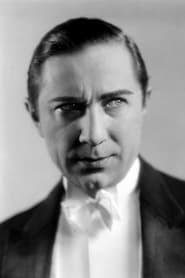
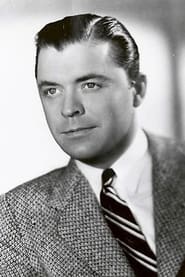
A psychiatrist tells two stories: one of a trans woman, the other of a pseudohermaphrodite. Glen or Glenda (1953) American independent exploitation film directed, written by and starring Ed Wood (credited in his starring role as "Daniel Davis"), and featuring Wood's then-girlfriend Dolores Fuller and Bela Lugosi. It was produced by George Weiss who also made the exploitation film Test Tube Babies that same year.
Cast & crew
More films like this

More Drama films
View all →







More from Edward D. Wood Jr.
View all →
More about this film
About the production
Release dateFebruary 15, 1953
Budget$61,000
Box officeUnknown (likely minimal)
ProductionScreen Guild Productions, Edward D. Wood Jr. Productions
Filmed inLos Angeles, California, Sullivan Studios, Hollywood
The film was originally conceived as a quick exploitation picture to capitalize on the Christine Jorgensen story, but Ed Wood expanded it into a semi-autobiographical work about his own transvestism. The production was notoriously chaotic, with Wood filming scenes without permits, using borrowed equipment, and employing friends and acquaintances as crew. The film was shot in approximately 4-5 days on a shoestring budget, with many scenes filmed in Wood's apartment. Lugosi's scenes were reportedly filmed in a single day for $1,000, and he appears to have been heavily intoxicated during filming.
Themes
Gender identitySocial conformitySelf-acceptanceThe nature of masculinity and femininitySocietal pressure and control
Themes & topics
transvestitegender identitypsychiatristcross-dressinggender confirmation surgeryexploitation filmpseudohermaphroditedream sequencenarrationbizarrecult filmLGBTQ+1950spropagandasocial issues
Historical background
Released in 1953 during the postwar studio era, Glen or Glenda reached audiences when exhibitors were still defining programming conventions. The narrative hook—A psychiatrist tells two stories: one of a trans woman, the other of a…—reflects what contemporary producers thought would draw viewers.
Why this film matters
Glen or Glenda remains discussed by archivists tracing how screen stories of its period represented work, desire, conflict, and social order. Its central situation—A psychiatrist tells two stories: one of a trans woman, the other of a…—still prompts questions about genre conventions and audience expectations.
Making of
The making of 'Glen or Glenda' was as unconventional as the film itself. Producer George Weiss approached Ed Wood to direct an exploitation film about Christine Jorgensen, one of the first people to undergo gender confirmation surgery. However, Wood, who was secretly a transvestite, saw this as an opportunity to tell his own story. He wrote the script in a feverish three-day session, expanding beyond the Jorgensen story to include his personal experiences. The production was extremely low-budget, with Wood filming in borrowed spaces and using friends as crew. Bela Lugosi, by then struggling with drug addiction, was hired for a day's work to add marquee value. His scenes, featuring nonsensical monologues about 'pulling strings' and 'beads of sweat,' were completely disconnected from the main narrative but became the film's most memorable elements. Dolores Fuller, Wood's girlfriend at the time, played Barbara without knowing about Wood's transvestism, leading to tension when she discovered the truth during filming. The film was completed in just five days of principal photography, with Wood employing every trick in the book to stretch his meager budget, including extensive use of stock footage and public domain material.
What critics said
Trade and newspaper notices for Glen or Glenda generally emphasized casting, spectacle, and program fit rather than extended aesthetic argument. Retrospective screenings and archival notes continue to shape how viewers evaluate Glen or Glenda today.
Did you know?
- Ed Wood wrote the script in three days and starred in the film under the pseudonym 'Daniel Davis' to avoid embarrassment
- The film was originally titled 'I Changed My Sex!' and later 'I Led 2 Lives' before becoming 'Glen or Glenda'
- Bela Lugosi's role as 'The Scientist' has no connection to the main plot and was added purely to exploit Lugosi's name recognition
- The film was financed by producer George Weiss, who wanted a quick exploitation film about Christine Jorgensen, but Wood delivered a personal, semi-autobiographical work instead
- The 'pulling string' imagery throughout the film was Wood's metaphor for how people are manipulated by society
- Wood's real-life girlfriend Dolores Fuller played Barbara, Glen's fiancée, without knowing Wood was a transvestite when she accepted the role
- The film features bizarre dream sequences including one with Satan and women in lingerie being tortured by devils
- The narration was recorded in a single take by Wood, who spoke too fast and had to be slowed down in post-production
- The film includes stock footage from various sources, including nuclear explosions and car crashes, to pad its running time
- Despite its subject matter, the film passed the Hays Code because it ultimately portrayed cross-dressing as a psychological problem that could be 'cured'
- Wood claimed the film was based on his own experiences as a transvestite who served in World War II wearing women's underwear under his uniform
Visual style
The cinematography by William C. Thompson (who worked on many of Wood's films) is characterized by its primitive technical quality but surprisingly ambitious visual style. The film employs a mix of conventional narrative sequences, documentary-style interviews, and surreal dream sequences with wildly different visual approaches. Thompson uses dramatic low-angle shots for Lugosi's monologues, creating an atmosphere of bizarre authority. The dream sequences feature expressionistic lighting and strange compositions, including the famous image of Lugosi surrounded by bubbling beakers and electrical equipment. The film makes extensive use of stock footage, often jarringly inserted without regard for continuity or visual consistency. Despite the technical limitations, Wood and Thompson attempted to create visual metaphors for gender confusion through distorted perspectives and unconventional framing. The film's most memorable visual motif involves strings and puppets, representing societal control over individual identity.
Innovations
While 'Glen or Glenda' is hardly known for its technical excellence, it does feature some innovative editing techniques for its time. Wood employed jump cuts and abrupt transitions between different narrative styles, creating a disorienting effect that actually serves the film's exploration of gender confusion. The film's use of multiple narrative perspectives - the psychiatrist's narration, Glen's story, Alan/Anne's story, and Lugosi's abstract monologues - was structurally ambitious for a low-budget exploitation film. Wood also experimented with superimposition and visual effects during the dream sequences, creating layered images that, while crude, effectively convey psychological distress. The film's most technically innovative aspect is its blending of documentary and fiction techniques, using interviews and direct-to-camera narration alongside traditional dramatic scenes. While these techniques were often poorly executed due to budget constraints, they demonstrate Wood's willingness to push formal boundaries in service of his personal vision.
Music
The film's music was composed by Gerald Fried, who would later become known for his work on 'The Man from U.N.C.L.E.' and 'Star Trek.' The score is a bizarre mixture of dramatic orchestral pieces, library music, and seemingly random musical cues that often don't match the on-screen action. The soundtrack prominently features a theremin, giving the film an eerie, science-fiction quality that contrasts strangely with its domestic drama elements. During Lugosi's scenes, the music becomes particularly dramatic and overwrought, emphasizing the character's mysterious nature. The film also makes extensive use of stock sound effects, including incongruous sounds of thunder, explosions, and animal noises during key dramatic moments. The narration, delivered by Wood himself, was recorded at such a fast pace that it had to be artificially slowed down in post-production, giving it an unnaturally deep and ponderous quality that has become one of the film's most distinctive features.
Famous quotes
Pull the strings! Pull the strings! - Bela Lugosi as The Scientist
Bevare of the big green dragon that sits on your doorstep. He eats little boys. - Bela Lugosi as The Scientist
Do you like this? Do you like this world of make-believe? - Narrator
I have to confess something... I'm a transvestite. - Glen/Glenda
Nature makes mistakes. It's part of the plan. - Dr. Alton
Give yourself over to absolute pleasure. Swim the warm waters of sins of the flesh. - Narrator (paraphrased in various adaptations)
Your world is full of strange people. - Bela Lugosi as The Scientist
The Devil is not always so black as he is painted. - Narrator
Memorable scenes
- The opening scene with Bela Lugosi as The Scientist, surrounded by bubbling beakers and delivering cryptic monologues about pulling strings
- Glen's nightmare sequence featuring Satan, women in lingerie, and bizarre torture devices
- The scene where Glen tries on women's clothing for the first time, accompanied by dramatic narration
- The wedding scene where Glen struggles with whether to reveal his secret to Barbara
- The stock footage montage of nuclear explosions and car crashes used to represent Glen's internal turmoil
- The final scene where Lugosi dramatically delivers his 'bevare of the big green dragon' line
- The documentary-style interviews with 'real' transvestites and cross-dressers
- The scene where Alan transforms into Anne through crude special effects
What audiences thought
Contemporary audiences in 1953 largely rejected or ignored 'Glen or Glenda,' with the film failing to find its intended audience of exploitation film patrons. Many viewers were confused by its mixture of documentary-style narration, dramatic sequences, and surreal dream sequences. The film's subject matter was considered so taboo that it played primarily in grindhouse theaters and was often advertised under different titles to attract unsuspecting viewers. Over time, however, the film has developed a devoted cult following among fans of bad cinema, LGBTQ+ audiences, and Ed Wood enthusiasts. Midnight screenings in the 1970s and 1980s helped establish its reputation as a 'so bad it's good' masterpiece. Modern audiences often approach the film with a mix of amusement and admiration for its earnestness, with many finding Wood's personal investment in the material deeply moving despite the film's technical flaws.
Film connections
Influenced by
- Christine Jorgensen's story
- Freudian psychology
- Exploitation cinema conventions
- Film noir visual style
- German Expressionism
- Documentary filmmaking techniques
This film influenced
- The Rocky Horror Picture Show
- The Adventures of Priscilla, Queen of the Desert
- Hedwig and the Angry Inch
- The Crying Game
- Boys Don't Cry
- Transamerica
- The Danish Girl
Film restoration
The film has been preserved through various home video releases and is part of the public domain. Multiple versions exist, with different running times and slightly different content. The best quality version available is the restored version released by The Film Detective in 2017, which was scanned from the best surviving elements. The film has been included in several Ed Wood box sets and is widely available on streaming platforms. While the original camera negative is believed to be lost, several 35mm prints have been preserved in film archives, including at the UCLA Film and Television Archive. The film's public domain status has actually helped ensure its survival and availability, though this has also resulted in numerous poor quality releases.
Where to watch
- Amazon Prime Video
- YouTube (public domain versions)
- Tubi
- The Criterion Channel (occasionally)
- Various DVD and Blu-ray collections
- Internet Archive
- Shout Factory TV
- Pluto TV