
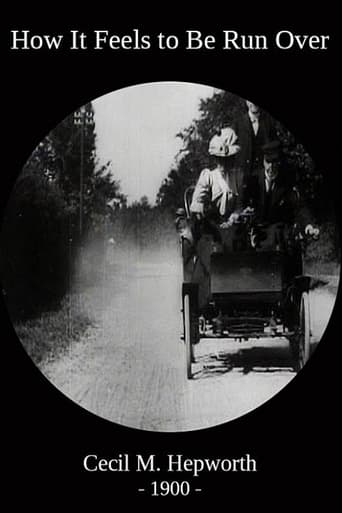
How to Stop a Motor Car
"A policeman is run over by an automobile."
Keys: Space play/pause · ←/→ 10s · F fullscreen · M mute · </> speed
About this film
A policeman is run over by an automobile
Cast & crew
More films like this
More Comedy films
View all →







More from Percy Stow
View all →
More about this film
About the production
Release date1902
ProductionHepworth Manufacturing Company
Filmed inWalton-on-Thames, Surrey, England
Produced during the early days of British cinema at Hepworth's studio in Walton-on-Thames. The film was created using basic single-camera techniques typical of the era, with minimal editing and reliance on physical comedy. The automobile featured would have been a relatively rare sight in 1902, adding to the film's novelty for contemporary audiences. The production likely required careful coordination to safely stage the stunt of the actor being run over by the vehicle.
Themes
Technology versus traditionAuthority challenged by modernityPhysical comedy and slapstick humorSocial anxiety about industrial progressHuman vulnerability in the face of machines
Themes & topics
Historical background
Viewers in 1902 encountered How to Stop a Motor Car alongside competing releases that were collectively teaching new cinematic grammar.
Why this film matters
Historians treat How to Stop a Motor Car as evidence of what typical 1902 audiences could see in a program slot.
Making of
The making of 'How to Stop a Motor Car' took place during the formative years of cinema when the Hepworth Manufacturing Company was establishing itself as a leader in British film production. Percy Stow, who directed this short, was a key figure in the development of narrative cinema in Britain. The filming would have required careful choreography to safely execute the central gag of the policeman being run over by the automobile. The car itself would have been a prop of significant value and rarity in 1902 England. Cecil Hepworth, who appears in the film, was not only performing but also overseeing production as head of the studio. The film was likely shot outdoors to accommodate the automobile, using natural lighting as artificial lighting equipment was still primitive. The simple premise reflects the straightforward storytelling approach of early cinema, where visual gags could be quickly understood by international audiences without the need for intertitles or complex narrative development.
What critics said
Audience data from 1902 is sparse; reception for How to Stop a Motor Car is inferred from reissue and archival interest.
Did you know?
- This film was made when automobiles were still a novelty and somewhat feared by the British public, making the car's dominance over the policeman particularly humorous to audiences of the time
- The Hepworth Manufacturing Company was one of Britain's most important early film studios, founded by Cecil Hepworth in 1899
- Director Percy Stow was one of Hepworth's key collaborators and would later direct the 1903 version of 'Alice in Wonderland'
- The film's title suggests it may have been part of a series of 'how-to' parody films popular in early cinema
- Cecil M. Hepworth who appears in the film was not only an actor but also the studio owner and a pioneer of British cinema
- At only one minute long, this film was typical of the very short format of early cinema before feature-length films became common
- The stunt of being run over by a car would have been particularly impressive and potentially dangerous in 1902 when automobile safety features were virtually non-existent
- The film reflects contemporary anxieties about new technology while simultaneously mocking traditional authority figures
- This type of physical comedy would become a staple of silent film comedy throughout the next two decades
- The film survives today as an important example of early British comedy and the development of cinematic language
Visual style
The cinematography of 'How to Stop a Motor Car' reflects the technical limitations and conventions of early cinema. The film was likely shot on 35mm black and white film using a hand-cranked camera, resulting in the slightly erratic frame rates characteristic of the era. The camera position would have been stationary, capturing the action from a single perspective as was typical of films from this period. Natural outdoor lighting was employed, creating high contrast images that emphasized the physical action. The composition would have been simple and direct, ensuring the gag was clearly visible to audiences. No camera movement or complex angles were used, as such techniques had not yet been developed. The film's visual style prioritized clarity and immediate comprehension of the action over aesthetic considerations, reflecting the functional approach to cinematography in cinema's first decade.
Innovations
While 'How to Stop a Motor Car' does not feature major technical innovations, it demonstrates the developing craft of early filmmaking. The successful execution of the central stunt required careful timing and coordination between the performers and camera operator. The film represents an early example of narrative continuity, with a clear beginning, middle, and end that tells a complete story despite its brevity. The use of an actual automobile as a central prop was notable for 1902, given the rarity and expense of such vehicles. The film's survival itself represents a technical achievement in film preservation, as many works from this period have been lost due to the unstable nature of early film stock. The production showcases the growing sophistication of British filmmakers in creating engaging narrative content within the technical constraints of the era.
Music
As a silent film, 'How to Stop a Motor Car' had no synchronized soundtrack. During its original exhibition, the film would have been accompanied by live music, typically provided by a pianist or small orchestra in the theater. The musical accompaniment would have been improvised or selected from existing classical pieces, with lively, comedic music chosen to match the on-screen action. Some theaters might have used sound effects created mechanically or vocally to enhance the comedy, such as honking sounds for the automobile or exaggerated crash noises. The choice of music would have been crucial in establishing the comedic tone and helping audiences interpret the visual gags. Modern screenings of restored silent films typically feature newly composed scores or carefully selected period-appropriate music.
Famous quotes
No dialogue - silent film
Memorable scenes
- The central sequence where the policeman attempts to stop the approaching automobile with authoritative gestures, only to be dramatically run over and emerge from beneath the vehicle in a dazed but comically unharmed state, perfectly encapsulating early cinema's approach to physical comedy and technological anxiety.
What audiences thought
Edwardian audiences would have found 'How to Stop a Motor Car' highly entertaining due to its combination of novelty and humor. The sight of an automobile was still rare enough to be fascinating, while the comedic premise of a policeman being defeated by modern technology would have resonated with viewers experiencing similar disruptions in their daily lives. The physical comedy would have been easily understood by diverse audiences regardless of language or education level, making it suitable for the varied crowds that attended early cinema screenings. The film's short length made it ideal for the variety-style programs typical of early cinema, where multiple shorts were shown in succession. Contemporary viewers likely appreciated the spectacle of the stunt work involved in safely staging the policeman being run over by the car, as such effects were still impressive to early cinema audiences.
Film connections
Influenced by
- Early Lumière comedies
- Georges Méliès' trick films
- Music hall comedy traditions
- Slapstick theater performances
This film influenced
- Later Keystone comedies featuring police
- Charlie Chaplin's 'Easy Street' (1917)
- Buster Keaton's 'The Goat' (1921)
- Harold Lloyd's automobile comedies
Film restoration
The film survives in film archives, though its exact preservation status and viewing quality may vary. As with many films from this era, it exists as an important historical document of early British cinema. The British Film Institute and other film archives maintain collections of early Hepworth productions, though some may exist only in fragmentary or deteriorated condition. The film's survival is notable given the high loss rate of films from the silent era, particularly British productions of the 1900s.
Where to watch
- British Film Institute collections
- Academic film archives
- Specialized early cinema DVD compilations
- Online film archive platforms specializing in silent cinema
- Museum exhibitions on early cinema history