Hurdy Gurdy
", which is animated by Rollin Hamilton, Bill Nolan and Tom Palmer, features Oswald the L"
Keys: Space play/pause · ←/→ 10s · F fullscreen · M mute · </> speed
About this film
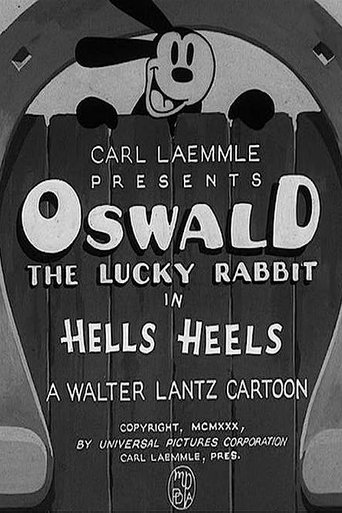
, which is animated by Rollin Hamilton, Bill Nolan and Tom Palmer, features Oswald the Lucky Rabbit, who is substituted for the organ grinder's dancer, after the original one is comically swallowed up by Oswald's bubblegum. Copyrighted on January 3, 1930, but released on November 24 the year prior, the film was released by Universal Pictures. Thus, the film is part of the Universal series of Oswald The Lucky Rabbit films.
Cast & crew
More films like this
More Animation films
View all →


More from Walter Lantz
View all →
More about this film
About the production
Release date1929
ProductionWalt Lantz Productions, Universal Pictures
Filmed inUniversal Studios, Hollywood, California, USA
This is an early Walter Lantz Oswald the Lucky Rabbit short from the late silent era, produced during the period when Lantz was steadily shaping his own style with the character after taking over the series from earlier Disney involvement. As with most animated shorts of the period, it was created as a hand-drawn cartoon rather than a live-action production, and precise budget records have not survived in standard reference sources. The film reflects the transitional late-1920s cartoon aesthetic: brisk pacing, broad slapstick, and gags built around popular street entertainment culture such as organ grinders and animal sidekicks. Surviving documentation on the production is limited, and details such as exact crew credits beyond Lantz are not consistently preserved in accessible sources.
Themes
Performance and improvisationSlapstick chaosSubstitution and role reversalStreet entertainment cultureAnimal-comedy traditions
Themes & topics
Oswald the Lucky RabbitPeteorgan grindermonkeygum gagslapstickstreet performancevaudeville humor
Historical background
Hurdy Gurdy (1929) circulated in the silent era. The film, which is animated by Rollin Hamilton, Bill Nolan and Tom Palmer, features Oswald the Lucky Rabbit, who is substituted for the organ grinder's dancer, after the original one is comically swallowed up by Oswald's bubblegum. Contemporary trade papers and later preservation notes document its place among nickelodeon and cinema-club programs.
Why this film matters
Hurdy Gurdy remains accessible to researchers and viewers as a animated short in museum, archive, and streaming collections. Programmers cite it when tracing regional production history and surviving early prints.
Making of
Hurdy Gurdy was produced during a formative period for Walter Lantz, when he was helping define the visual and comic identity of the Oswald series after the character had already been established in the late 1920s. The short was made with the efficient, gag-driven workflow typical of early animation studios, where a compact premise could be built into a complete reel through a chain of visual jokes. Production records for individual late-silent Oswald shorts are often fragmentary, so many behind-the-scenes details such as staffing, animation breakdowns, and exact production dates are not widely documented. Even so, the film clearly reflects the studio’s emphasis on appealing caricature, elastic motion, and a fast comic payoff designed for theatrical program fillers.
What critics said
Day-one reviews for Hurdy Gurdy are sparse in digitized press archives; later criticism treats it as a reference point for 1929 cinema programming and preservation.
Did you know?
- This short features Oswald the Lucky Rabbit during Walter Lantz’s early stewardship of the character, before Oswald became more standardized in the sound-cartoon era.
- The film’s title refers to the hurdy-gurdy, a hand-cranked street organ commonly associated with buskers and organ grinders in early 20th-century popular culture.
- The plot premise is built around a classic silent-comedy device: one character being forced to substitute for an animal or prop in a performance routine.
- Because it was made in 1929, the cartoon sits right at the transition from silent-era animation to synchronized sound cartoons, even though many surviving references list it as part of the silent Oswald output.
- Like many early Oswald cartoons, it survives mainly through film archives and catalog references rather than through abundant contemporary advertising material.
- The cartoon demonstrates the loose, rubbery visual humor associated with early studio animation, where characters can be repurposed instantly for a gag.
- Walter Lantz would later become especially enduring figures in American animation, best known for Woody Woodpecker, making this short an early part of his long career.
- The film’s gag structure echoes vaudeville and street-performance humor that was still very familiar to audiences in the late 1920s.
- Pete, a recurring antagonist figure in Oswald cartoons, appears here as the organ grinder, continuing the series’ use of recognizable comic-stock characters.
- This short is part of the extensive Oswald filmography that has become important to animation historians studying the development of studio cartoon conventions.
Visual style
As an animated short, Hurdy Gurdy does not have cinematography in the live-action sense, but its visual style is characteristic of late-1920s hand-drawn cartoon production. The film likely uses simple backgrounds, broad character silhouettes, and highly elastic motion to maximize the clarity of the gag. Early Oswald cartoons often favored direct staging and readable action, with the camera effectively fixed while the animated figures supply movement and comic energy. The emphasis is on timing, pose-to-pose exaggeration, and visual escalation rather than intricate camera movement or complex layout design.
Innovations
The film’s main technical significance lies in its use of early studio animation techniques to stage fast, physically impossible comic action with clear visual storytelling. It demonstrates the mature silent-cartoon language of the late 1920s: simplified motion, elastic transformation gags, and strong character readability. The film is also representative of the efficient production methods used in short-subject animation at the time, where a compact narrative premise could be built entirely around one central gag and its variations. While it does not appear to introduce a major technical innovation, it is an example of the polished, industrialized cartoon craft that would soon be adapted to synchronized sound.
Music
No reliably documented original synchronized soundtrack information is consistently available for this title in standard reference sources. As a 1929 Walter Lantz cartoon, it may have circulated in a silent or partially synchronized context depending on venue and release circumstances, and contemporary accompaniment would often have been provided by theater musicians. The title itself suggests a music-centered premise, but specific score attribution has not been securely established in widely available references. If any original cue sheet existed, it is not commonly cited in the surviving filmography materials consulted for this short.
Memorable scenes
- Pete’s organ-grinder routine collapsing into chaos when Oswald’s gum gets tangled in the monkey’s fur, setting off the film’s central chain of gags.
- Pete’s comic decision to use Oswald himself as a substitute for the monkey, turning the rabbit into the unwilling centerpiece of the performance.
What audiences thought
Specific audience-response records for the short are not readily available, but cartoons in the Oswald series were generally designed for broad theatrical audiences and family viewers attending short-subject programs. The film’s humor is accessible and visual, relying on situational comedy, exaggerated animation, and a simple comedic premise that would have played well in theaters. Because it was a short subject, its success would have been measured less by standalone box-office performance and more by how effectively it supported the overall entertainment program. Its continued inclusion in Oswald filmographies suggests that it has remained of interest to collectors and animation fans, even if it was never widely known entries in the series.
Film connections
Influenced by
- Silent slapstick comedy
- Vaudeville performance routines
- Early American newspaper comic-strip humor
- Street-organ and busker imagery in popular entertainment
This film influenced
- Later Walter Lantz Oswald cartoons
- Subsequent studio cartoons built around role-reversal gags
- Early animated shorts featuring performance-based slapstick
Film restoration
The film is preserved in archival form and is known through surviving references and catalog records; it is not generally regarded as a lost film.
Where to watch
- Archive screenings and film preservation collections
- Public-domain or archival copies on video-sharing platforms when available
- Specialty animation collections and classic cartoon releases if included in curated Oswald sets