
Joan of Arc
"divinely inspired peasant woman becomes an army captain for"
Keys: Space play/pause · ←/→ 10s · F fullscreen · M mute · </> speed
About this film
A divinely inspired peasant woman becomes an army captain for France and then is martyred after she is captured.
Cast & crew
More films like this
More Drama films
View all →







More from Georges Méliès
View all →
More about this film
About the production
Release date1900
Box officeUnknown - box office records from 1900 are not reliably preserved
ProductionStar Film Company (Georges Méliès)
Filmed inMontreuil, Seine-Saint-Denis, France (Méliès' studio)
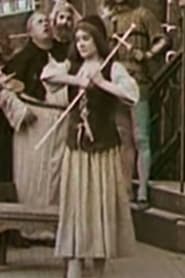
Filmed entirely in Méliès's glass-walled studio in Montreuil using his signature theatrical sets and painted backdrops. The picture employed multiple camera tricks and substitution splices to create supernatural effects representing Joan's visions. Méliès used his typical cast of regular performers from the Théâtre Robert-Houdin, with himself appearing in the production. The staging was highly theatrical, reflecting Méliès's background as a stage magician, with actors performing in exaggerated gestures suitable for silent film audiences of the era.
Themes
Divine interventionMartyrdomNationalismFaith versus doubtFemale leadership
Themes & topics
medieval Francehundred years wardivine visionsmilitary leadershiptrialheresyburning at stakesaintmartyrpeasant girl
Historical background
By 1900, Star Film Company (Georges Méliès) was supplying France theaters with titles like Joan of Arc, part of the broader expansion of filmed entertainment into working-class districts and small towns.
Why this film matters
Programmers and historians revisit Joan of Arc (1900) because its story—a divinely inspired peasant woman becomes an army captain for france and then is martyred after she is captured—illustrates popular narrative habits and production norms of the period.
Making of
The production took place entirely in Méliès's innovative glass studio in Montreuil, which allowed him to control lighting and weather conditions. Méliès employed his extensive experience as a stage magician to create visual effects representing Joan's divine visions, using techniques such as multiple exposure, substitution splices, and pyrotechnics. The cast consisted largely of regular performers from Méliès's Théâtre Robert-Houdin, who were accustomed to his theatrical style of performance. The elaborate costumes and sets were designed to evoke medieval France while remaining practical for the technical requirements of early filmmaking. Méliès's approach to directing involved precise blocking and timing to accommodate the primitive camera equipment and the need for clear visual storytelling without dialogue.
What critics said
English-language trade reviews of Joan of Arc are limited for 1900. Where notices survive, they stress pacing and photographic clarity; later criticism values the title as archival evidence of studio style.
Did you know?
- This was one of Méliès's longer narrative films, reflecting his ambition to create more substantial dramatic works beyond his famous trick films
- Méliès himself appears in the picture, continuing his practice of acting in many of his own productions
- the picture was released during the peak of Méliès's creative period, when he was producing his most ambitious works
- Joan of Arc was a popular subject in early cinema, with multiple versions produced in the 1890s and 1900s
- the picture was distributed by Méliès's Star Film Company and exported internationally with catalog numbers for different markets
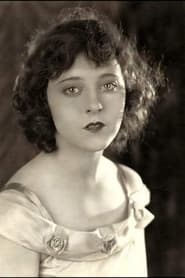
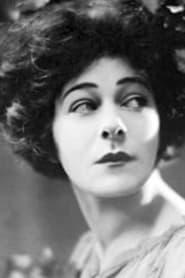
- Méliès's wife Jehanne d'Alcy, who appears in the cast, was one of cinema's first film actresses and later became Méliès's second wife
- the picture used elaborate painted backdrops and theatrical sets typical of Méliès's style, creating a stylized medieval world
- Like many of Méliès's films, it was hand-colored in some releases, a laborious process done frame by frame
- the picture represents Méliès's attempt to blend his signature special effects with serious historical drama
- 1900 was the year of the Paris Exposition, where Méliès exhibited many of his films to international audiences
Visual style
The cinematography reflects Méliès's theatrical approach, with a static camera positioned to capture the entire stage-like set, similar to a theater audience's view. The camera work is straightforward and functional, serving primarily to document the staged action rather than creating dynamic visual movement. Méliès used the camera as a tool for his special effects, employing techniques such as multiple exposure and substitution splices to create supernatural elements. The visual composition emphasizes clarity and legibility, ensuring that audiences could follow the narrative despite the absence of dialogue. The black and white photography was sometimes enhanced with hand-coloring in select releases, adding visual richness to key scenes.
Innovations
the picture Méliès's pioneering special effects techniques, including multiple exposure to create ghostly visions representing Joan's divine inspiration. He employed substitution splices for magical appearances and disappearances, a technique he perfected through his background in stage magic. The production used elaborate mechanical sets and pyrotechnics for dramatic effect, particularly in the battle scenes and Joan's martyrdom. Méliès's glass studio construction allowed for controlled lighting essential to these effects. the picture represents an early example of narrative continuity in cinema, with multiple scenes connected to tell a complete story, advancing beyond the single-scene format common in earliest films.
Music
As a silent film, Joan of Arc would have been accompanied by live musical performance during screenings. The typical accompaniment would have consisted of a pianist or small ensemble playing appropriate music to match the picture's dramatic and religious themes. The musical selections likely included popular classical pieces, hymns, and improvisations that enhanced the emotional impact of key scenes. No original score was composed specifically for the picture, as was common practice in early cinema. The music would have varied by theater and performer, with each venue providing its own interpretation of suitable accompaniment.
Famous quotes
As a silent film, dialogue was conveyed through intertitles and performance rather than spoken quotes
Memorable scenes
- Joan receiving her divine visions through Méliès's special effects techniques
- The coronation of the Dauphin with elaborate theatrical staging
- Battle sequences using miniature effects and pyrotechnics
- The trial scene with dramatic theatrical gestures
- The martyrdom scene with burning effects representing Joan's death
What audiences thought
Early 1900s audiences would have been drawn to the picture's combination of familiar historical subject matter and Méliès's signature visual spectacle. The story of Joan of Arc was well-known to French viewers and would have provided a narrative framework that helped audiences understand the new medium of cinema. the picture's theatrical presentation style, with exaggerated gestures and clear visual storytelling, was well-suited to audiences still learning how to 'read' movies. Like many of Méliès's productions, it likely performed well both in France and in export markets, where his films were popular for their visual inventiveness.
Film connections
Influenced by
- Medieval hagiography
- Stage adaptations of Joan of Arc story
- Classical French theater
- Religious iconography
- Romantic literature
This film influenced
- The Passion of Joan of Arc (1928)
- Joan of Arc (1948)
- Later historical epics
- Religious biographical films
Film restoration
the picture is partially preserved with some scenes surviving in various film archives. Like many of Méliès's works, complete copies are rare due to the deterioration of nitrate film stock and Méliès's own destruction of his negatives after financial difficulties. Surviving fragments are held by archives including the Cinémathèque Française and other international film preservation institutions. Some versions exist only in truncated form or as poor-quality copies. the picture has been included in various Méliès retrospectives and collections of early cinema.
Where to watch
- Available in various Méliès compilation collections from Criterion and other specialty distributors
- Screenings at film archives and cinematheques specializing in early cinema
- Some versions may be accessible through academic film databases
- Included in online collections of early cinema such as the Internet Archive
- Occasionally broadcast on specialty channels focusing on film history