
Liberty
"Pants switched, freedom complicated"
Keys: Space play/pause · ←/→ 10s · F fullscreen · M mute · </> speed
About this film
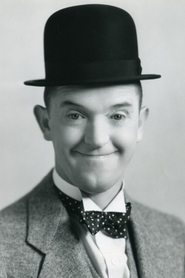
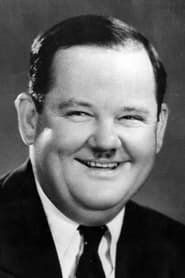
Escaped convicts Stan Laurel and Oliver Hardy pull off each other's trousers by mistake and spend the short trying to swap pants without being caught. Leo McCarey supervised this 1929 Hal Roach talkie that turns wardrobe confusion into sustained slapstick.
Cast & crew
More films like this
More Comedy films
View all →







More from Leo McCarey
View all →

More about this film
About the production
Release dateJanuary 26, 1929
ProductionHal Roach Studios, Metro-Goldwyn-Mayer (distributor)
Filmed inHal Roach Studios, Culver City, California
Liberty was one of Laurel & Hardy's early transitional films during the shift from silent to sound cinema. While primarily a silent film with synchronized music and sound effects, it was released during the period when studios were experimenting with sound technology. The famous high-rise sequence was achieved through clever set construction and camera angles, with the performers actually working on girders several feet off the studio floor, not the hundreds of feet the film suggests. Director Leo McCarey, who was instrumental in developing the Laurel & Hardy team dynamic, pushed the duo to expand their physical comedy to incorporate more dangerous stunts and contemporary urban settings.
Themes
Identity confusionUrban chaosThe comedy of desperationMale friendship and loyaltyModernization and progress
Themes & topics
mistaken identitypantsconstruction sitehigh-riseescaped convictsphysical comedyurban settingwardrobe malfunctiondangerous heightsslapstick
Historical background
Liberty was among Laurel and Hardy's early sound shorts, preserving their silent physical timing with audible gags. Roach released it through MGM as part of the All-Stars series.
Why this film matters
Liberty holds a special place in cinema history as one of the definitive Laurel & Hardy comedies that helped establish their enduring legacy. The film exemplifies their unique ability to transform a simple premise into increasingly elaborate physical comedy, a formula that would influence countless comedy duos in subsequent decades. The high-rise sequence has been referenced and homaged in numerous films and television shows, demonstrating its lasting impact on visual comedy. Liberty also represents an important transitional work in the evolution of film comedy, bridging the gap between silent era slapstick and sound-era comedy. The film's preservation and continued availability has allowed new generations to discover Laurel & Hardy's work, maintaining their cultural relevance nearly a century after its release. The pants-exchange scenario has become a classic comedy trope that continues to appear in various forms in contemporary comedy.
Making of
The production of Liberty showcased Hal Roach Studios' commitment to pushing the boundaries of comedy during the early sound era. Director Leo McCarey, who had been working with Laurel & Hardy since their teaming in 1927, encouraged the duo to develop more elaborate physical comedy sequences that would work well with synchronized sound. The famous high-rise sequence required extensive planning and safety precautions, with the construction team building a rotating platform that could simulate the movement of the girders while keeping the performers relatively safe. Stan Laurel, known for his perfectionism, insisted on performing many of the stunts himself despite the risks. The film was shot quickly, as was typical for two-reel comedies of the period, with principal photography completed in just a few days. The synchronized score was added later, with the music carefully composed to enhance the comedic timing of the physical gags, particularly the increasingly frantic pace of the pants-exchange attempts.
What critics said
Fans and historians cite Liberty for the extended pants routine, a textbook Laurel and Hardy escalation. It remains widely circulated in comedy anthologies.
Did you know?
- The high-rise construction sequence was filmed on a specially built set that simulated being dozens of stories in the air, though the actors were only a few feet off the studio floor
- was released during the transition period from silent films to talkies, and like many Hal Roach productions of the time, featured synchronized music and sound effects but no spoken dialogue
- Liberty is considered one of Laurel & Hardy's most dangerous films due to the high-wire style comedy in the final sequence
- The pants mix-up premise was reportedly inspired by a real incident that happened to Stan Laurel
- The film's title has no direct connection to the Statue of Liberty, despite being set in what appears to be New York City
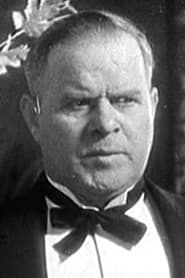
- Sam Lufkin, who appears as the prison guard, was a regular supporting actor in Laurel & Hardy films
- The construction site setting was contemporary and modern for 1929, reflecting the rapid urban development of the era
- This was one of the first Laurel & Hardy films to be released by MGM after their distribution deal with Hal Roach Studios
- The film's success helped establish the formula of simple premises leading to increasingly complex situations that would define their later work
- Liberty was remade in 1932 as a Spanish-language version titled 'La libertad' with different actors
Visual style
The cinematography in Liberty, primarily handled by George Stevens, presents innovative techniques for creating the illusion of extreme height in the high-rise sequence. The camera work employs low angles and carefully positioned foreground elements to maximize the perceived danger of the girders. The use of wide shots in the construction scenes contrasts with intimate close-ups during the pants-exchange attempts, creating effective comedic rhythm. The film's visual style maintains the clean, well-lit aesthetic characteristic of Hal Roach productions, ensuring that every physical gag is clearly visible to the audience. The cinematography successfully balances the need for safety with the illusion of danger, using perspective tricks rather than genuine risk to create tension. The urban exteriors demonstrate the cinematographer's ability to incorporate real city elements into the comedy, blending location footage with studio work seamlessly.
Innovations
Liberty stands out for its innovative set design and construction techniques, particularly in creating the convincing illusion of extreme height in the final sequence. The film presents the sophisticated methods developed by Hal Roach Studios for combining synchronized sound with silent-style physical comedy. The production team developed specialized camera rigs and safety mechanisms that allowed for dynamic filming of the high-wire style comedy while protecting the performers. The film's editing demonstrates advanced understanding of comedic timing, with cuts perfectly synchronized to musical cues and physical actions. The successful integration of location footage with studio sets represents an early example of seamless blending that would become standard practice in later years. The technical achievements in Liberty contributed to the development of safety standards and filming techniques that would influence action and comedy filmmaking for decades to come.
Music
Liberty features a synchronized musical score composed by Leroy Shield, who created many of the memorable themes for Hal Roach productions. The score uses a combination of original compositions and popular melodies of the era, carefully timed to enhance the physical comedy. The music adapts its tempo and style to match the escalating tension of the pants-exchange attempts, becoming more frantic as the situations become more desperate. Sound effects were synchronized to emphasize key comedic moments, such as the clanging of tools on the construction site and the exaggerated sounds of the characters struggling with their ill-fitting pants. The soundtrack represents the sophisticated approach to sound that Hal Roach Studios developed during this transitional period, using music and effects to enhance rather than dominate the visual comedy. The absence of dialogue in the film demonstrates the producers' confidence in Laurel & Hardy's ability to convey humor through physical expression alone.
Famous quotes
Well, here's another nice mess you've gotten me into!" (Ollie to Stan during their predicament)
I had a good mind to." (Stan's characteristic unfinished phrase)
Why don't you do something to help me!" (Ollie's exasperated plea)
This is a fine how-do-you-do!" (Ollie's expression of their situation)
Memorable scenes
- The opening sequence where Stan and Ollie realize they've exchanged pants while changing in the getaway car, leading to their immediate discomfort and awkward movement
- The frantic search for privacy in various public locations, including their failed attempts behind newspapers and in alleys
- The climactic high-rise sequence where they attempt to exchange pants while balancing precariously on construction girders dozens of stories above the city
- The moment when a construction worker walks by, forcing them to pretend everything is normal while wearing each other's ill-fitting trousers
- The final desperate scramble as they both try to maintain their balance while completing the pants exchange
What audiences thought
Liberty was enthusiastically received by audiences in 1929, who were hungry for comedy that successfully navigated the transition to sound. Theater owners reported strong attendance for showings featuring the film, with many requesting additional Laurel & Hardy shorts. The film's simple premise made it accessible to international audiences, contributing to its worldwide success. Audience letters to trade publications frequently mentioned the high-rise sequence as the highlight, with many viewers expressing genuine concern for the comedians' safety despite knowing it was a movie. In subsequent decades, Liberty has maintained its popularity through television broadcasts and home video releases, with comedy fans often ranking it among their favorite Laurel & Hardy shorts. The film continues to score highly with modern audiences on classic film platforms and streaming services, demonstrating the timeless appeal of its humor. Laurel & Hardy fan societies regularly screen Liberty at their gatherings, where it never fails to generate laughter from both longtime fans and newcomers to their work.
Film connections
Influenced by
- Charlie Chaplin's physical comedy style
- Harold Lloyd's skyscraper films
- Buster Keaton's engineering comedy
- Mack Sennett's slapstick traditions
- Hal Roach Studios' comedy formula
This film influenced
- The Music Box (1932)
- Sons of the Desert (1933)
- Way Out West (1937)
- The Three Stooges' short subjects
- Abbott and Costello's early films
- Jackie Chan's action comedies
Film restoration
Liberty has been well-preserved and is considered to be in good condition. The film exists in its complete form in the archives of major institutions including the Library of Congress, the Museum of Modern Art, and the UCLA Film & Television Archive. The film was restored as part of the Laurel & Hardy collection preservation project in the 1990s, with original nitrate elements carefully transferred to safety film and digital formats. The synchronized soundtrack has also been preserved and restored, ensuring that the film can be experienced as originally intended. Multiple high-quality versions are available for both archival and commercial use, demonstrating the successful preservation efforts for this classic comedy.
Where to watch
- The Criterion Channel streaming service
- Kino Lorber's DVD/Blu-ray collections of Laurel & Hardy films
- The Laurel & Hardy Official YouTube channel
- Classic film streaming platforms like Fandor
- Public domain archives and websites
- Turner Classic Movies occasional broadcasts
- The Library of Congress's National Screening Room