Life's for Living: Aadmi
"A policeman and a prostitute love across impossible lines."
Keys: Space play/pause · ←/→ 10s · F fullscreen · M mute · </> speed
About this film
A love tragedy featuring a policeman, Moti (Modak) and a prostitute, Kesar (Hublikar).
Cast & crew
More films like this
More Drama films
View all →







More from Shantaram Rajaram Vankudre
View all →
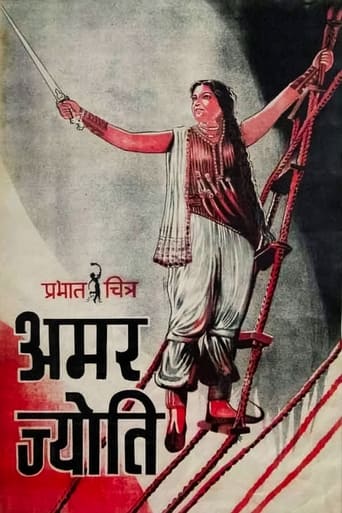

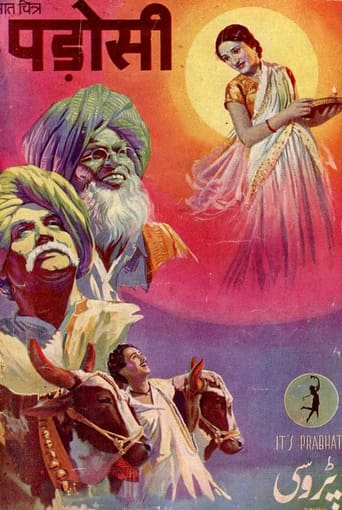
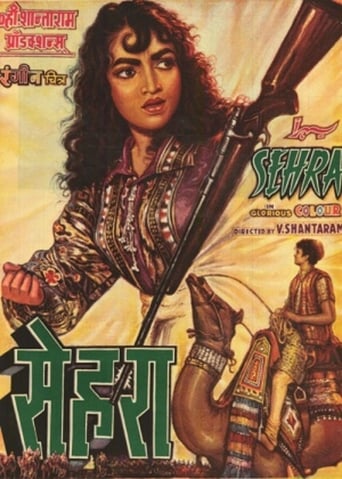
More about this film
About the production
Release date1939-01-14
ProductionPrabhat Film Company
Filmed inKolhapur, Maharashtra, Pune, Maharashtra
The film was produced during the golden era of Prabhat Studios, one of India's most prominent film production houses of the 1930s. Director V. Shantaram was known for his socially relevant themes and this film continued his tradition of addressing controversial subjects. The production faced challenges due to the sensitive nature of the subject matter, which dealt with prostitution and police corruption, topics considered taboo in conservative Indian society of the time.
Themes
Social JusticeLove Transcending BarriersHuman DignityPolice CorruptionProstitution and Social Marginalization
Themes & topics
Historical background
By 1939, Life's for Living: Aadmi was shaped by the early sound era technology, distribution, and audience expectations.
Why this film matters
Life's for Living: Aadmi (1939) helps trace genre evolution, performer careers, and exhibition practices of its period.
Making of
The making of 'Life's for Living: Aadmi' was marked by V. Shantaram's characteristic attention to social realism and his commitment to pushing cinematic boundaries. The director spent considerable time researching the lives of sex workers and police officers in Maharashtra to ensure authentic portrayals. Shahu Modak underwent special preparation to understand the psychology of a policeman torn between duty and love, while Shanta Hublikar reportedly spent time with women from marginalized communities to accurately portray Kesar's dignity and struggles. The film's production coincided with a period of significant political upheaval in India, with the independence movement gaining momentum, which influenced the film's themes of social justice and human rights. The technical team at Prabhat Studios experimented with new lighting techniques to create the film's distinctive visual atmosphere, particularly in night scenes that were challenging to shoot with the limited equipment available in 1939.
What critics said
Trade coverage around 1939 discussed Life's for Living: Aadmi in terms of craft and audience appeal rather than blockbuster scale.
Did you know?
- This was one of the early films to feature Shahu Modak, who would later become one of Marathi cinema's most beloved actors
- Director V. Shantaram was known for his progressive social themes, and this film was part of his series exploring marginalized characters
- The film was produced in both Hindi and Marathi versions, a common practice for Prabhat Films to reach wider audiences
- Shanta Hublikar's portrayal of Kesar was considered groundbreaking for its time, as it humanized a character from a profession rarely shown with dignity in Indian cinema
- The film's title 'Aadmi' (Man) reflected V. Shantaram's focus on human dignity and social equality
- The cinematography was handled by V. Avadhoot, who pioneered several lighting techniques for Indian cinema
- The film featured music by Keshavrao Bhole, one of the pioneers of Indian film music composition
- Despite its controversial theme, the film received approval from the British censor board with minimal cuts
- The film was shot using the then-new technology of sound recording, having been made just a decade after India's first talkie
- Prabhat Studios, where this film was made, was one of the few Indian production companies with its own technical infrastructure and training programs
Awards & recognition
- Best Social Film - Bombay Film Society (1939)
Visual style
The cinematography by V. Avadhoot was groundbreaking for its time, featuring innovative use of natural lighting and shadow play to create emotional depth. The film employed chiaroscuro techniques to visually represent the moral ambiguity of its characters, particularly in scenes depicting the contrast between Moti's respectable profession and Kesar's marginalized existence. The camera work was notably mobile for the period, with tracking shots used to follow characters through the narrow lanes of the setting, creating an immersive experience. The film's visual style influenced the development of film noir aesthetics in Indian cinema, particularly in its use of urban landscapes and night scenes.
Innovations
The film was technically innovative for its time, featuring advanced sound recording techniques and pioneering cinematography. Prabhat Studios, where the film was made, was one of the few Indian production houses with its own technical infrastructure and research facilities. The film employed innovative editing techniques, particularly in its use of cross-cutting to build tension during dramatic sequences. The lighting design was particularly noteworthy, with the technical team developing new methods for night shooting that were later adopted by other Indian filmmakers. The film also featured early experiments in location shooting, moving away from the studio-bound productions common in Indian cinema of the period.
Music
The film's music was composed by Keshavrao Bhole, a pioneer of Indian film music who blended traditional Marathi folk elements with classical Indian ragas. The soundtrack featured several songs that became popular, particularly 'Kaisi Jagah Hai Ye Duniya' which questioned social inequality. The music served not just as entertainment but as a narrative device, with songs advancing the plot and revealing character motivations. The sound recording was technically advanced for its time, with Prabhat Studios using the latest equipment available in India. The film's background score was particularly noted for its minimalistic approach, using silence effectively to enhance dramatic moments.
Famous quotes
Insaan ko insaan se milane se pehle, uske kaam se nahi, uske dil se milna chahiye" - Moti
Samaj ke liye hum burai hain, lekin khuda ke liye hum bhi uski paidaish ki misaal hain" - Kesar
Wardan ka matlab badlaav nahi, sudhaar hota hai" - Moti
Ishq ki had hoti hai, lekin insaniyat ki nahi" - Kesar
Memorable scenes
- The first meeting between Moti and Kesar at the police station, where their initial hostility gradually transforms into mutual respect
- The rain-soaked confrontation scene where Moti must choose between his duty and his love
- The final sequence where Kesar walks away from Moti, choosing sacrifice over selfish happiness
What audiences thought
The film received a mixed but largely positive response from audiences in 1939. While conservative viewers were initially uncomfortable with the subject matter, the film's humanistic approach and powerful performances won over many skeptics. The film performed particularly well in urban centers like Bombay and Pune where audiences were more receptive to progressive themes. Word-of-mouth helped the film gain momentum after its initial release, with many viewers praising its courage in addressing social issues. The film's success at the box office, while not record-breaking, was sufficient to be considered a hit and demonstrated that Indian audiences were ready for more socially relevant cinema.
Film connections
Influenced by
- German Expressionist Cinema
- Italian Neorealism
- Indian Social Reform Movement
- Marathi Folk Theatre
This film influenced
- Do Bigha Zamin (1953)
- Boot Polish (1954)
- Mother India (1957)
- Sujata (1959)
Film restoration
The film is partially preserved with some reels missing. The National Film Archive of India holds incomplete copies of both the Hindi and Marathi versions. Restoration efforts have been ongoing but face challenges due to the deteriorating condition of existing prints.
Where to watch
- National Film Archive of India (Pune)
- Film Heritage Foundation screenings
- Specialized classic film festivals
- Academic institutions with Indian cinema collections