

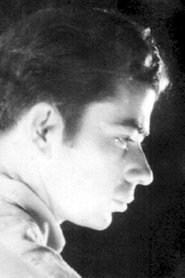
Limite
"Three castaways confess across open water"
Keys: Space play/pause · ←/→ 10s · F fullscreen · M mute · </> speed
About this film
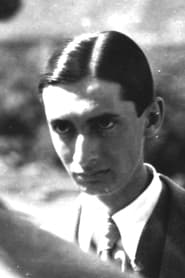
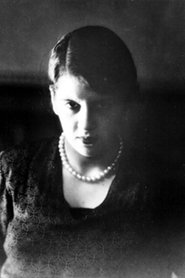
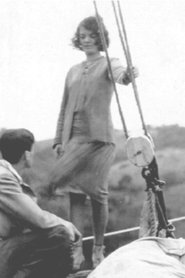
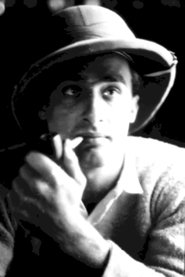
Adrift in the vast expanse of the ocean, a solitary boat carries three castaways—a man and two women. Stranded and devoid of any glimmer of rescue, they find solace in recounting the tales of their lives to one another. As they delve into their personal narratives, reminiscing ab
Cast & crew
More films like this
More Drama films
View all →







More about this film
About the production
Release dateMay 17, 1931 (Brazil)
Box officeMinimal commercial release, no significant box office recorded
ProductionFilmes do Limite, Cinédia
Filmed inRio de Janeiro, Brazil, Guanabara Bay
The film was shot over two years (1929-1931) with a small crew and limited resources. Director Mário Peixoto was only 21 years old when he began filming, working with borrowed equipment and financing the project himself. The production faced numerous challenges including technical difficulties, weather delays, and the director's perfectionist approach. Many scenes were shot multiple times to achieve the precise visual effects Peixoto envisioned. The film's innovative techniques included superimpositions, rapid editing, and symbolic imagery that were revolutionary for Brazilian cinema of the era.
Themes
Isolation and lonelinessMemory and the pastHuman limits and boundariesExistential despairThe passage of time
Themes & topics
castawaysoceanflashbackssilent filmavant-gardephilosophicalexperimental cinemapoeticnon-linear narrativesurvivaldespairmemorydreamssymbolismBrazilian cinema
Historical background
Limite appeared in 1931, when the studio era between the Great Depression and World War II shaped how movies were financed, distributed, and discussed. Audiences of the day encountered the work amid shifting tastes in acting, pacing, and spectacle. Its focus on adrift in the vast expanse of the ocean, a solitary boat carries three castaways—a man and two women mirrors themes circulating in popular culture of that moment.
Why this film matters
Limite (1931) belongs to the wider archive of world cinema, documenting adrift in the vast expanse of the ocean,. Archivists and historians value such titles for what they reveal about craft, genre, and audience expectations. Restorations and festival screenings keep the work visible to viewers far beyond its first run.
Making of
The making of 'Limite' is as as the film itself. Mário Peixoto, a wealthy young man from Rio de Janeiro, decided to make a film after being inspired by European avant-garde cinema. He assembled a small crew and cast mostly non-professional actors, including his sister Olga Breno. The production was chaotic and extended over two years due to Peixoto's perfectionism and technical challenges. The director would often spend entire days waiting for the perfect lighting conditions or ocean waves. Many scenes required innovative camera techniques that had never been attempted in Brazilian cinema before. The film's post-production was equally arduous, with Peixoto spending months editing and creating complex visual effects in a makeshift laboratory. Despite completing the film, Peixoto struggled to find distributors due to its experimental nature, and it only had a limited theatrical run before disappearing from public view for decades.
What critics said
Press coverage from 1931 is fragmentary for many titles of this vintage; surviving notices for Limite tend to stress novelty, star power, or topical appeal. Later writing places the picture within its national and generic context, weighing both period conventions and moments that still land for modern viewers. Streaming and disc releases have revived discussion among classic-film audiences.
Did you know?
- Mário Peixoto was only 22 years old when he completed the film, making him one of the youngest directors of such an ambitious work in cinema history
- The film was considered lost for decades until a complete print was discovered in the 1960s in the Brazilian Ministry of Education's archives
- Walter Salles, renowned Brazilian director, considers 'Limite' one of the greatest films ever made and helped restore it in the 1990s
- The film contains no intertitles, relying purely on visual storytelling to convey its narrative
- Peixoto never directed another feature film, making 'Limite' his only complete work
- The film's title refers to both the physical boundaries of the boat and the metaphorical limits of human existence
- Russian director Sergei Eisenstein praised the film after viewing it in Paris, calling it 'a work of pure poetry'
- The ocean scenes were filmed in Guanabara Bay using a small boat that often took on water during shooting
- The film's experimental style was heavily influenced by German Expressionism and French Impressionism
- It took over 60 years for 'Limite' to be properly restored and recognized as a masterpiece of world cinema
Awards & recognition
- Best Brazilian Film of All Time (Brazilian Film Critics Association, 2015)
- Cultural Heritage Recognition (Brazilian Ministry of Culture, 2001)
Visual style
The cinematography of 'Limite' is revolutionary for its time, featuring innovative techniques that were decades ahead of their era. Cinematographers Edgar Brasil and Roger Dumas employed groundbreaking methods including extreme close-ups, superimpositions, and rapid montage sequences. The film's visual style combines German Expressionist shadows with French Impressionist fluidity, creating a dreamlike atmosphere that blurs the line between reality and memory. The ocean is filmed with both lyrical beauty and terrifying power, using long takes that emphasize the vastness of space and the isolation of the characters. The black and white photography achieves remarkable tonal range, from the blinding white of sun-drenched beaches to the inky blackness of the night sea. The camera work is both subjective and objective, often adopting the characters' points of view while maintaining a detached, philosophical perspective on their plight.
Innovations
'Limite' achieved numerous technical innovations that were remarkable for its time and place. The film's editing techniques, including rapid cross-cutting between past and present, were highly advanced for 1931. Peixoto and his team developed special effects in-camera, creating superimpositions and double exposures that added layers of meaning to the visual narrative. The film's use of natural lighting, particularly in the ocean scenes, demonstrated sophisticated understanding of cinematography. The production overcame significant technical challenges, including filming on water with limited equipment and creating the illusion of endless ocean using practical effects. The film's non-linear structure, which weaves together three different stories without clear transitions, was a bold narrative experiment that influenced future filmmakers. The preservation and restoration of 'Limite' itself represents a technical achievement, as specialists worked to save the deteriorating nitrate film and transfer it to modern formats while maintaining the original visual quality.
Music
As a silent film, 'Limite' originally had no synchronized soundtrack, though it was accompanied by live musical performances during its theatrical run. The score for these performances varied by theater, ranging from classical pieces to improvised piano music. For the 1995 restoration, composer Rogério Duprat created a new orchestral score that attempts to capture the film's poetic and emotional essence. This restoration score incorporates elements of Brazilian folk music, classical motifs, and experimental sounds that mirror the film's visual innovations. In 2010, a new soundtrack was commissioned for the film's digital restoration, featuring contemporary Brazilian musicians who reimagined the score using both traditional and modern instruments. The various soundtracks created for 'Limite' over the years reflect evolving interpretations of the film's meaning and its place in Brazilian cultural history.
Famous quotes
The sea is the only thing that doesn't lie.
We are all prisoners of our memories.
In the end, we are all adrift in the same ocean.
Time is the cruelest of all prisons.
The limits we see are often the limits we create ourselves.
Memorable scenes
- The opening sequence where the camera slowly reveals the small boat adrift in the vast ocean, establishing the film's central metaphor of human isolation
- The flashback sequence showing the woman walking endlessly along the beach, representing the cyclical nature of memory and regret
- The superimposition of the three characters' faces as they share their stories, visually connecting their separate destinies
- The storm sequence where the ocean becomes a character itself, its waves reflecting the characters' inner turmoil
- The final scene where the camera pulls back to show the boat disappearing into the horizon, leaving the audience with questions about the nature of existence
What audiences thought
The original 1931 audience reception was largely negative, with many viewers finding the film confusing and pretentious. The limited theatrical run resulted in small audiences, and the film quickly disappeared from theaters. After its restoration and re-release in the 1990s, audience reception improved dramatically, particularly among art house cinema enthusiasts and film students. Today, screenings of 'Limite' at film festivals and cinematheques attract dedicated audiences who appreciate its artistic merit. The film has developed a cult following among cinephiles, who often describe it as a hypnotic and transformative viewing experience. Despite its challenging nature, modern audiences generally respond positively to its visual beauty and emotional depth, though it remains a film that requires patience and multiple viewings to fully appreciate.
Film connections
Influenced by
- The Cabinet of Dr. Caligari (1920)
- Un Chien Andalou (1929)
- Napoleon (1927)
- The Passion of Joan of Arc (1928)
- Battleship Potemkin (1925)
- Man with a Movie Camera (1929)
- The Last Laugh (1924)
- Sunrise: A Song of Two Humans (1927)
This film influenced
- Deus e o Diabo na Terra do Sol (1964)
- Terra em Transe (1967)
- Memórias do Cárcere (1984)
- Cidade de Deus (2002)
- Aquarius (2016)
- Bacurau (2019)
Film restoration
The film was considered lost for over three decades before a complete nitrate print was discovered in the 1960s. It underwent major restoration in the 1990s under the supervision of Walter Salles and the Cinemateca Brasileira. A further digital restoration was completed in 2010 by the World Cinema Foundation and the Cineteca di Bologna. The restored version has been preserved in 4K digital format and is considered especially successful film restoration projects in Latin American cinema history. The original negative is stored in temperature-controlled facilities at the Cinemateca Brasileira in São Paulo.
Where to watch
- The Criterion Channel
- MUBI
- Kanopy (with library access)
- The Museum of Modern Art (MoMA) film collection
- Cinemateca Brasileira (São Paulo)
- Brazilian Film Archive (Rio de Janeiro)
- Various film festival screenings and cinematheque presentations worldwide