Man with a Movie Camera
"City watched by camera"
Keys: Space play/pause · ←/→ 10s · F fullscreen · M mute · </> speed
About this film
Dziga Vertov's cameraman records Soviet urban life with self-reflexive editing and street rhythm. A cameraman wanders around with a camera slung over his shoulder, documenting urban life with dazzling inventiveness.
Cast & crew
More films like this
More Documentary films
View all →
More from Dziga Vertov
View all →

More about this film
About the production
Release dateJanuary 8, 1929 (premiered in Kyiv)
BudgetLimited Soviet state funding through VUFKU - exact figures not documented but typical of Soviet experimental films of the era
Box officeNot commercially released in traditional sense - distributed through Soviet state cinema system, no box office records available
ProductionVUFKU (All-Ukrainian Photo-Cinema Directorate)
Filmed inKyiv, Ukrainian SSR, Moscow, Russian SFSR, Odesa, Ukrainian SSR, Kharkiv, Ukrainian SSR
Filmed over approximately three years (1926-1929) using hidden cameras and innovative filming techniques. Vertov and his brother Mikhail Kaufman developed new methods for capturing candid footage, including camera disguises and portable equipment. The film was edited by Elizaveta Svilova, Vertov's wife, who created over 1,700 separate shots in the final cut. The production faced criticism from Soviet authorities for its 'formalist' approach, but was ultimately completed with state support.
Themes
Urban modernityThe power of cinemaHuman-machine relationshipCollective laborSoviet progress
Themes & topics
documentaryexperimental filmurban lifecameramanSoviet Unionmontagesilent filmavant-gardecity symphonyself-reflexive cinema
Historical background
1929 placed Man with a Movie Camera within Soviet Union cinema as VUFKU (All-Ukrainian Photo-Cinema Directorate) navigated wartime markets, immigration audiences, and the shift from intertitles to sound.
Why this film matters
Archivists revisit Man with a Movie Camera (1929) for Dziga Vertov style, genre norms at VUFKU (All-Ukrainian Photo-Cinema Directorate), and the exhibition context of 68 minutes (original version) programming.
Making of
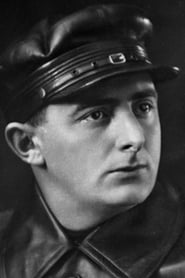
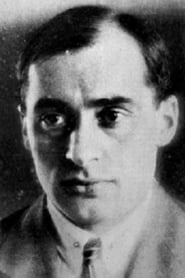
The making of Man with a Movie Camera was as revolutionary as the film itself. Vertov, born Denis Arkadievich Kaufman, adopted his pseudonym meaning 'spinning top' to reflect his dynamic approach to cinema. His brother Mikhail served as both cinematographer and on-screen subject, while their wife Elizaveta Svilova handled the complex editing. The trio, known as 'Kinoks' (cinema-eye people), rejected traditional narrative filmmaking in favor of capturing 'life as it is.' They developed portable cameras and disguised filming equipment to capture authentic urban life without people's awareness. The production involved extensive travel across Soviet cities, often under difficult conditions. Vertov's insistence on showing the filmmaking process itself, including editing scenes, was unprecedented and controversial. The relationship between the brothers deteriorated during production due to creative disagreements about the film's direction, with Mikhail eventually leaving the project before completion.
What critics said
Retrospective writing on Man with a Movie Camera stresses craft by Dziga Vertov, print survival, and repertory value rather than opening-week gross alone.
Did you know?
- The film contains no intertitles explaining the action, which was revolutionary for documentary films of its time
- Mikhail Kaufman, the cameraman featured in the film, was Dziga Vertov's brother and their professional relationship eventually soured over creative differences
- The film was banned in some Western countries for decades due to its perceived Soviet propaganda content
- Vertov originally wanted to call the film 'The Sixth Part of the World' but changed it during production
- The famous self-reflexive scene showing the cameraman filming himself was one of the earliest examples of breaking the fourth wall in cinema
- The film features approximately 1,775 separate shots, an unprecedented number for its time
- Vertov and his team invented several camera techniques specifically for this film, including camera mounts for vehicles and hidden cameras
- The film was shot without a script or predetermined shooting schedule, following Vertov's theory of 'life caught unawares'
- The famous scene of the camera superimposed on beer glasses was achieved through multiple exposure techniques developed for the film
- The film's editing took nearly as long as the shooting, with Svilova working tirelessly to create the complex montages
Awards & recognition
- Named one of the Top 10 films of all time by Sight & Sound magazine's critics' poll (2012)
- Voted the 8th greatest documentary ever made by the International Documentary Association (2014)
- Preserved in the National Film Registry by the Library of Congress (2021)
Visual style
The cinematography in Man with a Movie Camera was revolutionary for its time, employing techniques that were decades ahead of contemporary practice. Mikhail Kaufman utilized extreme camera angles, including bird's-eye views and worm's-eye perspectives, to create dynamic urban perspectives. The film features extensive use of Dutch angles, rapid pans, and tracking shots that create a sense of movement and energy. Kaufman employed innovative camera mounts on vehicles, trams, and even moving trains to capture fluid motion. The cinematography includes famous self-reflexive shots of the camera itself, including the iconic image of Kaufman's camera perched atop another camera. The use of superimposition and multiple exposure created surreal visual effects that emphasized the film's experimental nature. The cinematography deliberately breaks the illusion of reality by showing the camera's presence, establishing a new relationship between filmmaker, subject, and audience.
Innovations
Man with a Movie Camera pioneered numerous technical innovations that would become standard in filmmaking. The film introduced complex editing techniques including jump cuts, match cuts, and rapid montage sequences. Vertov and his team developed specialized camera equipment, including portable cameras and hidden mounts for candid filming. The film's use of superimposition and multiple exposure created visual effects that were technically advanced for the period. The editing process involved over 1,700 separate shots, requiring unprecedented organizational precision. The film demonstrated early use of what would later be called visual effects, including stop-motion animation and time-lapse photography. The self-reflexive elements, showing the filmmaking process itself, were technically innovative in their execution. The film's urban sequences required innovative approaches to capturing moving subjects, leading to advances in mobile camera techniques.
Music
Originally conceived as a silent film, Man with a Movie Camera has received numerous musical scores over the decades. Vertov himself provided detailed instructions for musical accompaniment, suggesting specific rhythms and themes for different sequences. In 1995, the Alloy Orchestra created a celebrated score using found objects and percussion instruments to match the film's industrial themes. The Cinematic Orchestra released a highly regarded soundtrack in 2003 that became influential in its own right. Michael Nyman composed a score in 2002 that emphasized the film's urban rhythms. Contemporary screenings often feature live musical accompaniment, with various musicians and ensembles creating new interpretations. The absence of synchronized sound in the original version allowed for greater flexibility in musical interpretation, making each viewing potentially unique.
Famous quotes
I am kino-eye, I am a mechanical eye. I, a machine, show you the world as only I can see it." - Dziga Vertov's manifesto
This film is an experiment in cinematic communication of real events without the aid of intertitles, without the aid of a story, without the aid of theatre." - Opening intertitle
The 'Man with a Movie Camera' is a film poem about the beauty of everyday life." - Dziga Vertov
Memorable scenes
- The opening sequence showing an empty movie theater gradually filling with an audience, establishing the film's self-reflexive nature
- The famous split-screen sequence showing multiple perspectives of the same street scene simultaneously
- The superimposed camera appearing to grow from a beer glass, exemplifying the film's surreal visual effects
- The rapid montage of Soviet citizens from all walks of life, culminating in a unified vision of the new Soviet man
- The final sequence showing the camera itself as the hero, with superimposed images celebrating the power of cinema
What audiences thought
Initial Soviet audience reception was mixed, with many viewers finding the film's abstract style confusing compared to more conventional Soviet cinema. The lack of narrative and intertitles challenged audience expectations of the time. However, urban audiences and intellectuals appreciated its dynamic portrayal of modern Soviet life. The film found greater appreciation in international avant-garde circles and among filmmakers who recognized its technical innovations. Contemporary audiences, particularly those interested in film history and experimental cinema, have embraced the film as a groundbreaking work. Modern screenings often feature live musical accompaniment, enhancing the viewing experience. The film has gained cult status among film students and experimental cinema enthusiasts, with many considering it essential viewing for understanding cinematic language.
Film connections
Influenced by
- Ballet Mécanique (1924)
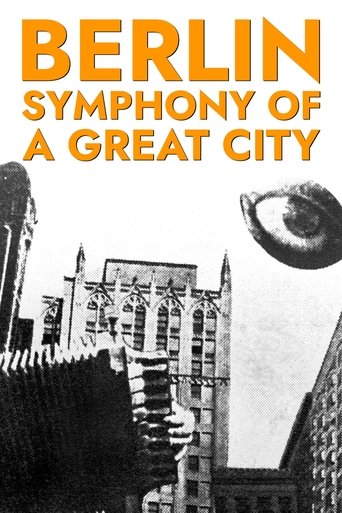
- Berlin: Symphony of a Great City (1927)
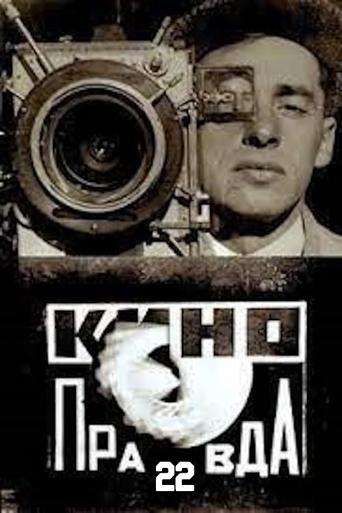
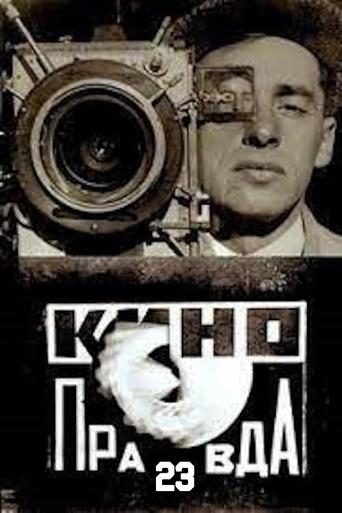
- The Man with a Movie Camera was influenced by Vertov's earlier Kino-Pravda newsreels
- Futurist art movement
- Constructivist design principles
This film influenced
- Koyaanisqatsi (1982)
- Baraka (1992)
- Powaqqatsi (1988)
- The Matrix (1999) - for its self-reflexive elements
- Run Lola Run (1998) - for rapid editing techniques
- Scott Pilgrim vs. The World (2010) - for visual experimentation
Film restoration
The film has been preserved and restored by various archives including the British Film Institute and the Museum of Modern Art. Multiple versions exist due to different restoration efforts and varying running times. The most complete version was restored from original negatives in the early 2000s. The film is considered well-preserved compared to many silent-era works, though some degradation is evident in surviving prints. Digital restorations have made the film accessible to modern audiences while preserving its historical significance.
Where to watch
- The Criterion Collection (Blu-ray/DVD)
- Kino Lorber (DVD/Blu-ray)
- MUBI streaming service
- The Criterion Channel
- YouTube (official uploads from archives)
- Various educational film collections
- Film forum screenings with live accompaniment