
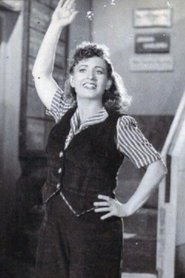
Miss Frontier Mail
"Savita, aka Miss 1936, is an amateur hunter while her brother"
Keys: Space play/pause · ←/→ 10s · F fullscreen · M mute · </> speed
About this film
Savita, aka Miss 1936, is an amateur hunter while her brother Jayant is an amateur film-maker. Their father, Maganlal, arrested for the murder of a station-master, is defended by their uncle Shyamlal, who is in fact the mysterious Signal X. Shyamlal causes a major train smash-up.
Cast & crew
More films like this
More from Homi Wadia
View all →More about this film
About the production
Release date1936
Box officeVery successful - one of the highest-grossing films of 1936 in India
ProductionWadia Movietone
Filmed inBombay (now Mumbai), India
This was one of the earliest films to feature extensive stunt sequences performed by a female lead. The train sequences were particularly challenging to film, requiring careful coordination and real railway equipment. The film was shot during the golden age of Indian cinema when stunt films were gaining popularity. The production team built elaborate sets including realistic train interiors and bridge structures for the action sequences.
Themes
Justice vs. CorruptionFemale EmpowermentModern vs. Traditional ValuesTechnology and ProgressFamily Loyalty
Themes & topics
trainstuntsaction heroinesabotagemysteryrevengejusticerailwayfight sequencescrimeinvestigationbrother-sister relationshipvillainheroine
Historical background
By 1936, sound cinema, wartime mobilization, and changing censorship norms were reshaping what audiences expected from narrative features.
Why this film matters
Miss Frontier Mail remains part of the screen heritage of its era, offering evidence of prevailing genres, production methods, and audience tastes. Later revivals, archive screenings, and digitization have kept such titles accessible to researchers and dedicated viewers long after their first commercial runs.
Making of
The production of Miss Frontier Mail was groundbreaking for its time, particularly in its approach to action sequences. Fearless Nadia performed most of her own stunts, including the dangerous fight scenes atop the moving train, which required extensive rehearsals and safety precautions. The Wadia brothers, Homi and JBH, were pioneers in creating stunt-oriented films that appealed to mass audiences. The train sequences were filmed using actual railway tracks with cooperation from the railway authorities. The film's success established a new genre in Indian cinema - the stunt-action film with a female lead. The production team faced significant challenges in creating realistic action sequences without modern special effects, relying instead on practical stunts and clever camera work.
What critics said
Reception records for Miss Frontier Mail are uneven; interest today is concentrated among archivists, historians, and viewers of older cinema. Modern assessment tends to emphasize historical value, craft, and cultural context rather than box-office performance.
Did you know?
- Mary Ann Evans, better known by her stage name Fearless Nadia, was actually an Australian-born actress who became one of India's first female action stars
- The film featured one of cinema's earliest examples of a female protagonist performing her own stunts in action sequences
- The moving train fight sequence was considered revolutionary for its time and became among the leading imitated scenes in Indian cinema
- The character 'Signal X' was one of the first supervillains in Indian cinema, complete with a secret identity and elaborate schemes
- Director Homi Wadia married Fearless Nadia (Mary Ann Evans) in 1961, after working with her on numerous films
- The film's success led to a series of similar stunt films featuring Nadia as the lead
- The train crash sequence used actual railway equipment and was filmed with minimal special effects, relying on practical stunts
- The film was originally released in both Hindi and English versions to cater to different audiences
- Miss Frontier Mail was one of the first Indian films to feature a female character in traditionally male-dominated action roles
- The film's title refers to the prestigious Frontier Mail train service that ran between Bombay and Peshawar
Visual style
The cinematography of Miss Frontier Mail was innovative for its time, particularly in the filming of action sequences. The camera work during the train fight scenes employed dynamic angles and movement that enhanced the sense of danger and excitement. The film used actual railway locations, giving the action sequences a sense of realism that was rare in cinema of the era. The cinematographer employed techniques such as low-angle shots to emphasize the heroic stature of the protagonist and wide shots to capture the scale of the action sequences. The visual style combined the dramatic lighting of early cinema with the kinetic energy required for action sequences.
Innovations
Miss Frontier Mail achieved several technical milestones for Indian cinema in 1936. The film's most significant achievement was the successful execution of complex action sequences, particularly the fight scenes atop a moving train, which required precise coordination and innovative camera techniques. The production team developed new methods for safely filming dangerous stunts while maintaining visual excitement. The train crash sequence was another technical marvel, achieved through practical effects rather than optical tricks. The film also demonstrated advanced editing techniques for action sequences, creating a sense of rhythm and pace that was ahead of its time. These technical achievements set new standards for action filmmaking in India.
Music
The film's music was composed by Govindram Tembe, with lyrics by various poets of the era. The soundtrack featured a mix of romantic songs and upbeat numbers that accompanied the action sequences. While specific song titles are not well-documented, the music followed the pattern of early Indian talkies, incorporating both traditional Indian musical elements and Western influences to create a distinctive sound. The sound design was particularly notable for its use of sound effects during the fight sequences, which enhanced the impact of the action on screen. The film's audio was recorded using the sound-on-disc technology that was common in Indian cinema of the mid-1930s.
Famous quotes
As Miss 1936: 'Fear is a word I don't understand!'
Signal X: 'The railway will bow to my will!'
Savita: 'Justice may be delayed, but it will never be denied!'
Jayant: 'My camera captures truth that the blind cannot see!'
Sundar: 'Together, we can stop any evil!'
Memorable scenes
- The iconic fight sequence atop the moving train where Savita battles Signal X's henchmen while the train speeds through the countryside
- The dramatic train crash sequence orchestrated by Signal X to promote his airline
- Savita's introduction as Miss 1936, showcasing her hunting skills and fearless nature
- The bridge sabotage scene captured on film by Jayant, providing crucial evidence
- The final confrontation where Savita unmasks Signal X as her uncle Shyamlal
What audiences thought
Miss Frontier Mail was a massive commercial success, drawing huge crowds to theaters across India. Audiences were particularly captivated by Fearless Nadia's stunt sequences and the film's thrilling action set pieces. The film's popularity led to repeat viewings and established Nadia as a major star. The character of Miss 1936 became particularly popular with younger audiences, who admired her fearlessness and strength. The film's success at the box office demonstrated that Indian audiences were ready for more action-oriented content with strong female protagonists, influencing the direction of popular cinema for decades to come.
Film connections
Influenced by
- Hollywood action serials of the 1930s
- Western adventure films
- Indian mythological stories featuring strong female characters
- Early cinema stunt performers
This film influenced
- Hunterwali (1935) - earlier film by the same team
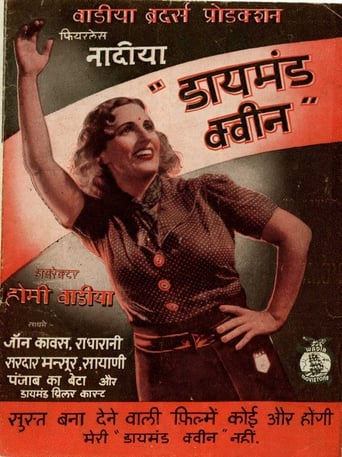
- Diamond Queen (1940) - another Fearless Nadia starrer
- Later Indian stunt films with female leads
- Modern Indian action films featuring strong female protagonists
Film restoration
The film is partially preserved with some sequences available in film archives. The National Film Archive of India holds portions of the film, though some reels may be incomplete or in poor condition. Restoration efforts have been undertaken by film preservationists, but a complete pristine version may not exist. The film's historical significance has led to increased efforts to preserve remaining footage.
Where to watch
- Available on select classic Indian cinema streaming platforms
- Screenings at film festivals specializing in classic cinema
- Film archive viewings by appointment at the National Film Archive of India
- Some segments available on YouTube and other video platforms
- Included in special DVD collections of classic Indian cinema