
Homi Wadia
Director
Born: 22 May 1911 in Bombay, British India (now Mumbai, India) Died: 10 December 2004 Active: 1936-1970s (as director and producer)
Films
3 films
About Homi Wadia
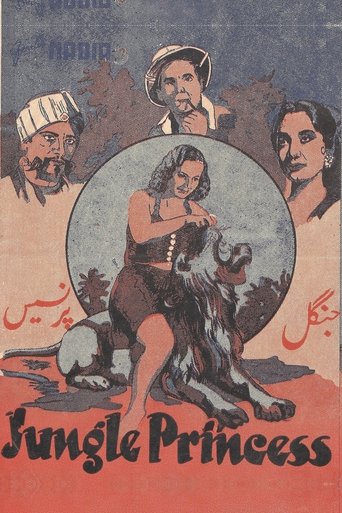
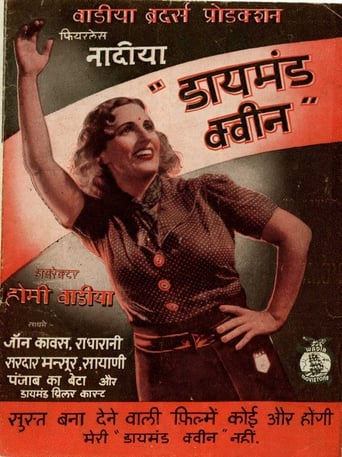
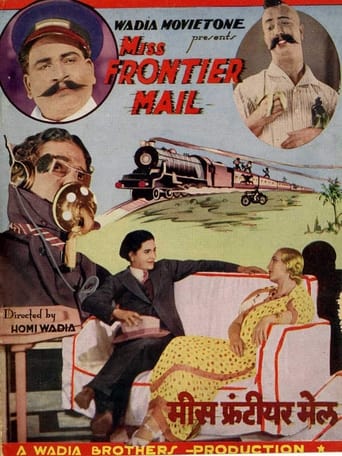
Indian film director and producer who in shaping Indian cinema during the 1930s and 1940s. Born into the prominent Wadia family of Bombay (now Mumbai), he began his career working alongside his elder brother JBH Wadia at Wadia Movietone, one of India's earliest film studios. Homi Wadia became renowned for his adventurous and fantasy films, often featuring strong female protagonists and special effects for the time. He discovered and nurtured the career of Fearless Nadia, the stunt actress who became India's first female action star. His films like 'Miss Frontier Mail' (1936), 'Diamond Queen' (1940), and 'The Jungle Princess' (1942) were revolutionary for their time, combining elements of Western adventure serials with Indian storytelling. After the partition of India in 1947, he established Basant Pictures and continued producing films, though he gradually stepped back from directing. His contributions to Indian cinema, particularly in the action-adventure genre, have earned him a permanent place in film history as one of the early architects of popular Indian cinema.
The Craft
Behind the Camera
Homi Wadia's directing style was characterized by its bold, adventurous spirit and innovative use of action sequences. He drew heavily from Hollywood adventure serials and Western films, adapting their fast-paced narrative structure and spectacular stunts for Indian audiences. His films featured elaborate fight scenes, daring horseback chases, and impressive special effects that were groundbreaking for 1930s-40s Indian cinema. Wadia had a distinctive visual approach, often incorporating exotic locations, elaborate sets, and dynamic camera movements. He was particularly skilled at creating larger-than-life scenarios while maintaining clear storytelling, making his films accessible and entertaining to mass audiences. His direction emphasized spectacle and excitement, with a focus on strong, independent female protagonists who could perform their own stunts.
Milestones
- Directed 'Miss Frontier Mail' (1936) featuring Fearless Nadia
- Created 'Diamond Queen' (1940) which became a cult classic
- Established Wadia Movietone with brother JBH Wadia
- Founded Basant Pictures after partition
- Pioneered action-adventure genre in Indian cinema
- Discovered and mentored Fearless Nadia, India's first stunt queen
Best Known For
Must-See Films
Accolades
Special Recognition
- Recognized as a pioneer of Indian stunt cinema
- Honored in film retrospectives for his contributions to early Indian cinema
Working Relationships
Worked Often With
Studios
Why They Matter
Impact on Culture
Homi Wadia's impact on Indian cinema was revolutionary, particularly in establishing the action-adventure genre as a viable commercial format. His films broke social conventions by featuring strong, independent female protagonists who could fight villains and perform dangerous stunts, challenging traditional gender roles in 1930s-40s India. The success of Fearless Nadia under his direction created a new archetype of the female action hero that would influence Indian cinema for decades. Wadia's films also demonstrated that Indian audiences had an appetite for spectacle and entertainment comparable to Hollywood productions, encouraging other filmmakers to invest in more ambitious productions. His work helped establish Bombay as the center of India's film industry and contributed to the development of what would become Bollywood. The Wadia brothers' studio system also pioneered many technical and production techniques that became standard in Indian cinema.
Lasting Legacy
Homi Wadia's legacy endures through his contributions to Indian popular cinema and his role in creating one of its most enduring icons, Fearless Nadia. His films, particularly 'Hunterwali' (directed by his brother but produced by him) and 'Diamond Queen', are now considered cult classics and are regularly featured in film retrospectives and academic studies of early Indian cinema. The Wadia studio system he helped create became a model for film production in India, influencing generations of filmmakers. His emphasis on entertainment value, spectacle, and strong female characters can be seen in contemporary Bollywood action films. The preservation and restoration of his films have ensured that new generations can appreciate the innovative spirit of early Indian cinema. Homi Wadia is remembered not just as a director, but as a visionary who understood the power of cinema to entertain, inspire, and challenge social norms.
Who They Inspired
Homi Wadia influenced numerous filmmakers who followed in his footsteps, particularly in the action and adventure genres. His success with stunt-oriented films paved the way for later Indian action directors like Manmohan Desai and Prakash Mehra, who incorporated similar elements of spectacle and entertainment in their films. The archetype of the strong female action hero he helped create with Fearless Nadia influenced later filmmakers featuring actresses like Sridevi, Madhuri Dixit, and more recently, Deepika Padukone and Katrina Kaif in action roles. His production methods and studio management techniques influenced how Indian films were produced and marketed. The Wadia brothers' focus on creating indigenous versions of popular international genres inspired other filmmakers to adapt Western formats for Indian audiences. His work continues to be studied by film scholars interested in the development of popular cinema in India and the representation of women in early Indian films.
Off Screen
Homi Wadia came from the prominent Parsi Wadia family of Bombay, which had a long history in business and industry. He married Fearless Nadia (born Nadia Abdul Hamid Khan), the Australian-Indian actress who became his muse and the star of many of his films. Their marriage was considered unusual for the time, as Nadia was not of Parsi origin and was a divorced woman when they married in 1961. Despite this, their relationship was deeply personal and professional, with Homi continuing to produce films featuring Nadia even after their marriage. The couple had no children together. Homi lived a relatively private life away from the film industry's glamour, focusing on his work and maintaining close ties with his family. He remained active in film production until his later years, preserving the legacy of the Wadia studio system.
Education
Educated in Bombay, came from a well-educated Parsi family with business background
Family
- Fearless Nadia (1961-2004, until her death in 1996)
Did You Know?
- Homi Wadia was part of the prominent Wadia family of Bombay, which included industrialists and shipbuilders
- He discovered Fearless Nadia when she was working as a circus performer
- His films were among the first in India to feature women performing their own stunts
- The Wadia brothers were among the first Indian filmmakers to use sound technology effectively
- Homi Wadia's films often featured themes of anti-colonialism and Indian nationalism
- He continued producing films well into the 1970s, long after retiring from directing
- The Wadia studio was one of the few to survive the transition from silent films to talkies
- Homi married Fearless Nadia in 1961, decades after they first worked together
- His films were popular not just in India but also in other South Asian countries
- The character of 'Hunterwali' (Whip-wielder) played by Nadia became a cultural phenomenon
- Homi Wadia's films often featured elaborate train sequences, which were technically challenging for the time
- He was known for his hands-on approach to filmmaking, often personally supervising stunts and special effects
In Their Own Words
We wanted to make films that would make Indians proud while entertaining them
Fearless Nadia wasn't just an actress, she was a phenomenon that changed Indian cinema
In our films, the woman could be the hero - that was our revolution
Cinema should be larger than life, that's what people pay to see
Frequently Asked Questions
Who was Homi Wadia?
Indian on YTB.my. He was instrumental in establishing the action-adventure genre in Indian cinema and discovered Fearless Nadia, India's first female action star. He co-founded Wadia Movietone with his brother and later established Basant Pictures, becoming one of the early architects of popular Indian cinema.
What films is Homi Wadia best known for?
Titles linked here include Miss Frontier Mail (1936), Diamond Queen (1940).
When was Homi Wadia born and when did he die?
Born 22 May 1911; died 10 December 2004.
What awards did Homi Wadia win?
While Homi Wadia did not receive many formal awards during his active years, he has been posthumously recognized as a pioneer of Indian stunt cinema. His films are regularly featured in retrospectives celebrating early Indian cinema, and he is honored for his role in establishing the action genre and discovering Fearless Nadia.
What was Homi Wadia's directing style?
Homi Wadia's directing style was characterized by its emphasis on spectacle, action, and adventure. He drew inspiration from Hollywood serials and Westerns, adapting their fast-paced narratives and spectacular stunts for Indian audiences. His films featured elaborate fight scenes, daring chases, and innovative special effects, with a focus on entertainment value and strong female protagonists who could perform their own stunts.