
The Jungle Princess
"A jungle girl raised among lions"
Keys: Space play/pause · ←/→ 10s · F fullscreen · M mute · </> speed
About this film
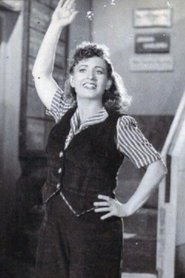
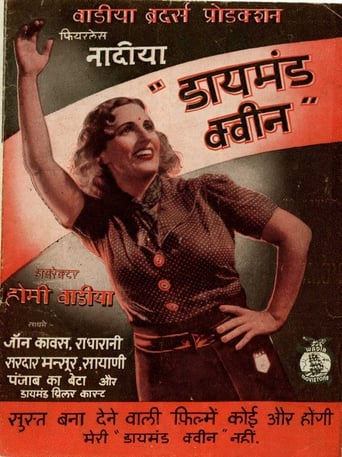
A young girl named Maya is shipwrecked and raised by lions in a jungle. Years later, a search party tries to return her to civilization. Despite interference from cannibal chief Radha Rani, Maya and her loyal lions help the explorers. She also finds love with John.
Cast & crew
More films like this
More from Homi Wadia
View all →
More about this film
About the production
Release date1942
ProductionWadia Movietone
Filmed inBombay (now Mumbai), India
The Jungle Princess was produced during the golden era of Indian cinema under the Wadia Movietone banner, known for their adventure and stunt films. The production faced significant challenges working with live lions on set, requiring specialized handlers and safety precautions. Director Homi Wadia was particularly known for his innovative action sequences and this film featured some of the most daring jungle scenes of its time. The film was shot in black and white during the tumultuous period of World War II, when film production in India was facing material shortages and censorship challenges.
Themes
Civilization vs. NatureFemale EmpowermentHuman-Animal BondLove and BelongingCultural Identity
Themes & topics
Historical background
The Jungle Princess appeared in 1942, when wartime and immediate postwar filmmaking shaped how movies were financed, distributed, and discussed. Audiences of the day encountered the work amid shifting tastes in acting, pacing, and spectacle. Its focus on a young girl named maya is shipwrecked and raised by lions in a jungle mirrors themes circulating in popular culture of that moment.
Why this film matters
The Jungle Princess (1942) belongs to the wider archive of world cinema, documenting a young girl named maya is shipwrecked and. Archivists and historians value such titles for what they reveal about craft, genre, and audience expectations. Restorations and festival screenings keep the work visible to viewers far beyond its first run.
Making of
The making of The Jungle Princess was proof of the ingenuity and determination of the Wadia brothers during a challenging period in Indian history. Working with limited resources during World War II, the production team had to innovate constantly. The lions used in the film were sourced from local circuses and trained extensively for months before filming. Mary Ann Evans (Fearless Nadia) performed many of her own stunts, including scenes with the lions, which was unprecedented for female actors of the time. The jungle sets were constructed on the outskirts of Bombay, with real plants and trees transported to create an authentic atmosphere. The film's production was temporarily halted several times due to wartime curfews and material shortages, but the team's perseverance resulted in especially ambitious adventure films of early Indian cinema.
What critics said
Press coverage from 1942 is fragmentary for many titles of this vintage; surviving notices for The Jungle Princess tend to stress novelty, star power, or topical appeal. Later writing places the picture within its national and generic context, weighing both period conventions and moments that still land for modern viewers. Streaming and disc releases have revived discussion among classic-film audiences.
Did you know?
- Mary Ann Evans, who played Maya, was actually an Australian actress who worked in Indian cinema under the name Fearless Nadia, becoming one of Bollywood's first stunt women
- The film featured real lions in many scenes, a rarity for cinema of that era, requiring months of training and careful coordination
- Director Homi Wadia was the brother of producer JBH Wadia, and together they pioneered the action-adventure genre in Indian cinema
- The film was released during the Quit India Movement of 1942, making its production and distribution particularly challenging
- John Cawas, who played the male lead, was a professional bodybuilder and stunt performer before becoming an actor
- The character of Radha Rani, the cannibal chief, was played by Dalpat, who was known for playing villainous roles in Wadia productions
- The film's success led to several similar jungle-themed movies in Indian cinema throughout the 1940s and 1950s
- Despite being made during wartime, the film featured elaborate sets and outdoor locations, showcasing the Wadia brothers' commitment to production value
- The film was one of the earliest Indian movies to feature a female protagonist who was both physically strong and emotionally independent
- The lion sequences were so well-received that they were later reused in compilations and clip shows for decades
Visual style
The cinematography of The Jungle Princess, handled by the Wadia brothers' regular team, was groundbreaking for its time. The film employed innovative camera techniques to capture the jungle sequences, including low-angle shots to emphasize the majesty of the lions and wide shots to establish the vastness of the jungle setting. The cinematographers had to work with challenging lighting conditions, especially in the dense jungle sets where natural light was limited. The film used tracking shots to follow the action sequences, particularly the chase scenes involving Maya and her lion companions. Despite the technical limitations of 1942, the cinematography successfully created a sense of adventure and danger that enhanced the storytelling. The black and white photography added to the film's mysterious atmosphere, with careful use of shadows and contrast to create tension in key scenes.
Innovations
The Jungle Princess was technically ambitious for its time, featuring several innovations that set new standards in Indian cinema. The film's most significant technical achievement was the successful integration of live animals into the narrative, requiring innovative training methods and safety protocols. The production team developed special camera rigs to capture dynamic action sequences involving both human performers and animals. The jungle sets were among the most elaborate constructed in Indian cinema up to that point, featuring mechanical elements for creating realistic environmental effects. The film also pioneered certain stunt techniques that would become standard in Indian action cinema. The sound recording techniques used to capture both dialogue and the natural sounds of the jungle were particularly advanced for the era. These technical achievements demonstrated the growing sophistication of the Indian film industry and its ability to compete with international productions.
Music
The film's music was composed by the Wadia brothers' regular music director, who created a distinctive score that blended Western adventure themes with traditional Indian musical elements. The soundtrack featured several songs that became popular, including romantic numbers between Maya and John, as well as thrilling musical pieces that accompanied the action sequences. The music used indigenous instruments to create authentic jungle sounds, complementing the visual elements of the film. The background score was particularly effective in building tension during scenes with the cannibal tribe and during the lion attack sequences. The songs were performed by prominent playback singers of the era, whose voices added emotional depth to the narrative. The soundtrack was released on gramophone records and was well-received by audiences, contributing to the film's overall success.
Famous quotes
The jungle is my home, the lions are my family
Civilization is a cage, freedom is in the wild
Love knows no boundaries, not even between man and beast
In the heart of the jungle, we find our true selves
Memorable scenes
- Maya's first encounter with the lion cubs after her shipwreck, establishing their lifelong bond
- The dramatic rescue sequence where Maya and her lion companions save the explorers from Radha Rani's tribe
- The romantic scene between Maya and John by the waterfall, contrasting wilderness with civilization
- The final confrontation where Maya must choose between her jungle home and a life with John
What audiences thought
The Jungle Princess was a commercial success upon its release, resonating strongly with Indian audiences who were hungry for locally produced adventure films. The movie's thrilling action sequences, combined with Fearless Nadia's charismatic performance, made it a box office hit. Audiences were particularly impressed by the realistic jungle scenes and the fearless interactions between the actress and live lions. The film developed a cult following that has persisted for decades, with many considering it a classic of early Indian cinema. Its success at the box office proved that Indian audiences would embrace homegrown adventure stories, encouraging more productions in this genre. The movie's popularity contributed significantly to Fearless Nadia's status as a beloved star of her era.
Film connections
Influenced by
- Tarzan films
- The Jungle Book
- Sheena, Queen of the Jungle
- Adventure serials of the 1930s
This film influenced
- Later Indian jungle adventure films
- Fearless Nadia's subsequent action films
- 1970s Indian jungle cinema
- Modern Indian adventure films with strong female leads
Film restoration
The Jungle Princess exists in partial form with some reels preserved at the National Film Archive of India. Like many films of this era, complete preservation has been challenging due to the nitrate film stock used and the passage of time. However, significant portions of the film have been restored and digitized, allowing modern audiences to experience this classic. The restored versions are occasionally screened at classic film festivals and retrospectives of Indian cinema.
Where to watch
- National Film Archive of India screenings
- Classic Indian cinema festivals
- Film archive collections
- Occasional broadcasts on classic film channels
- Academic film studies programs