
My Cousin
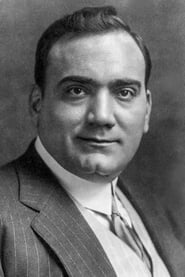
"Caruso plays sculptor and tenor cousin"
Keys: Space play/pause · ←/→ 10s · F fullscreen · M mute · </> speed
About this film
Struggling sculptor Tommaso (Enrico Caruso) models a bust of his polished cousin Caroli, the opera star he hopes to marry—until rivalry and mistaken identity complicate the studio.
Cast & crew
More films like this
More Drama films
View all →







More from Edward José
View all →
More about this film
About the production
Release dateMarch 1918
ProductionFamous Players-Lasky Corporation
Filmed inNew York City, New York
This film was part of Enrico Caruso's brief but notable foray into motion pictures, showcasing his remarkable ability to play dual roles with distinctly different personas. The production capitalized on Caruso's enormous fame as one of the Metropolitan Opera's greatest tenors, using his star power to attract audiences to the relatively new medium of cinema. The film required elaborate makeup and costume changes for Caruso to transform between the characters of Tommasso and Caroli, demonstrating early techniques in character differentiation in silent film.
Themes
Art versus commerceIdentity and self-worthClass differences and social mobilityThe immigrant experience in AmericaThe relationship between high art and popular culture
Themes & topics
dual rolesculptoropera singercousinsmistaken identityartist strugglingromantic rivalryclass differencesNew York CityMetropolitan OperaItalian-Americansilent filmcomedy-dramafamily disapprovalartistic integrity
Historical background
Viewers who saw My Cousin in 1918 experienced it within the conventions of silent era filmmaking. The film stars Enrico Caruso, Henry Leone, Carolina White, Joseph Riccardi, A.G. Corbelle, and Bruno Zirato.
Why this film matters
Film clubs and archives revisit My Cousin as part of broader silent era programming.
Making of
The production of 'My Cousin' represented a significant crossover between the worlds of opera and early cinema, with the Metropolitan Opera granting unprecedented access to their facilities and performances. Edward José, the director, had to carefully orchestrate Caruso's dual performance, utilizing early film techniques to clearly distinguish between the two characters despite being played by the same actor. The makeup department faced the challenge of creating two distinctly different looks for Caruso - the rough, artistic Tommasso versus the polished, sophisticated Caroli. Filming in New York City provided authentic urban backdrops, including actual restaurant locations and the prestigious Metropolitan Opera House. The production team worked closely with Caruso to accommodate his opera schedule, often filming around his performance commitments. Caruso, despite his enormous stage presence, had to adapt his acting style for the intimate camera, learning to convey emotion through subtle expressions rather than the grand gestures typical of opera performance.
What critics said
Surviving reviews and later retrospectives treat My Cousin as representative silent era fare—valued for craft even when not hailed as a masterpiece.
Did you know?
- Enrico Caruso, widely known opera singers of all time, played dual roles in this film - both the struggling sculptor and his famous opera singer cousin
- This was one of only two feature films Caruso made during his career, as he primarily focused on his opera performances and recordings
- Caruso's distinctive voice, which made him world-famous in opera, could not be utilized in this silent film, requiring him to rely solely on his acting abilities and facial expressions
- The film capitalized on Caruso's massive celebrity status as the Metropolitan Opera's leading tenor, using his real-life fame as a plot device
- Caruso reportedly earned $100,000 for his film work, an enormous sum for the time period
- The Metropolitan Opera scenes were filmed on location at the actual opera house, adding authenticity to the production
- Caruso's bushy moustache in the Tommasso character was a significant departure from his usual clean-shaven appearance as an opera performer
- The film was released just two years before Caruso's death in 1921, making it one of the last visual records of the tenor
- Despite his limited film experience, Caruso's performance was praised by critics for its natural charm and comedic timing
- The sculpture bust featured in the film was actually created by a professional artist, though Caruso's character is shown working on it
Visual style
The cinematography of 'My Cousin' reflects the transitional state of film techniques in 1918, moving away from the static theatrical compositions of earlier cinema toward more dynamic camera work. The film utilizes medium shots and close-ups effectively to capture Caruso's facial expressions, particularly important for distinguishing between his two characters. The Metropolitan Opera sequences feature grand, sweeping shots that convey the scale and opulence of the venue, while the more intimate scenes in the sculptor's workshop and restaurant employ tighter framing to emphasize character interactions. The lighting techniques demonstrate the growing sophistication of the era, with careful attention paid to creating different moods for the various settings. The film makes effective use of location shooting in New York City, providing authentic urban backdrops that enhance the story's realism. The cinematography successfully balances the need to showcase Caruso's star presence with the narrative requirements of telling a coherent visual story without dialogue.
Innovations
The film's most notable technical achievement lies in its effective use of dual role photography, with Enrico Caruso playing both Tommasso and Caroli. The production employed early split-screen techniques and careful editing to create convincing interactions between the two characters, demonstrating the growing sophistication of special effects in 1918. The makeup and costume department achieved remarkable differentiation between the two characters using limited tools of the era, with Caruso's transformation requiring significant physical alterations including the addition and removal of his distinctive moustache. The film showcases advances in location filming techniques, particularly in capturing the grandeur of the Metropolitan Opera House and authentic New York City street scenes. The production demonstrated improved lighting techniques for creating different moods across various settings, from the dimly lit sculptor's workshop to the opulent restaurant scenes. The movie also represents progress in narrative pacing and storytelling techniques for feature-length films, balancing comedy and drama within a cohesive structure that maintains audience engagement throughout its runtime.
Music
As a silent film, 'My Cousin' would have been accompanied by live musical performance during its original theatrical run. The score likely varied by theater, ranging from solo piano accompaniment in smaller venues to full orchestral arrangements in prestigious movie palaces. Given the film's connection to opera, many theaters probably incorporated popular opera pieces into their accompaniment, potentially including works that Caruso himself was famous for performing. The Metropolitan Opera scenes would have called for particularly grand musical treatment to match the on-screen spectacle. Some theaters might have used cue sheets provided by the studio, suggesting specific musical pieces for different scenes and emotional beats. The transition between the comedic and dramatic elements of the story would have required careful musical modulation to guide audience emotions. Modern restorations of the film have typically commissioned new scores that blend period-appropriate music with contemporary sensibilities, often incorporating Italian musical themes to reflect the characters' heritage.
Famous quotes
Art is not a luxury, it is a necessity of the soul.
A man's worth is not measured by his purse, but by his passion.
In the opera of life, sometimes we must play multiple roles.
True art speaks even when the artist cannot.
Love, like sculpture, requires patience and vision to reveal its beauty.
Memorable scenes
- The transformation sequence where Caruso changes from the rough sculptor Tommasso to the polished opera singer Caroli, showcasing early makeup and costume techniques
- The opera house scene where Caroli performs on stage while Tommasso watches from the audience, highlighting the contrast between the cousins' lives
- The restaurant confrontation where the cousins meet but fail to recognize each other, leading to misunderstanding and embarrassment
- The climactic scene where Tommasso presents his sculpture to Caroli, hoping to prove his artistic worth and win Rosa's approval
- The opening sequence in the sculptor's workshop, establishing Tommasso's artistic passion and financial struggles
What audiences thought
Audiences in 1918 flocked to theaters to see the Enrico Caruso on screen, with the film capitalizing on his enormous popularity as an opera star. Many viewers were curious to see how the famous tenor would translate his talents to the silent medium, and most were pleasantly surprised by his charismatic performance. The dual role aspect generated particular excitement, with audiences marveling at Caruso's ability to portray two distinctly different characters. Italian-American communities especially embraced the film, seeing representation of their culture and one of their most celebrated countrymen on screen. Despite the challenges of film exhibition during the 1918 flu pandemic, the movie performed reasonably well at the box office, particularly in urban areas with large opera-going populations. Modern audiences who have had the opportunity to see restored versions of the film generally appreciate it as a historical artifact and a charming example of silent-era comedy-drama.
Film connections
Influenced by
- Italian theatrical traditions
- Opera conventions
- Commedia dell'arte character archetypes
- American silent comedy traditions
- European art house cinema of the 1910s
This film influenced
- Later films featuring opera singers in cinema
- Dual role comedies of the 1920s and 1930s
- Films about artistic struggles in New York
- Movies exploring Italian-American identity
Film restoration
The preservation status of 'My Cousin' (1918) is somewhat precarious, as with many silent films from this era. While complete copies are known to exist in film archives, they may suffer from the deterioration common to nitrate film stock. The film has been preserved in several archives including the Library of Congress and the Museum of Modern Art's film collection. Some restoration work has been undertaken, but a comprehensive digital restoration has yet to be completed. The surviving copies show varying degrees of quality, with some scenes better preserved than others. The film's historical significance, particularly due to Enrico Caruso's involvement, has helped ensure its survival when many other films from the same period have been lost completely. Film preservationists continue to work on stabilizing the existing elements and searching for any additional footage that might exist in private collections or smaller archives.
Where to watch
- The film is occasionally screened at silent film festivals and special cinema events
- Some archives may provide viewing access for researchers and film historians
- The film may be available through specialized film distribution companies that focus on classic and silent cinema
- Certain streaming services specializing in classic films occasionally feature this title
- Film societies and universities with film studies programs sometimes include this in their collections