


Naan Petra Selvam
"Cousins in need, father opposed"
Keys: Space play/pause · ←/→ 10s · F fullscreen · M mute · </> speed
About this film
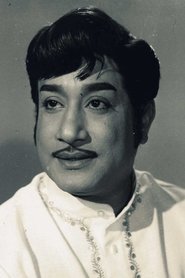
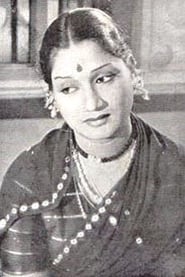
Shekar, a rich young man, discovers that his cousins, Gowri and Sundar, are finding it difficult to lead a comfortable life. He decides to help them against his father's wishes.
Cast & crew
More Drama films
View all →






More from K. Somu
View all →More about this film
About the production
Release dateJanuary 14, 1956
Box officeConsidered a 'Super Hit' at the time of its release, performing exceptionally well in the Madras Presidency region.
ProductionParagon Pictures
Filmed inChennai (then Madras), Tamil Nadu, India, Vahini Studios
The film marked the beginning of a highly successful and prolific collaboration between actor Sivaji Ganesan and writer-director A. P. Nagarajan. It was produced by A. M. Ismail under the Paragon Pictures banner. The production was noted for its high emotional stakes and traditional melodrama style, which was a staple of 1950s Tamil cinema.
Themes
Themes & topics
cousinsinheritancemental illnesslost sisterpovertywrongful arrestfamily reunionstage playaccountant villain
Historical background
Naan Petra Selvam reached screens around 1956, produced in its country of origin. Postwar distribution and sound standards shaped how it was marketed.
Why this film matters
Researchers cite Naan Petra Selvam when tracing screen culture of its decade.
Making of
The production of 'Naan Petra Selvam' was characterized by the emerging 'Sivaji style' of acting, which emphasized intense emotional delivery and theatrical expressions. Director K. Somu worked closely with A. P. Nagarajan to ensure the screenplay balanced social commentary with family drama. among the leading challenging aspects of the shoot was the stage play sequence where Sivaji Ganesan had to perform as a classical poet; this required rigorous rehearsal to master the complex Tamil verses. The chemistry between Sivaji Ganesan and G. Varalakshmi was highly praised, leading to them being cast together in several subsequent projects. The film also utilized the technical expertise of cinematographer J. G. Vijayam to create a stark contrast between the opulent lifestyle of the Mirasdar and the gritty poverty faced by Shekar.
What critics said
Reviewers in 1956 weighed Naan Petra Selvam on clarity, pacing, and audience response rather than prestige status. No single canonical review dominates later reference works for the title.
Did you know?
- This film is the first of many collaborations between the actor Sivaji Ganesan and the writer A. P. Nagarajan, who later became a famous director of mythological films.
- The title song 'Naan Petra Selvam' is set in the Jaunpuri raga, a choice by composer G. Ramanathan that became iconic in Tamil film music history.
- The film features a play-within-a-film sequence where Sivaji Ganesan portrays the poet Nakkeerar, a role he would famously reprise nine years later in the 1965 masterpiece 'Thiruvilaiyaadal'.
- The plot involves a 'lost and found' trope common in Indian cinema, specifically regarding the character Dr. Sumathi being the long-lost daughter of the Mirasdar.
- The film was released during the Pongal festival of 1956, a prime release window for major Tamil films.
- M. N. Nambiar, who was typically known for playing villainous roles, played a sympathetic character (Sundar) who loses his mental balance in this film.
- The film's dialogue was written by A. P. Nagarajan, who was known for his command over classical Tamil and rhythmic prose.
- The soundtrack was a major success, with the song 'Thirudathe Poisollathe' becoming a popular moralistic anthem for children.
Awards & recognition
- Best Actor (Sivaji Ganesan) - Film Fans Association Award (1956)
- Best Film - Film Fans Association Award (1956)
Visual style
The cinematography by J. G. Vijayam is notable for its use of high-contrast lighting to depict the emotional turmoil of the characters. The indoor sets of the Mirasdar's mansion are filmed with a sense of grandeur and space, while the scenes of Shekar's poverty are shot in tighter, more claustrophobic frames to emphasize his struggle. The stage play sequence is captured with a theatrical flair, using static shots to mimic a live audience's perspective.
Innovations
The film was noted for its seamless integration of a stage play within the cinematic narrative, a technique that required precise editing by T. Vijayarangam. The sound recording was also advanced for its time, capturing the nuances of Sivaji Ganesan's booming voice and the intricate classical compositions of G. Ramanathan without significant distortion.
Music
The music, composed by G. Ramanathan with lyrics by Ka. Mu. Sheriff, is one of the film's strongest pillars. Key tracks include: 1. 'Naan Petra Selvam' - A soulful title track in Jaunpuri raga sung by T. M. Soundararajan. 2. 'Thirudathe Poisollathe' - A moralistic song that became a staple in schools. 3. 'Inbam Vandhu Serum' - A romantic duet. 4. 'Maatha Pitha Guru Deivam' - A song emphasizing traditional respect for parents and teachers. 5. 'Kattukulla' - A folk-inspired track.
Famous quotes
Thirudathe, poi sollathe... (Don't steal, don't lie...) - Context: A moral teaching song that became a famous quote in itself.
Naan petra selvam, nalamana selvam. (The child I have gained is a healthy/good treasure.) - Context: The recurring theme of the film regarding the value of children over material wealth.
Netrikkan thirappinum kutram kutrame! (Even if you open your third eye, a mistake is a mistake!) - Context: Spoken by Sivaji Ganesan as Nakkeerar in the stage play sequence, a line that became.
Memorable scenes
- The Nakkeerar stage play sequence where Shekar (Sivaji Ganesan) argues with a character playing Lord Shiva about the natural fragrance of women's hair.
- The tragic scene where Gowri dies in the nursing home while Shekar is caught attempting to steal to pay her bills.
- The climax where Sundar regains his memory upon meeting his nephew Selvam.
- The emotional reunion between the Mirasdar and his long-lost daughter, Dr. Sumathi.
What audiences thought
The film was a massive commercial success, particularly among female audiences who were moved by the tragic arc of Gowri and the struggles of Shekar. It ran for over 100 days in several theaters across Tamil Nadu, a significant milestone at the time. The songs were ubiquitous on the radio, further fueling the film's popularity and ensuring its status as a 'Super Hit'.
Film connections
Influenced by
- The 'Lost and Found' tropes of 1940s Indian social dramas
- Victorian melodramas regarding inheritance and family honor
This film influenced
- Thiruvilaiyaadal (1965) - specifically the Nakkeerar sequence
- Many subsequent Tamil family dramas of the 1960s that featured the 'suffering hero' archetype
Film restoration
The film is preserved in the National Film Archive of India (NFAI). Digital restorations have been made, and the film is frequently broadcast on vintage cinema television channels in South India.
Where to watch
- YouTube (Official channels like Rajshri Tamil)
- Amazon Prime Video (Regional availability)
- Tamil-language classic movie channels (Sun Life, Raj Digital Plus)