Sivaji Ganesan
Actor
Born: October 1, 1928 in Sirkali, Madras Presidency, British India (now Tamil Nadu, India) Died: July 21, 2001 Active: 1952-2001 Birth Name: Ganesan Subramanian
Films
7 films
About Sivaji Ganesan
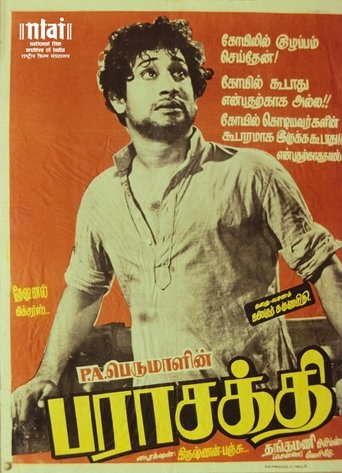
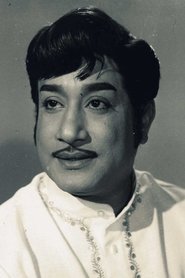
Indian actor who revolutionized Tamil cinema with his powerful performances and versatile acting abilities. Born as Ganesan Subramanian, he began his career as a stage actor before making his film debut in the 1952 film 'Parasakthi', which immediately established him as a major star. Throughout his five-decade career, he portrayed over 300 different characters in more than 280 films, showcasing an extraordinary range from mythological heroes to contemporary social characters. His breakthrough performance in 'Parasakthi' was particularly significant as it challenged social conventions and addressed contemporary issues, making him a cultural icon. Ganesan was renowned for his ability to deliver lengthy dialogues with perfect diction and emotional intensity, often performing complex monologues that became his trademark. He received international recognition, including being the first Indian actor to win a Best Actor award at an international film festival (Afro-Asian Film Festival in 1960). His influence extended beyond cinema into politics and social reform, making him respected figures in South Indian cultural history.
The Craft
On Screen
Sivaji Ganesan was renowned for his dramatic, theatrical acting style characterized by powerful dialogue delivery, intense emotional expressions, and remarkable voice modulation. His technique was heavily influenced by his stage background, incorporating elaborate gestures, facial expressions, and body language that could convey complex emotions. He was particularly famous for his ability to deliver lengthy monologues and dialogues with perfect diction and timing, often performing complex emotional transitions within single scenes. His style blended classical Indian theatrical traditions with contemporary cinematic techniques, creating a unique approach that emphasized emotional authenticity while maintaining dramatic intensity. Ganesan's method involved deep character study and preparation, allowing him to transform completely into diverse roles ranging from mythological heroes to modern social characters.
Milestones
- Film debut in Parasakthi (1952) which became a cultural phenomenon
- First Indian actor to win Best Actor at an international film festival (1960)
- Portrayed over 300 different characters in 280+ films
- Received Padma Shri (1966) and Padma Bhushan (1984) awards
- Honored with Dadasaheb Phalke Award (1997)
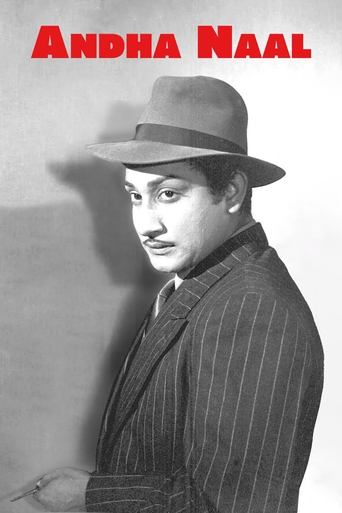
- Acted in the first Tamil film without songs 'Andha Naal' (1954)
- Delivered legendary performances in historical and mythological roles
- Became a cultural icon and influenced generations of actors
Best Known For
Iconic Roles
Must-See Films
Accolades
Won
- Padma Shri (1966)
- Padma Bhushan (1984)
- Dadasaheb Phalke Award (1997)
- Best Actor Award at Afro-Asian Film Festival (1960)
- Filmfare Best Actor Award (multiple times)
- Tamil Nadu State Film Awards (multiple times)
- Kalaimamani award from Tamil Nadu government
Nominated
- Nominated for Filmfare Awards for numerous films throughout his career
- Considered for international film festival juries multiple times
Special Recognition
- First Indian actor to be featured on a postage stamp
- Statue erected in Chennai honoring his contributions
- Multiple roads and theaters named after him
- Honorary doctorates from several universities
- Lifetime Achievement Awards from various film organizations
- Recognized as one of the greatest actors of Indian cinema
Working Relationships
Worked Often With
Studios
Why They Matter
Impact on Culture
Sivaji Ganesan's cultural impact extended far beyond cinema, making him. His portrayal of strong, principled characters in films like 'Parasakthi' helped shape social consciousness and challenged traditional norms in post-independence India. He became a symbol of Tamil pride and cultural identity, with his performances often addressing social issues like caste discrimination, women's rights, and political corruption. His influence on Tamil language and literature was profound, as he popularized classical Tamil through his dialogue delivery and made traditional arts accessible to mass audiences. Ganesan's films served as vehicles for preserving and promoting Tamil culture, mythology, and history, educating generations about their heritage while entertaining them. His status as a cultural icon was such that his birthday is still celebrated by fans as a cultural event, and his films continue to be studied for their artistic and social significance.
Lasting Legacy
Sivaji Ganesan's legacy as an actor and cultural figure remains unparalleled in Indian cinema history. He established a benchmark for acting excellence that continues to inspire generations of performers, particularly in South Indian cinema. His technique of blending theatrical intensity with cinematic realism created a new paradigm for film acting that many subsequent actors have emulated. The characters he portrayed, especially historical figures like Veerapandiya Kattabomman, have become part of Tamil cultural consciousness, with his interpretations becoming definitive versions. His influence extends to technical aspects of filmmaking as well, with his demanding approach to character preparation raising standards across the industry. The awards and honors he received, including India's highest civilian honors, cemented his status as a national treasure. Today, his films are studied in film schools, his acting techniques are analyzed by scholars, and his contributions to cinema are celebrated through retrospectives and festivals worldwide.
Who They Inspired
Sivaji Ganesan's influence on subsequent generations of actors is immeasurable, with many of India's biggest stars citing him as their primary inspiration. His method of intense character study and preparation influenced actors like Kamal Haasan, who developed a reputation for versatility similar to Ganesan's. Rajinikanth, one of India's biggest superstars, has frequently acknowledged Ganesan's impact on his acting style and career approach. The tradition of powerful dialogue delivery and emotional intensity that Ganesan pioneered became a hallmark of Tamil cinema, with actors like Vijayakanth and Sarathkumar following in his footsteps. Beyond acting, his approach to film production and his emphasis on quality storytelling influenced filmmakers across Indian cinema. International filmmakers who discovered his work were impressed by his range and technique, helping bring Indian cinema to global attention. His legacy lives on through the Sivaji Productions company established by his family, continuing his commitment to quality filmmaking.
Off Screen
Sivaji Ganesan led a rich personal life that balanced his cinematic career with family responsibilities and social commitments. He married Lakshmi Rajyam in 1952, and they had two sons together before their separation. Later, he married Pankajavalli in 1954, with whom he had four children, including two sons who followed in his footsteps to become actors. Despite his enormous success, Ganesan maintained strong connections to his humble beginnings in Sirkali and remained deeply involved in social and charitable causes throughout his life. He was known for his generosity and often supported struggling artists and crew members in the film industry. His personal philosophy emphasized hard work, dedication to craft, and service to society, values he instilled in his children and the many actors he mentored.
Education
Limited formal education due to family circumstances, but received extensive training in traditional Tamil arts, music, and theater during his formative years
Family
- Lakshmi Rajyam (1952-1957)
- Pankajavalli (1954-2001)
Did You Know?
- Was the first Indian actor to receive a salary of one lakh rupees per film
- Could memorize and deliver pages of dialogue in a single take
- Was a talented singer and musician in his early stage career
- His stage name 'Sivaji' was given by his mentor E.V. Ramasamy (Periyar)
- Acted in the first Tamil film without songs ('Andha Naal')
- Once performed 12 different roles in a single stage play
- His film 'Veerapandiya Kattabomman' was screened at the Cannes Film Festival
- Was offered roles in Hollywood films but declined to focus on Tamil cinema
- His voice was considered so powerful that microphones had to be specially adjusted
- Maintained a personal library of over 10,000 books on various subjects
- Was fluent in Tamil, Telugu, Hindi, and English
- His final film appearance was in 'Padaiyappa' (1999) alongside Rajinikanth
In Their Own Words
Acting is not just performing; it's becoming the character and living their emotions
Cinema should not only entertain but also educate and elevate society
Every role is a new life; you must live it completely to do justice to it
Success comes not from talent alone, but from dedication and continuous learning
The stage and screen are platforms to reflect society and inspire change
Art without purpose is mere entertainment; art with purpose is civilization
Frequently Asked Questions
Who was Sivaji Ganesan?
Legendary Indian with credits in this catalog. He appeared in over 280 films spanning five decades and was known for his dramatic acting style and ability to portray diverse characters with remarkable authenticity.
What films is Sivaji Ganesan best known for?
Titles linked here include Parasakthi (1952), Andha Naal (1954).
When was Sivaji Ganesan born and when did he die?
Born October 1, 1928; died July 21, 2001.
What awards did Sivaji Ganesan win?
He received numerous prestigious awards including the Padma Shri (1966), Padma Bhushan (1984), and Dadasaheb Phalke Award (1997). He was also the first Indian actor to win a Best Actor award at an international film festival (Afro-Asian Film Festival, 1960) and received multiple Filmfare Awards and Tamil Nadu State Film Awards.
What was Sivaji Ganesan's acting style?
Ganesan was known for his dramatic, theatrical style characterized by powerful dialogue delivery, intense emotional expressions, and remarkable voice modulation. His technique blended classical Indian theatrical traditions with contemporary cinematic approaches, allowing him to perform complex monologues and emotional transitions with exceptional skill.