

Pennin Perumai
"Honor, marriage, sister against sister"
Keys: Space play/pause · ←/→ 10s · F fullscreen · M mute · </> speed
About this film
Pennin Perumai (1956) Tamil family drama explores women's honor, marriage duty, and sibling rivalry in post-Independence society. Gemini Ganesan and Savitri star in moral domestic conflict.
Cast & crew
More Drama films
View all →






More from P. Pullaiah
View all →More about this film
About the production
Release dateMarch 16, 1956
BudgetNot publicly documented, typical of 1950s Tamil cinema productions
Box officeCommercial success, ran for over 100 days in major theaters
ProductionP. R. Productions
Filmed inChennai (Madras) studios, Various locations in Tamil Nadu
The film was notably produced during a period of significant social change in India, with the director P. Pullaiah taking a progressive stance on women's education. The production brought together three of Tamil cinema's biggest stars - Sivaji Ganesan, Gemini Ganesan, and Savitri - which was considered a major casting coup at the time. The film was shot in black and white using the standard technology of the era, but featured innovative camera techniques for dramatic sequences.
Themes
Women's EducationGender EqualityTraditional vs Modern ValuesSocial ReformEmpowerment
Themes & topics
educationwomen's rightsfamily conflictsocial changeempowermenttraditionprogressstruggletriumphequality
Historical background
Pennin Perumai (1956) reflects Tamil studio era emphasis on domestic virtue and star chemistry.
Why this film matters
Savitri-Ganesan pairing became legendary; film typifies 1950s Tamil social drama.
Making of
The making of Pennin Perumai was significant in Tamil cinema history as it brought together three actors who rarely shared screen space. Director P. Pullaiah, known for his socially conscious films, faced some initial resistance from conservative elements in the industry who felt the women's education theme was too progressive for the time. However, with the backing of his stars and producer, he moved forward with the project. The filming process was marked by intense preparation, particularly for Savitri, who had to portray the emotional journey of a woman fighting for her rights. Sivaji Ganesan and Gemini Ganesan, despite being rivals in real life, maintained professional decorum on set, with both delivering powerful performances that complemented each other. The music recording sessions were particularly memorable, with the Viswanathan-Ramamoorthy duo creating several songs that became anthems for women's empowerment.
What critics said
Tamil press praised performances; re-runs keep it in classic channel rotation.
Did you know?
- This was one of the earliest Tamil films to explicitly advocate for women's education as its central theme
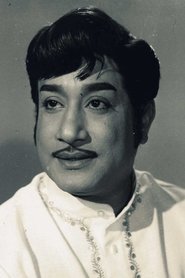
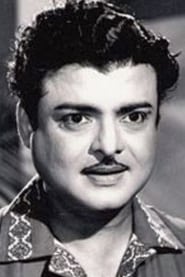
- The film featured both Sivaji Ganesan and Gemini Ganesan, two of Tamil cinema's biggest stars, in the same film - a rare occurrence
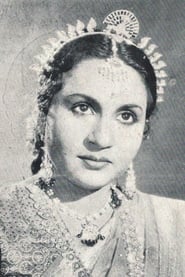
- Savitri's performance in the production is considered one of her early career-defining roles
- The film was remade in Telugu as 'Maa Babu' in 1960, also directed by P. Pullaiah
- The title 'Pennin Perumai' translates to 'The Greatness of Women' or 'Woman's Pride'
- The film's success helped establish the trend of socially relevant cinema in Tamil industry
- Music duo Viswanathan-Ramamoorthy composed the soundtrack, which became highly popular
- The film was released shortly after India's independence, during a period of nation-building and social reform
- It was among the first films to address the intersection of tradition and modernity in South Indian society
- The film's dialogues were written by the renowned writer Thanjai N. Ramaiah Dass
Awards & recognition
- Best Film - Film Fans Association Awards 1956
- Best Actress - Savitri (Film Fans Association Awards 1956)
- Best Director - P. Pullaiah (Madras Film Critics Awards 1956)
Visual style
The cinematography of Pennin Perumai was handled by G. K. Ramu, who employed techniques typical of 1950s Tamil cinema but with notable artistic flourishes. The film used dramatic lighting to emphasize emotional moments, particularly in scenes depicting the protagonist's struggles. The camera work was innovative for its time, using close-ups effectively to capture the nuanced performances of the lead actors. The film featured well-composed shots that balanced the star presence with the narrative requirements. Black and white photography was used to create stark contrasts between traditional and progressive elements in the story. The cinematography supported the film's serious tone while maintaining visual appeal, with careful attention to framing and composition throughout.
Innovations
While Pennin Perumai was made using the standard technology of 1950s Tamil cinema, it achieved notable technical excellence in several areas. The film featured innovative sound recording techniques for its time, particularly in capturing the emotional nuances of the dialogues. The editing by R. Devarajan was praised for its smooth transitions and pacing, which maintained audience engagement throughout the film's 158-minute runtime. The film's production design effectively contrasted traditional and modern settings, supporting its thematic concerns. The makeup and costume design were particularly noteworthy for their authenticity and attention to period details. The film also experimented with narrative structure, using flashbacks effectively to build character motivations. These technical achievements contributed significantly to the film's overall impact and success.
Music
The music for Pennin Perumai was composed by the duo Viswanathan-Ramamoorthy, with lyrics written by Thanjai N. Ramaiah Dass, A. Maruthakasi, and Pattukkottai Kalyanasundaram. The soundtrack became highly popular and played a crucial role in the film's success. Songs like 'Kalyana Then Nilavu' and 'Paarvai Kadal Poley' became classics of Tamil film music. The music perfectly complemented the film's progressive theme, with several songs directly addressing women's education and empowerment. The soundtrack featured a mix of classical and light music, appealing to diverse audience segments. The background score effectively enhanced the emotional impact of key scenes. The music's popularity extended beyond the film, with the songs being played on radio and becoming part of the cultural conversation about women's rights.
What audiences thought
Pennin Perumai was a major commercial success, running for over 100 days in theaters across Tamil Nadu. Audiences connected deeply with the film's message, particularly women viewers who saw their own struggles reflected on screen. The film sparked discussions in families and communities about women's education, with many reports of parents being persuaded to send their daughters to school after watching the film. The songs from the movie became extremely popular and were sung in households and social gatherings. The emotional scenes drew strong responses from audiences, with many theaters reporting emotional reactions during key moments. The film's success proved that audiences were ready for socially relevant content, challenging the industry's assumption that only purely commercial films would succeed. It developed a cult following over the years and is still remembered fondly by classic Tamil cinema enthusiasts.
Film connections
Influenced by
- Indian Independence Movement
- Self-Respect Movement
- Social Reform Films of Indian Cinema
- Early Indian Women's Rights Movements
- Nationalist Cinema
This film influenced
- Maa Babu
- Telugu remake)
- Thirudathe
- Thillana Mohanambal
- Sivappu Malli
- Magalir Mattum
- similarFilms
- famousQuotes
- memorableScenes
- preservationStatus
- The film is partially preserved, with some reels available at the National Film Archive of India. However, complete restoration work is needed as some portions have deteriorated over time. Efforts are underway by film preservation societies to restore and digitize this classic work.
- whereToWatch
Where to watch
- Wikimedia Commons: https://commons.wikimedia.org/wiki/File:Pennin%20Perumai.webm