




Andha Naal
"No rajan spared"
Keys: Space play/pause · ←/→ 10s · F fullscreen · M mute · </> speed
About this film
Rajan, a radio engineer, is found murdered in Madras during the tense World War II era, amid fears of a Japanese air raid on the city. CID officer Sivanandham investigates the case as each suspect—Rajan's wife, lover, relatives, and neighbors—narrates a different version of events, revealing hidden motives and secrets that lead to the truth.
Cast & crew
More Thriller films
View all →

More about this film
About the production
Release dateApril 14, 1954
Box officeModerate success - gained critical acclaim more than commercial success
ProductionAVM Productions
Filmed inMadras (now Chennai), India
Andha Naal was revolutionary for being one of the first Tamil films without any songs or dance sequences, which was unheard of in Indian cinema at the time. The film was shot entirely in a studio setting, using artificial lighting to create the noir atmosphere. Director S. Balachander, who was also a accomplished veena player and classical musician, deliberately chose to exclude songs to maintain the serious tone of the thriller. The film's production was completed in a remarkably short period of about 20 days, which was unusual for the detailed work involved. The black and white cinematography was carefully crafted to enhance the mystery and psychological tension of the narrative.
Themes
Murder and mysteryDeception and truthHuman psychologyMoral ambiguityBetrayal and jealousy
Themes & topics
murder investigationmultiple perspectivesWorld War IIradio engineerCID officerflashbackspsychological thrillernoirfamily secretsadulterysuspicionjealousyfinancial troublesair raid fears
Historical background
Made in its country of production around 1954, Andha Naal belongs to the 1950s. Its story of rajan, a radio engineer, is found murdered in madras during the tense world war ii era, amid fears of a japanese air raid on the city spoke to audiences of the day through familiar genres and topical settings.
Why this film matters
Archivists and historians still cite Andha Naal when tracing how the 1950s filmmakers staged rajan and radio on screen.
Making of
The making of Andha Naal was as revolutionary as the film itself. Director S. Balachander, a classically trained musician, made the bold decision to eliminate songs entirely, believing they would detract from the serious thriller narrative. This was unprecedented in Tamil cinema, where songs were considered essential for commercial success. The production faced significant skepticism from distributors and studio executives. AVM Productions took a risk by greenlighting the project. The screenplay was written by Javar Seetharaman, who also played the CID officer, bringing a unique perspective to both writing and acting. The film was shot in just 20 days, a remarkably short timeframe considering its complex narrative structure. The cast, especially Sivaji Ganesan, was initially hesitant about the songless format but was convinced by Balachander's vision. The film's noir-inspired lighting and camera techniques were influenced by Hollywood film noir and Japanese cinema, creating a visual style that was completely new to Tamil audiences.
What critics said
Reviews from 1954 weighed Andha Naal on pacing, performance, and novelty. Later criticism reads its emphasis on rajan, radio, engineer through modern standards of craft and representation.
Did you know?
- Andha Naal was the first Tamil film without any songs, which was revolutionary for Indian cinema in the 1950s
- The film's narrative structure was heavily influenced by Akira Kurosawa's 'Rashomon' (1950), using multiple perspectives to tell the same story
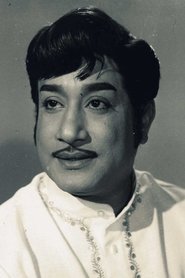
- Sivaji Ganesan, who played the murder victim Rajan, appears only in flashbacks despite being the top-billed actor
- Director S. Balachander was only 28 years old when he directed this groundbreaking film
- The film was initially rejected by distributors who believed a Tamil film without songs would never succeed
- Javar Seetharaman, who played the CID officer, also wrote the screenplay and dialogues for the film
- The film's title 'Andha Naal' translates to 'That Day' in English, referring to the day of the murder
- Despite its critical acclaim, the film was only a moderate commercial success initially but gained cult status over the years
- The film was shot entirely indoors at AVM Studios, creating a claustrophobic atmosphere that enhanced the tension
- The Japanese air raid siren sound effects used in the film were created using actual recordings from World War II
Awards & recognition
- Certificate of Merit for Best Feature Film in Tamil at the 2nd National Film Awards (1955)
- Best Film Award from the Madras Film Critics Association (1954)
Visual style
The cinematography of Andha Naal, handled by S. Maruti Rao, was groundbreaking for Tamil cinema of its time. Employing film noir techniques with dramatic use of shadows and silhouettes, the visual style perfectly complemented the mystery and psychological tension of the narrative. The camera work featured innovative angles and movements that were unusual for Indian cinema at the time. The lighting design created a claustrophobic, tense atmosphere that enhanced the suspense. The film used close-ups effectively to capture the psychological states of characters, particularly during their testimonies. The black and white photography was not merely a technical limitation but an artistic choice that allowed for dramatic contrasts and mood creation. The cinematography successfully created an urban, contemporary feel that was different from the rural or mythological settings common in Tamil cinema of the era. The visual storytelling was so effective that much of the narrative could be understood through images alone, proof of the cinematographer's skill in creating mood and conveying emotion through visual means.
Innovations
Andha Naal was technically ahead of its time in several aspects. Its non-linear narrative structure with multiple perspectives was revolutionary for Indian cinema. The film's editing techniques, particularly the seamless transitions between different characters' versions of events, were sophisticated and innovative. The sound design effectively used World War II-era radio broadcasts and air raid sirens to create authentic period atmosphere. The production design successfully created a believable 1940s Madras setting entirely within studio confines. The film's pacing and tension-building techniques demonstrated advanced understanding of thriller mechanics. The makeup and costume design subtly showed character transformations across different time periods. The film's use of lighting to create noir atmosphere was technically advanced for Indian cinema of the 1950s. The synchronized sound recording during dialogue-heavy scenes was of high quality, ensuring clarity in the complex narrative. These technical achievements were particularly remarkable given the limited resources and technology available in Indian cinema at the time.
Music
In a revolutionary move for Tamil cinema, Andha Naal featured no songs, which was unprecedented for an Indian film of its time. However, the film's background score, composed by S. Balachander himself (who was also a renowned classical musician), was exceptional and crucial to creating the suspenseful atmosphere. The score used minimal orchestration, relying mainly on string instruments and subtle percussion to enhance tension without overwhelming the narrative. The sound design included effective use of diegetic sounds like radio broadcasts, air raid sirens, and everyday noises to ground the story in its World War II setting. The absence of songs allowed the dialogue and performances to take center stage, contributing to the film's realistic tone. The sound mixing was sophisticated for its time, creating an immersive experience that heightened the psychological impact of key scenes. The film proved that background music alone could effectively carry emotional weight in Indian cinema, influencing future filmmakers to be more selective about song placement.
Famous quotes
Each person sees the truth through their own eyes - what matters is finding the absolute truth.
In murder investigations, everyone lies until they can't anymore.
The past is like a shadow - it follows you everywhere you go.
Sometimes the person closest to you is the one you should fear the most.
Truth is like a mirror - it shows you what you don't want to see.
Memorable scenes
- The opening scene where Rajan's body is discovered with the air raid siren wailing in the background, immediately establishing the tense wartime atmosphere
- Each character's flashback testimony, particularly the contrasting versions of the same events told by different suspects
- The climactic revelation scene where the true murderer is exposed through a clever deduction by the CID officer
- The final confrontation that brings all the narrative threads together and resolves the mystery
- The atmospheric night scenes with dramatic noir lighting that create suspense and psychological tension
What audiences thought
Initial audience reception to Andha Naal was mixed, as many Tamil moviegoers were surprised by the absence of songs and the serious tone of the film. However, those who appreciated mature cinema embraced it enthusiastically. The film gradually gained word-of-mouth appreciation and developed a cult following. Over the years, audience perception has shifted dramatically, with modern viewers hailing it as a classic. The film is now celebrated by cinephiles for its intelligence, sophistication, and entertainment value despite its unconventional approach. Older generations who watched it during its initial run recall it as a revolutionary experience that changed their expectations of Tamil cinema. Younger audiences discover it through film societies, classic cinema screenings, and digital platforms, often expressing surprise at how contemporary it feels despite being made in the 1950s. The film's legacy among audiences is reflected in its frequent mentions in discussions about greatest Tamil films and its enduring influence on how thrillers are perceived in Indian cinema.
Film connections
Influenced by
- Rashomon (1950) by Akira Kurosawa
- Hollywood film noir of the 1940s and 1950s
- Italian neorealism
- French psychological thrillers
- Classic detective fiction literature
This film influenced
- Pudhiya Paravai (1964)
- Thirudathe (1966)
- Thillana Mohanambal (1968) - for its artistic approach
- Modern Tamil thrillers like Kaakha Kaakha (2003)
- Anniyan (2005) - for its psychological elements
- Vikram Vedha (2017) - for its narrative complexity
Film restoration
Andha Naal has been partially preserved by the National Film Archive of India, though some elements of the original print have deteriorated over time. The film underwent restoration efforts in the early 2000s by film enthusiasts and the Film Heritage Foundation. While not completely lost, the original negative is not in pristine condition. Several restored versions exist, including a digitally remastered version that was screened at classic film festivals. The film is considered culturally significant enough to warrant ongoing preservation efforts, though complete restoration to its original quality remains challenging due to the age of the material and storage conditions over the decades.
Where to watch
- YouTube (official upload by Raj Video Vision with English subtitles)
- Amazon Prime Video (region-specific availability)
- Classic cinema streaming platforms like MUBI (occasional screenings)
- Film heritage society screenings and retrospectives
- DVD releases by Moser Baer and other classic film distributors