


Night of the Living Dead
"They're coming to get you, Barbara!"
Keys: Space play/pause · ←/→ 10s · F fullscreen · M mute · </> speed
About this film
A ragtag group barricade themselves in an old Pennsylvania farmhouse to remain safe from a horde of flesh-eating ghouls ravaging the Northeast.
Cast & crew
More films like this
More Horror films
View all →

More about this film
About the production
Release dateOctober 1, 1968 (Pittsburgh premiere), October 1968 (wide release)
Budget$114,000
Box office$12 million domestic (initial release), $18 million international, potentially $30 million worldwide with subsequent releases
ProductionImage Ten, Market Square Productions, Latent Image
Filmed inEvans City Cemetery, Evans City, Pennsylvania, Farmhouse near Butler, Pennsylvania, Pittsburgh, Pennsylvania
Originally titled 'Night of the Flesh Eaters' before being changed to avoid confusion with other horror films. The film was shot in black and white partly for artistic reasons but also because it was cheaper and Romero wanted to avoid the colorization process. The cast and crew were mostly local Pittsburgh talent, many working for deferred payment. The famous flesh-eating scenes used roasted ham covered in chocolate syrup for blood. The film entered the public domain due to the distributor's failure to place a copyright notice on the prints, which has led to numerous unauthorized releases over the years.
Themes
Survival against overwhelming oddsBreakdown of social orderRacial tension and prejudiceCritique of authority and institutionsMedia manipulation and sensationalism
Themes & topics
zombiesghoulsfarmhousesurvival horrorapocalypseflesh eatingradiationpossebarricadetrappedcemeterynews reportfamily conflictrace relationsend of the world
Historical background
Night of the Living Dead (1968) reached screens through Image Ten. Exhibitors of the time built postwar exhibition that mixed shorts, features, and live acts, so a clear premise helped Night of the Living Dead travel between cities and exchange markets.
Why this film matters
Archivists and revival programmers still cite Night of the Living Dead (1968) when tracing studio habits, casting pools, and the visual rhetoric audiences once took for granted. Even modest surviving prints help map how Night of the Living Dead fit beside competing releases of its day.
Making of
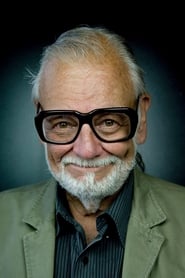
Night of the Living Dead was created by a group of friends who had previously worked together on commercial and industrial films in Pittsburgh. George Romero, John Russo, Russell Streiner, and Karl Hardman formed Image Ten Productions with the goal of making a profitable horror film. The script was written by Romero and Russo during weekends while they maintained their day jobs. The film was shot in black and white not only for budgetary reasons but also to create a stark, documentary-like feel that Romero believed would make the horror more believable. The farmhouse location was rented for $500 and the owners lived there during filming, often serving as background extras. The famous zombie makeup was created using simple techniques - grayish face paint, dark circles under the eyes, and occasionally fake blood. The gore effects were achieved using practical effects including chocolate syrup for blood, roasted ham for flesh, and animal entrails from a local butcher shop. The film's controversial decision to cast Duane Jones as the lead was groundbreaking for 1968, as it marked one of the first times an African American actor played a leading role in a mainstream horror film without the character's race being central to the plot.
What critics said
Trade coverage around 1968 discussed Night of the Living Dead for pacing, clarity, and program fit rather than blockbuster grosses. Later writers value it as evidence of period style and as a reference point beside other films from the same era.
Did you know?
- The film accidentally entered the public domain because the distributor forgot to add a copyright notice to the theatrical prints, which was required by law at the time.
- Duane Jones was cast as Ben not because he was African American, but because Romero felt he gave the best audition, making him one of the first Black protagonists in American horror cinema.
- The word 'zombie' is never used in the film; the creatures are referred to as 'ghouls' or 'flesh eaters'.
- The film's budget was so low that the cast used their own clothes for costumes and many did their own makeup.
- The famous final scene where Ben is shot was filmed with real bullets (blanks) that were fired dangerously close to actor Duane Jones.
- George Romero was inspired to make the film after reading Richard Matheson's novel 'I Am Legend'.
- The film was initially rejected by the MPAA for being too graphic, but was eventually released with no rating after an appeal.
- Many of the zombie extras were friends and family of the crew who worked for free.
- The film's success spawned a franchise of six films directed by Romero, concluding with 'Survival of the Dead' in 2009.
- The original ending was even darker, with Barbara's corpse shown being eaten by zombies, but this was cut for being too gruesome.
Awards & recognition
- 1970 - Sitges Film Festival - Best Director (George A. Romero)
- 1970 - Sitges Film Festival - Best Actress (Judith O'Dea)
- 1999 - National Film Registry - Inducted into Library of Congress
- 2001 - AFI's 100 Years...100 Thrills - Ranked #93
- 2008 - Empire Magazine's 500 Greatest Films of All Time - Ranked #397
Visual style
The black and white cinematography by George A. Romero (credited under the pseudonym 'Johnny Strong') creates a stark, documentary-like realism that enhances the film's horror. The decision to shoot in black and white was both economic and artistic, allowing Romero to create high-contrast images that emphasize the film's themes of light versus darkness and life versus death. The handheld camera work during chaotic scenes creates a sense of immediacy and panic, while static shots during tense moments build unbearable suspense. Romero uses deep focus to keep multiple threats visible in the frame, constantly reminding viewers of the danger surrounding the characters. The cinematography employs unusual angles and compositions to create unease, such as low shots that make the zombies appear more menacing and high angles that emphasize the characters' vulnerability. The film's most iconic shot - the final image of Ben's body being burned on a pyre - is composed to resemble a news photograph, reinforcing the film's commentary on media sensationalism. The cinematography also makes effective use of shadows and silhouettes, particularly in the sequences where zombies first appear at the farmhouse windows, creating images that have become deeply embedded in popular culture.
Innovations
Despite its minuscule budget, Night of the Living Dead achieved several technical innovations that would influence filmmaking for decades. The film pioneered the use of news report footage within a horror narrative to create verisimilitude, a technique now common in disaster and zombie films. Romero's use of gore effects, while relatively simple by modern standards, was groundbreaking for its time and pushed the boundaries of what was acceptable in mainstream cinema. The film's editing, particularly during the climactic zombie attack sequences, creates a sense of chaos and panic through rapid cuts and overlapping action. The practical effects for the zombie makeup were innovative in their simplicity, using basic materials to create iconic and terrifying designs. The film's use of real locations rather than studio sets gave it an authenticity that was unusual for horror films of its era. The decision to cast Duane Jones as the lead without making his race a plot point was a technical and social innovation in casting practices. The film's sound design, particularly the creation of zombie vocalizations, influenced how undead creatures would be portrayed in subsequent films. The movie's public domain status, while accidental, became a technical innovation in distribution, allowing for widespread availability and influence that would have been impossible under normal copyright restrictions.
Music
The film's soundtrack was composed by William Loose, who used library music under various pseudonyms to create the score. The main theme is a minimalist, repetitive piano piece that creates an atmosphere of dread and inevitability. The score eschews traditional horror music in favor of a more subtle approach that builds tension through repetition and dissonance. Sound design plays a crucial role in the film's effectiveness, with the moans and groans of the ghouls created by the actors themselves using various techniques. The film makes effective use of silence, particularly in the early scenes, to create unease before the attacks begin. Radio and television broadcasts are incorporated into the soundtrack, providing exposition and creating a sense of realism by placing the events within a broader context. The sound of breaking glass, gunshots, and screaming are mixed to create a cacophony during the film's climax, overwhelming the viewer just as the characters are overwhelmed by the zombie horde. The film's most famous sound effect - the repeated phrase 'They're coming to get you, Barbara' - echoes throughout the film, tying together the narrative and emphasizing the inescapable nature of the threat. The soundtrack's minimalist approach has influenced countless horror films, demonstrating that less can often be more when creating atmospheric tension.
Famous quotes
They're coming to get you, Barbara! - Johnny's taunting line in the cemetery that becomes the film's iconic tagline and foreshadows the horror to come.
We've got to have a plan. We can't just stay here like this. - Ben's desperate plea for organization as the situation deteriorates.
Kill the brain and you kill the ghoul. - The crucial discovery about how to stop the creatures, establishing a zombie rule that persists to this day.
Another one for the fire. - The posse member's casual comment as Ben's body is burned, highlighting the dehumanization and tragedy of the ending.
All right, you've had your fun. Now get out of here! - Harry Cooper's angry confrontation with Ben, exemplifying the human conflict that proves as deadly as the zombies.
I'm coming to get you, Barbara! - The radio announcer's repetition of Johnny's line, showing how media sensationalism twists personal tragedy into entertainment.
Memorable scenes
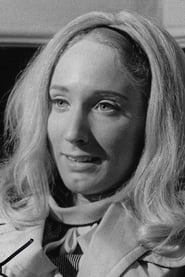
- The opening cemetery sequence where Johnny and Barbra are attacked, establishing the film's tone and featuring the iconic line 'They're coming to get you, Barbara!' The scene's sudden violence and Johnny's death immediately subvert audience expectations.
- The first zombie appearance at the farmhouse window, where a ghoul slowly approaches the glass and begins breaking through, creating an image of home invasion that has been endlessly imitated.
- The tense board-up sequence where Ben methodically secures the house while Barbra remains catatonic, showcasing Ben's competence and establishing the farmhouse as both sanctuary and potential tomb.
- The tragic truck explosion scene where Tom and Judy attempt to escape for gas but are killed when the truck catches fire, demonstrating the futility of escape and the brutal consequences of mistakes.
- The cellar confrontation where the group argues about strategy, revealing how human conflict and ego become as dangerous as the external threat.
- The final shocking sequence where Ben, having survived the night, is mistaken for a ghoul and shot by the posse, followed by the grainy news footage of his body being burned, creating one of cinema's most bleak and politically charged endings.
What audiences thought
Night of the Living Dead was a surprise box office success, grossing millions against its tiny budget and becoming a midnight movie phenomenon. Initial audiences were shocked by its graphic violence and bleak tone, with some reportedly fleeing theaters during particularly gruesome scenes. The film developed a strong cult following, particularly among young audiences who appreciated its subversive nature and rejection of Hollywood conventions. Word-of-mouth spread quickly about this terrifying new film that broke all the rules. The film's public domain status meant it could be shown widely and cheaply, exposing it to generations of horror fans. Over the decades, audience appreciation has only grown, with the film now considered a classic that transcends the horror genre. Modern viewers often express surprise at how well the film holds up, praising its tension, character development, and social commentary. The film has inspired countless fan conventions, academic studies, and even pilgrimages to its filming locations. Its influence on popular culture is evident in everything from Halloween costumes to political cartoons, proving that audiences continue to connect with its themes and imagery more than fifty years after its release.
Film connections
Influenced by
- I Am Legend (novel by Richard Matheson)
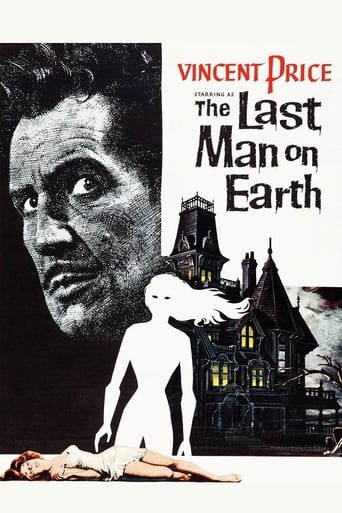
- The Last Man on Earth (1964 film)
- Invasion of the Body Snatchers (1956)
- The Birds (1963)
- Psycho (1960)
- Voodoo and Haitian folklore
- Cold War nuclear fears
- Vietnam War imagery
- 1960s social upheaval
This film influenced
- Dawn of the Dead (1978)
- Day of the Dead (1985)
- Zombi 2 (1979)
- The Evil Dead (1981)
- Re-Animator (1985)
- 28 Days Later (2002)
- Shaun of the Dead (2004)
- Zombieland (2009)
- The Walking Dead (TV series)
- Train to Busan (2016)
Film restoration
Night of the Living Dead has been preserved by the Museum of Modern Art and the Library of Congress, which selected it for inclusion in the National Film Registry in 1999 for being 'culturally, historically, or aesthetically significant.' Despite its public domain status, which has led to numerous poor quality releases, several restoration efforts have been undertaken to preserve the film's original quality. The Criterion Collection released a restored version in 1999, and subsequent 4K restorations have been produced using the best available elements. The original camera negative has been preserved, though some scenes exist only in lower quality prints due to damage over the years. The film's public domain status, while problematic for controlling quality, has ironically helped ensure its survival by making it widely available and preventing it from being lost to rights issues. The Evans City Cemetery, where the opening scenes were filmed, has become a pilgrimage site for horror fans and remains largely unchanged since the film's production.
Where to watch
- The Criterion Channel
- Shudder
- Tubi (free with ads)
- Pluto TV (free)
- Amazon Prime Video (multiple versions available)
- YouTube (public domain uploads)
- Apple TV/ iTunes
- Google Play Movies
- Vudu
- Blu-ray/DVD - Criterion Collection edition
- Blu-ray/DVD - Shout Factory edition
- Various public domain collections