Photograph
"A photographer has his camera all set up to take a gentleman's picture."
Keys: Space play/pause · ←/→ 10s · F fullscreen · M mute · </> speed
About this film
A photographer has his camera all set up to take a gentleman's picture. The subject checks his face in a hand mirror, and the photographer poses him. Just as the photographer is about to take the picture, the subject gets up to look at the camera more closely.
Cast & crew
More films like this
More Comedy films
View all →







More from Louis Lumière
View all →

More about this film
About the production
Release date1895
Box officeUnknown (early films were not commercially tracked in the modern sense; shown as part of Lumière demonstrations)
ProductionSociété Lumière
Filmed inLyon, France
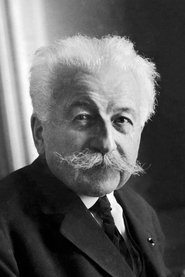
Filmed in one continuous shot using the Cinématographe device, which served as both camera and projector. The film was shot outdoors in natural light, as artificial lighting was not yet practical for motion pictures. Auguste Lumière, who appears as the subject, was not only the director's brother but also a key partner in developing the Cinématographe technology.
Themes
Human frustrationTechnology and human interactionProfessional patienceCuriosity vs. procedureComedy of errors
Themes & topics
Historical background
By 1895, distribution was widening and Photograph reached audiences through the theatrical channels dominant before television.
Why this film matters
Surviving prints of Photograph document how 1895-era filmmakers solved story problems with limited means.
Making of
The filming of 'Photograph' took place in 1895 at the Lumière factory in Lyon, France, where the brothers conducted their early motion picture experiments. The scene was likely staged in the courtyard or garden of the Lumière family home, taking advantage of natural sunlight which was essential for the slow film stock of the era. Auguste Lumière, who appears as the subject, was not a professional actor but participated in many of his brother's early films out of necessity and curiosity. The filming process required the actors to remain completely still during takes, as any camera movement would have been technically challenging with the bulky Cinématographe. The entire sequence was captured in a single continuous take, as editing technology had not yet been developed. The film was processed using the Lumière brothers' own photographic development techniques, which they had perfected through their previous work in still photography.
What critics said
Audience data from 1895 is sparse; reception for Photograph is inferred from reissue and archival interest.
Did you know?
- This film was part of the very first public film screening by the Lumière brothers on December 28, 1895, at the Grand Café in Paris
- The Cinématographe camera used to film this was also capable of developing and projecting the film, making it a revolutionary all-in-one device
- Auguste Lumière, who plays the subject, was actually a talented photographer in real life and helped perfect the photographic processes used in their film work
- The film demonstrates early use of comedic timing and situational humor, proving that cinema could entertain as well as document
- At 30 seconds, this was considered a substantial length for early films, many of which were under 20 seconds
- The large-format camera shown in the film was likely a real photographic apparatus, not just a prop
- This film was one of approximately 10 films shown at the historic first public screening
- The film was shot on 35mm film with a 1.33:1 aspect ratio, which would become the standard for silent films
- Louis Lumière reportedly believed cinema was 'an invention without a future' despite creating groundbreaking films like this
- The film's simple premise of photographer vs. subject would become a recurring trope in comedy films throughout cinema history
Visual style
The cinematography in 'Photograph' demonstrates the technical capabilities and limitations of the Lumière brothers' Cinématographe. The film was shot using a single, stationary camera positioned to capture the entire interaction between the photographer and his subject. The composition carefully frames both characters and the camera equipment within the shot, establishing the scene's context clearly. Natural lighting was used, requiring careful positioning to take advantage of sunlight while avoiding harsh shadows. The film exhibits remarkable clarity for the period, thanks to the Lumière brothers' expertise in photographic chemistry. The camera work is steady and professional, reflecting Louis Lumière's background as a skilled photographer. The framing allows viewers to clearly see the characters' expressions and actions, crucial for conveying the comedy without dialogue.
Innovations
The film represents a significant technical achievement as one of the first successful demonstrations of the Cinématographe, which was superior to competing devices due to its intermittent movement mechanism and claw system. The film showcases the Lumière brothers' ability to capture smooth, natural motion at 16 frames per second, which would become the standard for silent films. The processing and developing techniques used produced images of exceptional clarity and stability for the period. The film demonstrated that the Cinématographe could effectively capture human interaction and subtle comedic timing, proving the device's suitability for narrative filmmaking. The successful projection of this film at public screenings proved the commercial viability of cinema as entertainment. The film's preservation and survival to the present day is itself a technical achievement, given the fragility of early film stock.
Memorable scenes
- The climactic moment when the subject repeatedly stands up to inspect the camera, driving the photographer to increasing frustration, perfectly capturing the universal comedy of artistic process interrupted by curious subjects
What audiences thought
Audiences at the first public screening in December 1895 reportedly laughed and cheered during 'Photograph,' finding the situation both amusing and astonishingly real. Early viewers were particularly impressed by the natural movements and expressions of the performers, which contrasted with the stiff poses typical of contemporary photography. The film's humor was immediately accessible to viewers of all backgrounds, requiring no cultural knowledge or language skills to appreciate. Contemporary accounts describe audiences being delighted by the familiar frustration depicted, with many recognizing similar experiences in their own lives. The film became one of the more popular selections in the Lumière brothers' traveling exhibitions, consistently eliciting positive reactions from diverse audiences. Modern audiences viewing the film often express surprise at how effectively the comedy works despite the film's extreme brevity and the absence of sound.
Film connections
Influenced by
- Stage comedy traditions
- Photographic studio practices
- French theatrical farce
- Commedia dell'arte character archetypes
- Magic lantern show presentations
This film influenced
- Later Lumière comedies
- Early American comedies by Edison Studios
- Georges Méliès' fantasy comedies
- Charlie Chaplin's photographer-themed films
- Buster Keaton's technical comedy shorts
Film restoration
The film is preserved and available through various film archives and institutions, including the Lumière Institute in Lyon. The original 35mm film negative has been carefully preserved and restored, allowing modern audiences to view the film in quality close to its original presentation. Digital copies have been made from the restored elements for educational and archival purposes.
Where to watch
- YouTube (through official film archive channels)
- The Criterion Collection releases
- Lumière Institute official website
- Various film history streaming platforms
- Educational film databases
- Museum of Modern Art film collection screenings
- British Film Institute archive