
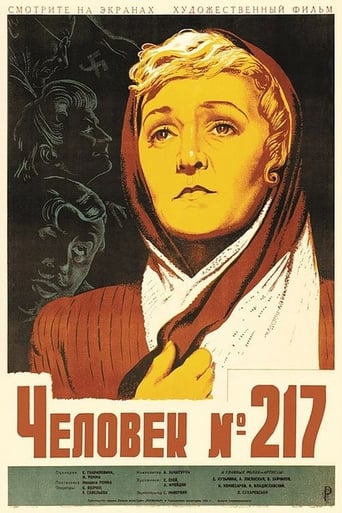
Rajchan
"Kazakh women find freedom under Soviet rule"
Keys: Space play/pause · ←/→ 10s · F fullscreen · M mute · </> speed
About this film
About the emancipation of Kazakh women under Soviet rule.
Cast & crew
More films like this
More Drama films
View all →







More from Moisei Levin
View all →
More about this film
About the production
Release dateMarch 15, 1940
ProductionAlma-Ata Film Studio, Kazakhfilm
Filmed inAlma-Ata (now Almaty), Kazakh SSR, Rural Kazakhstan
Filmed during a period of intense Soviet cultural transformation in Central Asia, 'Rajchan' was part of a larger state-sponsored effort to promote socialist values through cinema. The production faced challenges in finding authentic locations that could represent both traditional Kazakh life and Soviet modernization. Director Moisei Levin, who was not of Kazakh ethnicity, worked closely with Kazakh cultural consultants to ensure authenticity while maintaining the film's ideological message. The film was shot on black and white 35mm film using equipment that was relatively new to the Kazakh SSR at the time.
Themes
Women's emancipationTradition vs. modernitySoviet transformationEducation and literacyCollectivization
Themes & topics
KazakhstanSoviet Unionwomen's rightseducationrural lifesocial changetraditional culturemodernizationcollective farmingliteracy campaign
Historical background
Rajchan reached theaters around 1940, balancing wartime logistics with demand for escapist programming.
Why this film matters
Rajchan reflects the range of mid-century production beyond a single national mainstream.
Making of
The making of 'Rajchan' was a complex process that reflected the Soviet Union's broader efforts to modernize Central Asian cinema. Director Moisei Levin, though not Kazakh himself, spent months studying Kazakh culture and working with local advisors to ensure the film balanced authentic cultural representation with Soviet ideological requirements. The casting process was particularly challenging, as there were few professional Kazakh actors at the time, especially women. Rakhia Koychubayeva, who played Rajchan, was discovered working as a teacher and had no previous acting experience. The film crew faced logistical difficulties shooting in remote rural areas, often having to transport heavy equipment by camel or horseback. Despite these challenges, the production became a training ground for what would become Kazakhstan's first generation of professional filmmakers.
What critics said
Press notices for Rajchan (1940) are sparse in digitized sources; interest today rests on preserved prints and comparison with related titles.
Did you know?
- This was one of the first feature films to specifically address women's emancipation in Soviet Kazakhstan
- Director Moisei Levin was a Russian filmmaker who was sent to Kazakhstan to help develop the local film industry
- Shaken Aimanov, who played a supporting role, would later become one of Kazakhstan's most celebrated directors
- The film was used as educational material in literacy campaigns for women throughout Central Asia
- Original film elements were partially damaged during World War II but were later restored in the 1960s
- The title character's name 'Rajchan' was chosen to symbolize both traditional Kazakh identity and Soviet progressiveness
- The film was banned for a brief period in 1941 due to concerns that it might offend traditional Muslim populations
- Many of the costumes were authentic traditional Kazakh garments borrowed from local families
- The film's premiere was attended by Soviet officials from Moscow who praised it as a model of socialist realism
- Several scenes had to be reshot after initial screenings because they were deemed too critical of traditional Kazakh customs
Awards & recognition
- Stalin Prize (third degree) for outstanding achievement in cinema (1941)
- Order of the Red Banner of Labor awarded to director Moisei Levin (1940)
Visual style
The cinematography of Rajchan, handled by Soviet camera operators who had been trained in Moscow, employed techniques that were innovative for Central Asian cinema of the period. The film used a combination of wide landscape shots to emphasize the vastness of the Kazakh steppe and intimate close-ups to highlight the characters' emotional journeys. The visual style contrasted the darkness and confinement of traditional settings with the brightness and openness of Soviet modernization. Notable sequences included a montage of Rajchan learning to read, intercut with scenes of collective farm work, creating a visual parallel between personal and social transformation. The black and white photography made effective use of natural light, particularly in outdoor scenes that showcased the distinctive beauty of the Kazakh landscape.
Innovations
Rajchan represented several technical milestones for the burgeoning Kazakh film industry. The production was among the first in Kazakhstan to use synchronous sound recording for dialogue, though some scenes still employed post-synchronization due to technical limitations. The film's editing techniques, particularly in the montage sequences showing social transformation, were considered sophisticated for the regional cinema of the time. The production team developed innovative methods for recording sound in outdoor locations, which was challenging due to wind conditions on the steppe. The film also experimented with special effects to show the passage of time and social progress, using techniques that were relatively new to Soviet cinema outside of Moscow and Leningrad.
Music
The musical score for Rajchan was composed by Kazakh musician Yevgeny Brusilovsky, who was instrumental in developing modern Kazakh classical music. The soundtrack skillfully blended traditional Kazakh folk melodies with Soviet orchestral arrangements, creating a musical bridge between old and new. The film featured several traditional Kazakh songs performed by the characters, which were carefully selected to represent authentic cultural elements while supporting the narrative's themes. The score used traditional Kazakh instruments like the dombra alongside Western orchestral instruments, symbolizing the cultural synthesis promoted by the Soviet project. The music was recorded using techniques that were advanced for the time in Kazakhstan, though the quality was limited by the technical resources available at the Alma-Ata studio.
Famous quotes
A woman who cannot read is like a bird with broken wings - she cannot soar to her true potential.
Our traditions are not chains that bind us, but roots that give us strength to grow toward the sun.
Education is the key that opens the door to freedom, not just for one woman, but for all our people.
The old ways taught us to honor our past; the new ways teach us to build our future.
When a woman stands up for her rights, she stands up for the rights of all humanity.
Memorable scenes
- The scene where Rajchan secretly learns to read by candlelight while her family sleeps, symbolizing her private rebellion against traditional constraints
- The powerful montage sequence showing Rajchan teaching other women to read, intercut with shots of collective farm work and modern machinery
- The climactic confrontation scene where Rajchan challenges the village elders about women's participation in community decision-making
- The emotional farewell scene where Rajchan's mother reluctantly accepts her daughter's choice to pursue education and independence
- The final scene showing Rajchan leading a group of women to vote in their first Soviet election, representing their full participation in public life
What audiences thought
Contemporary audience reactions to Rajchan were mixed and reflected the complex social transformations occurring in Kazakhstan at the time. Urban audiences, particularly young people and women, generally responded positively to the film's progressive message and relatable characters. Rural audiences, especially in more traditional areas, sometimes found the film's criticism of Kazakh customs challenging or offensive. Despite these mixed reactions, the film was commercially successful within the Kazakh SSR and was screened extensively in mobile cinema units that traveled to remote villages. Over time, as Soviet policies became more established, the film gained wider acceptance and became a cultural touchstone for generations of Kazakh viewers. Today, it is remembered fondly by older Kazakhs as an important part of their cultural heritage.
Film connections
Influenced by
- Soviet socialist realist cinema
- Earlier Soviet films about women's emancipation
- Traditional Kazakh storytelling
- Soviet propaganda films
- Vsevolod Pudovkin's narrative techniques
This film influenced
- Amangeldy (1939)
- The Poem of Love (1954)
- The Girl of Dzhambul (1954)
- Our Dear Doctor (1957)
- If We Are All Together (1971)
Film restoration
The original negatives of Rajchan were partially damaged during the evacuation of film archives during World War II, but significant portions survived. The film underwent its first major restoration in the 1960s by the Gosfilmofond of the USSR. A digital restoration was completed in 2015 by the Kazakhstan Film Archive as part of a project to preserve classic Kazakh cinema. The restored version is now considered the definitive version and has been screened at international film festivals. Some scenes from the original release remain lost, particularly certain transitional sequences, but the narrative remains complete and coherent.
Where to watch
- Kazakhstan State Film Archive (by appointment)
- Gosfilmofond of Russia (Moscow)
- Selected screenings at the Kazakhfilm Studios during retrospectives
- Available on DVD through the Kazakh Cinema Classics collection
- Occasionally broadcast on Kazakhstan State Television during cultural programming
- Screenings at international film festivals focusing on Central Asian cinema