
Films
2 films
About Moisei Levin
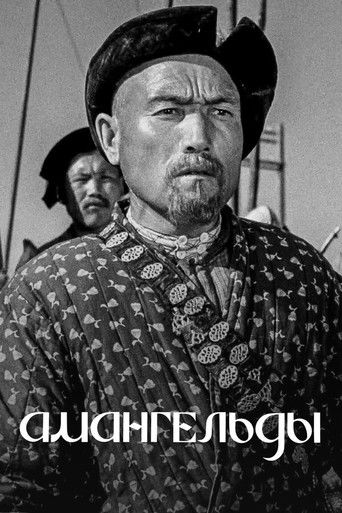
Soviet film director active during the late 1930s, best known for his historical epic 'Amangeldy' (1938). His career coincided with the height of Stalinist cultural policy, when Soviet cinema was heavily regulated to promote socialist realism and revolutionary themes. Levin's work contributed to the Soviet effort to create heroic narratives that celebrated revolutionaries from various Soviet republics, helping to forge a unified Soviet identity. His film 'Amangeldy' was particularly significant as it centered on a Kazakh revolutionary hero, representing the Soviet Union's multi-ethnic revolutionary heritage. While his career was relatively brief, spanning primarily from 1938 to 1940, Levin's films were part of the important wave of Soviet historical dramas that dominated the late 1930s cinematic landscape. Little detailed information survives about his personal life or early career, as was common for many Soviet directors of his generation who were not among the most prominent figures in Soviet cinema.
The Craft
Behind the Camera
Levin's directing style followed the conventions of Soviet socialist realism, emphasizing heroic portrayals of revolutionary figures and creating grand historical narratives. His work demonstrated the Soviet cinematic approach of the late 1930s, which focused on creating mythic representations of revolutionary heroes to inspire Soviet audiences. His films likely employed the dramatic techniques common in Soviet historical dramas of the period, including sweeping cinematography and theatrical performances designed to emphasize the heroic nature of their subjects.
Best Known For
Must-See Films
Working Relationships
Studios
Why They Matter
Impact on Culture
Moisei Levin contributed to the Soviet cinematic project of creating a unified revolutionary mythology that included heroes from all the Soviet republics. His film 'Amangeldy' was part of an important cultural effort to represent non-Russian revolutionaries in Soviet cinema, helping to legitimize the Soviet Union's multi-ethnic composition through the celebration of diverse revolutionary heroes. This approach was crucial to Soviet cultural policy during the Stalin era, as it helped create a pan-Soviet identity that transcended ethnic boundaries while maintaining the centrality of the revolutionary narrative.
Lasting Legacy
Moisei Levin's legacy lies primarily in his contribution to Soviet historical cinema of the late 1930s, particularly through his portrayal of Kazakh revolutionary hero Amangeldy Imanov. While not as widely remembered as giants of Soviet cinema like Eisenstein or Pudovkin, Levin's work represents the broader landscape of Soviet filmmaking during this period. His films serve as historical artifacts of how the Soviet Union used cinema to construct national myths and promote the ideals of socialist realism across its diverse territories.
Who They Inspired
As a director working within the Soviet system, Levin's influence would have been primarily through his contribution to the established genre of Soviet historical drama rather than through developing innovative techniques. His work followed and reinforced the conventions of socialist realism rather than breaking new ground, representing the mainstream of Soviet cinematic production during this era rather than its avant-garde.
Off Screen
Very little information is available about Moisei Levin's personal life, which was not uncommon for Soviet directors of his generation who were not among the most prominent figures in the Soviet film industry. Detailed biographical information about many Soviet filmmakers from this era remains scarce in Western sources, particularly for those whose careers were relatively brief or who worked primarily within the Soviet system without gaining international recognition.
Did You Know?
- Moisei Levin's film 'Amangeldy' (1938) portrayed the real-life Kazakh revolutionary Amangeldy Imanov
- His career was active during the height of Stalin's cultural purges in the Soviet Union
- The film 'Amangeldy' was part of the Soviet effort to create revolutionary heroes from all Soviet republics
- Very little biographical information about Levin survives in Western sources
- His directing career appears to have been brief, spanning only about two years of known film work
- Soviet directors of his generation often worked under strict state supervision and ideological constraints
Frequently Asked Questions
Who was Moisei Levin?
Soviet on YTB.my. His work contributed to Soviet cinema's effort to create pan-Soviet revolutionary narratives that included heroes from various Soviet republics.
What films is Moisei Levin best known for?
When was Moisei Levin born and when did he die?
Unfortunately, detailed biographical information about Moisei Levin's birth and death dates is not readily available in existing sources. This lack of information is not uncommon for Soviet directors of his generation who were not among the most prominent figures in Soviet cinema.
What awards did Moisei Levin win?
There is no documented record of major awards or nominations received by Moisei Levin for his film work. Soviet directors of his era who were not among the most famous often received little formal recognition that has been documented in Western sources.
What was Moisei Levin's directing style?
Levin's directing style followed the conventions of Soviet socialist realism, emphasizing heroic portrayals of revolutionary figures and creating grand historical narratives. His work reflected the dramatic techniques common in Soviet historical dramas of the late 1930s, designed to inspire Soviet audiences with revolutionary ideals.