Red Devils
"Adventures of three Red Army soldiers."
Keys: Space play/pause · ←/→ 10s · F fullscreen · M mute · </> speed
About this film
Adventures of three Red Army soldiers. Misha, Duniasha and Tom Jackson, an afro-American boy, are fighting against enemies. The story follows three daredevils who volunteer as scouts for the Red Cavalry during the Soviet fight against the forces of Ukrainian anarchist revolutionary Nestor Makhno during the Russian Civil War. It has become famous and oft-quoted works of the Soviet adventure film.
Cast & crew
More films like this

More Adventure films
View all →

More from Ivane Perestiani
View all →
More about this film
About the production
Release dateDecember 25, 1923
BudgetNot publicly documented
Box officeNot publicly documented
ProductionGoskino
Filmed inGeorgia, Caucasus region, Black Sea coast
Shot on location in the challenging terrain of the Caucasus mountains, requiring the cast and crew to endure difficult weather conditions. The production utilized local Georgian landscapes extensively to create authentic battle scenes. Director Ivane Perestiani employed innovative camera techniques for the time, including dynamic tracking shots during chase sequences. The film's action sequences were performed without stunt doubles, with the main actors doing their own riding and fighting scenes.
Themes
Revolutionary heroismInternational solidarityComing of age during warFriendship and loyaltyAnti-imperialism
Themes & topics
Russian Civil WarRed ArmyAdventureYouth heroesEspionageBattleFriendshipRevolutionCaucasusCounter-revolution
Historical background
Made in 1923, in Georgian SSR, under Ivan Perestiani, Red Devils belongs to silent filmmaking amid the silent era's rapid stylistic experiments. Red Devils is a 1923 Soviet adventure film directed by Ivan Perestiani based on the eponymous story by Pavel Blyakhin.
Why this film matters
Within silent history, Ivan Perestiani's name attaches to the work; surviving prints help researchers study silent-era craft; 1923 film by Ivan Perestiani.
Making of
The production of 'Red Devils' was ambitious for its time, requiring extensive location shooting in the remote Caucasus region. Director Ivane Perestiani, who had previously worked as an actor, brought a dynamic visual style to the film. The young cast underwent military training to authentically portray Red Army soldiers. The film's battle sequences involved hundreds of extras, many of whom were actual Red Army soldiers on leave. The production faced numerous challenges including harsh weather conditions, difficult terrain, and limited technical resources. Despite these obstacles, Perestiani managed to create spectacular action sequences that rivaled contemporary Hollywood productions. The film's success led to Perestiani becoming sought-after directors in the Soviet film industry.
What critics said
Contemporary reviews of Red Devils are sparse in open sources; later catalog entries chiefly summarize plot and credits.
Did you know?
- This was one of the first Soviet adventure films and became extremely popular, spawning two sequels: 'The Triumph of the Three Devils' (1924) and 'The Last Battle of the Three Devils' (1925)
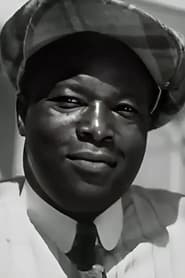
- The character Tom Jackson was notable as one of the first positive portrayals of an African American character in Soviet cinema
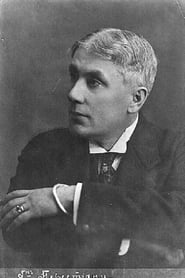
- Director Ivane Perestiani was actually of Georgian origin and was one of the pioneers of Georgian and Soviet cinema
- Based on a story by Pavel Blyakhin, which was also published as a popular children's book
- The three young actors were actually teenagers during filming, adding authenticity to their roles as young soldiers
- The film's success helped establish the adventure genre in Soviet cinema, previously dominated by historical epics and propaganda films
- Real Red Army uniforms and weapons were used in the production, lending authenticity to the military scenes
- Distributed internationally and was particularly successful in Germany, where it was known as 'Die Roten Teufel'
- A restored version of the film was released in the 1970s with a new musical score by composer Alfred Schnittke
- The film's title 'Red Devils' was meant to be ironic, as the protagonists were actually heroic characters fighting for the Soviet cause
Visual style
The cinematography by Aleksandr Digmelovi was considered innovative for its time, featuring dynamic camera movements and extensive location shooting in the Caucasus mountains. Digmelovi employed tracking shots during horseback chase sequences, creating a sense of movement and excitement that was unusual in early Soviet cinema. The film made effective use of the dramatic landscapes, with wide shots emphasizing the scale of the conflict and close-ups capturing the emotional intensity of the young protagonists. The battle sequences utilized multiple camera angles and rapid editing to create kinetic action scenes. The black and white photography showed strong contrast and composition, particularly in the night scenes which used creative lighting techniques to enhance the mood of danger and adventure.
Innovations
Featured several technical innovations for Soviet cinema of the early 1920s. The film's extensive location shooting in difficult terrain required portable cameras and power sources, demonstrating advances in mobile film equipment. The action sequences, particularly the horseback riding scenes, utilized innovative camera mounting techniques that allowed for smoother tracking shots. The film also employed sophisticated editing techniques, including parallel editing during chase sequences to build tension. The production team developed special effects for the battle scenes using practical methods such as controlled explosions and smoke effects. These technical achievements helped establish new standards for action filmmaking in the Soviet Union and influenced subsequent Soviet adventure productions.
Music
As a silent film, 'Red Devils' originally featured live musical accompaniment in theaters, typically performed by a pianist or small orchestra using compiled classical pieces and popular songs of the era. The 1970s restoration version featured a new original score composed by Alfred Schnittke, important Soviet composers of the 20th century. Schnittke's score incorporated elements of Russian folk music, revolutionary songs, and modernist techniques to create a soundtrack that both honored the film's historical context and appealed to contemporary audiences. The musical themes for the three protagonists were distinctively different, reflecting their individual characters while maintaining unity as a group.
Famous quotes
For the Motherland! For the Revolution! - Battle cry of the Red Devils
We may be young, but our hearts are strong for the cause! - Misha
In the Red Army, all brothers are equal regardless of color! - Tom Jackson
The devil may be red, but our cause is righteous! - Duniasha
Memorable scenes
- The opening sequence where the three young heroes swear their oath to the Red Army against a dramatic mountain backdrop
- The thrilling horseback chase through the Caucasus mountains with the Red Devils escaping from White Army forces
- The night raid on the enemy camp where the trio uses their wits to outsmart the superior enemy forces
- The emotional farewell scene where Tom Jackson explains why he left America to fight for the Soviet cause
What audiences thought
Was enormously popular with Soviet audiences upon its release, particularly among young viewers. The film ran for months in Moscow cinemas and was subsequently distributed throughout the Soviet Union, drawing large crowds in major cities and rural areas alike. Children and teenagers especially identified with the young protagonists, leading to the creation of 'Red Devils' youth clubs in some Soviet cities. The film's success was so significant that it became one of the highest-grossing Soviet films of 1923-1924. Audience demand led to the production of two sequels, making it one of the first film trilogies in Soviet cinema. The film's characters became cultural icons, with their images appearing on posters, postcards, and children's books throughout the 1920s.
Film connections
Influenced by
- American adventure serials
- Russian folk tales about heroes
- Contemporary Soviet propaganda art
- Pre-revolutionary Russian adventure literature
This film influenced
- The Triumph of the Three Devils (1924)
- The Last Battle of the Three Devils (1925)
- The Elusive Avengers (1966)
- Red and White (1932)
- Chapaev (1934)
Film restoration
Survived and is preserved in the Gosfilmofond archive in Russia. A restored version was created in the 1970s with new musical accompaniment. The original negative is believed to be lost, but high-quality prints exist. The film has been digitized and is available through various film archives and specialized streaming services. The restoration work has helped preserve this important piece of early Soviet cinema history for future generations.
Where to watch
- Available on specialized classic film streaming platforms
- Can be accessed through film archive websites
- Available on DVD from specialized distributors of classic Soviet cinema
- Screened occasionally at film festivals and museum retrospectives focusing on early Soviet cinema