Films
2 films
About Vitali Bryanskiy
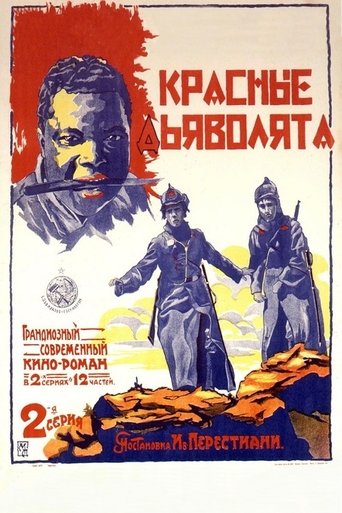
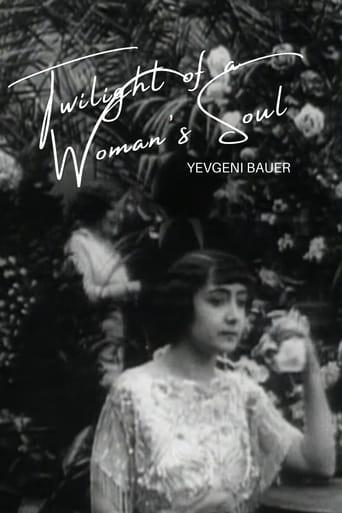
Early Russian film actor who worked during the transitional period between the Tsarist era and the early Soviet period of cinema. His a decade from 1913 to 1923, coinciding with the revolutionary changes that swept through Russian society and its film industry. Bryanskiy appeared in Yevgeni Bauer's influential 1913 film 'Twilight of a Woman's Soul,' which was among the psychologically sophisticated films that characterized pre-revolutionary Russian cinema. His later work in 'Red Devils' (1923) demonstrated his adaptation to the new Soviet cinematic aesthetic that emphasized revolutionary themes and action-oriented storytelling. Like many actors of his generation, Bryanskiy navigated the dramatic political and cultural shifts that transformed Russian filmmaking from an aristocratic art form to a tool of Soviet propaganda. His filmography, though limited in surviving records, represents the bridge between two distinct eras of Russian cinema history. Details about his later life and career beyond 1923 remain scarce in historical records.
The Craft
Milestones
- Appeared in Yevgeni Bauer's 'Twilight of a Woman's Soul' (1913)
- Starred in Soviet adventure film 'Red Devils' (1923)
- Transitioned from Tsarist to Soviet cinema era
Best Known For
Must-See Films
Working Relationships
Worked Often With
Why They Matter
Impact on Culture
Vitali Bryanskiy represents the generation of Russian actors who witnessed and participated in the transformation of their national cinema from a pre-revolutionary art form to Soviet propaganda. His appearance in 'Twilight of a Woman's Soul' places him within the context of early Russian psychological cinema, which was remarkably sophisticated for its time. The film itself is considered an important example of pre-revolutionary Russian filmmaking, showcasing the artistic ambitions of directors like Yevgeni Bauer. His later work in 'Red Devils' demonstrates the shift toward Soviet cinematic values, emphasizing revolutionary heroism and action. Though his individual contribution may be difficult to assess due to limited surviving documentation, Bryanskiy's career trajectory mirrors the broader evolution of Russian cinema during one of its most turbulent and transformative decades.
Lasting Legacy
Vitali Bryanskiy's legacy is preserved primarily through his surviving film work, particularly 'Twilight of a Woman's Soul,' which remains an important artifact of early Russian cinema. His career shows the actors who adapted to the dramatic political and cultural changes of early 20th century Russia. While not as well-documented as some of his contemporaries, his participation in these historically significant films ensures his place in the annals of Russian film history. The preservation of 'Twilight of a Woman's Soul' has allowed modern scholars to study the acting styles and techniques of this early period, providing insight into the theatrical traditions that influenced early Russian cinema.
Who They Inspired
Due to the limited documentation of Vitali Bryanskiy's career and the scarcity of surviving records from this period, it is difficult to trace his specific influence on subsequent generations of Russian actors. However, actors of his era who successfully transitioned from pre-revolutionary to Soviet cinema likely served as examples of adaptability for their colleagues. The films he appeared in, particularly those directed by masters like Yevgeni Bauer, continue to be studied by film scholars and historians interested in the development of Russian cinematic traditions.
Off Screen
Very limited information is available about Vitali Bryanskiy's personal life, which is common for actors from this early period of Russian cinema. Many personal records from this era were lost during the political upheavals of the Russian Revolution and subsequent years.
Did You Know?
- Appeared in 'Twilight of a Woman's Soul' (1913), directed by Russian filmmaker Yevgeni Bauer
- His active years covered the Russian Revolution, a period that dramatically transformed the country's film industry
- Starred in 'Red Devils' (1923), also known as 'Krasnye dyavolyata', one of the early Soviet adventure films
- Like many actors of his generation, his personal details remain largely undocumented in historical records
- His filmography represents the bridge between two distinct eras of Russian cinema: pre-revolutionary and early Soviet
- The limited information available about him is typical for actors from this very early period of Russian cinema
- Many Russian actors from this era had their records lost or destroyed during the political upheavals of the 1920s-1940s
Frequently Asked Questions
Who was Vitali Bryanskiy?
Russian with credits in this catalog. He is known for his roles in 'Twilight of a Woman's Soul' (1913) and 'Red Devils' (1923).
What films is Vitali Bryanskiy best known for?
Titles linked here include Twilight of a Woman's Soul (1913), Red Devils (1923).
When was Vitali Bryanskiy active as an actor?
Vitali Bryanskiy was active as an actor from 1913 to 1923, a decade that encompassed the Russian Revolution and the early formation of the Soviet film industry.
What was significant about 'Twilight of a Woman's Soul'?
'Twilight of a Woman's Soul' (1913) was directed by Yevgeni Bauer and is considered an important example of pre-revolutionary Russian cinema's psychological sophistication. The film is now recognized as a significant artifact of early Russian filmmaking.
How did Vitali Bryanskiy's career reflect changes in Russian cinema?
Bryanskiy's career from 1913-1923 perfectly mirrored the transformation of Russian cinema from pre-revolutionary artistic films to early Soviet propaganda. His work in both eras shows how actors adapted to the dramatic political and cultural shifts of the time.