Twilight of a Woman's Soul
"Charity work cracks a gilded conscience"
Keys: Space play/pause · ←/→ 10s · F fullscreen · M mute · </> speed
About this film
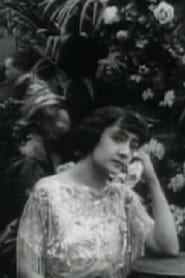
Despite living in luxury, Vera is lonely and discontented. When she accompanies her mother, the Countess, on a charity visit to the poor, she is troubled by what she sees, and she resolves to do whatever she can to help them…
Cast & crew
More films like this

More Drama films
View all →







More from Yevgeni Bauer
View all →

More about this film
About the production
Release date1913
ProductionKhanzhonkov Film Company
Filmed inMoscow, Russia
The film was shot during the peak of pre-revolutionary Russian cinema's artistic golden age, when Russian films were internationally recognized for their psychological depth and technical sophistication. Director Yevgeni Bauer was known for his meticulous attention to visual composition and his innovative use of lighting to create psychological effects. The production likely faced the technical limitations of early cinema, including the need for natural lighting and the challenges of filming with cumbersome, hand-cranked cameras. The film's themes of social inequality and moral awakening were somewhat daring for the time, reflecting the growing social consciousness in Russian society before the revolution.
Themes
Social inequality and class divisionMoral awakening and social responsibilityThe complexity of human natureNaivete versus experienceThe limits of charity
Themes & topics
Historical background
Twilight of a Woman's Soul appeared in 1913, when the silent era before Hollywood consolidated into a studio system shaped how movies were financed, distributed, and discussed. Audiences of the day encountered the work amid shifting tastes in acting, pacing, and spectacle. Its focus on despite living in luxury, vera is lonely and discontented mirrors themes circulating in popular culture of that moment.
Why this film matters
Twilight of a Woman's Soul (1913) belongs to the wider archive of world cinema, documenting despite living in luxury, vera is lonely and. Archivists and historians value such titles for what they reveal about craft, genre, and audience expectations. Restorations and festival screenings keep the work visible to viewers far beyond its first run.
Making of
The production of "Twilight of a Woman's Soul" took place during a remarkable period of artistic innovation in Russian cinema. Director Yevgeni Bauer, who had previously worked as an architect and set designer, brought a sophisticated visual sensibility to his filmmaking, carefully composing each shot to create psychological depth and emotional resonance. The filming likely took place at Khanzhonkov's Moscow studio, which was equipped with some of the most advanced technology available in Russia at the time. Working with the limitations of early cinema equipment, Bauer and his cinematographer had to be creative in their use of lighting, often relying on natural light or early artificial lighting techniques to create the film's moody, atmospheric visuals. The cast, led by Nina Chernova, would have had to convey complex emotions through gesture and expression alone, as this was a silent film. The production team faced the technical challenges of the era, including the need for precise timing in performances to match the limitations of film stock and camera capabilities. The film's themes of social inequality and moral awakening were somewhat controversial for the time, requiring careful handling to avoid censorship while still delivering the intended social commentary.
What critics said
Press coverage from 1913 is fragmentary for many titles of this vintage; surviving notices for Twilight of a Woman's Soul tend to stress novelty, star power, or topical appeal. Later writing places the picture within its national and generic context, weighing both period conventions and moments that still land for modern viewers. Streaming and disc releases have revived discussion among classic-film audiences.
Did you know?
- Director Yevgeni Bauer was among the leading innovative and influential filmmakers of early Russian cinema, known for his sophisticated use of mise-en-scène and psychological storytelling.
- The film was produced by Alexander Khanzhonkov, a pioneering Russian film producer who established one of Russia's first major film studios.
- Twilight of a Woman's Soul" was part of a wave of psychologically complex Russian films from the 1910s that influenced cinema worldwide.
- The film's themes of social inequality and moral awakening reflected growing tensions in Russian society that would eventually lead to the 1917 revolution.
- Yevgeni Bauer made over 80 films between 1912 and 1917 before his untimely death from pneumonia in 1917 at age 52.
- The film showcases Bauer's innovative use of lighting and shadow to create psychological effects, a technique that was ahead of its time.
- Many of Bauer's films, including this one, featured strong female protagonists, which was unusual for the era.
- The film was made during what is now considered the golden age of Russian cinema (1913-1917), before the industry was transformed by the revolution.
- Despite its artistic merits, like many Russian films from this period, "Twilight of a Woman's Soul" is not widely known today outside of film history circles.
- The film's exploration of class dynamics and social responsibility was particularly relevant in pre-revolutionary Russia, where inequality was a pressing social issue.
Visual style
The cinematography of "Twilight of a Woman's Soul" exemplifies Yevgeni Bauer's sophisticated visual style and innovative approach to cinematic storytelling. Bauer, who had previously worked as an architect, brought a meticulous attention to visual composition and spatial relationships to his filmmaking. The film features careful use of lighting and shadow to create psychological effects and emotional atmosphere, techniques that were ahead of their time in early cinema. The cinematography likely employed innovative camera angles and movements for the period, using visual techniques to enhance the psychological depth of the story. Bauer was known for his use of deep space composition, arranging characters and props within the frame to create visual metaphors and psychological subtext. The film's visual style would have contrasted the opulent, well-lit environments of Vera's wealthy world with the darker, more claustrophobic spaces of the poor districts, creating visual commentary on social inequality. The cinematography also likely featured careful attention to detail in set design and framing, creating a rich visual environment that supported the film's themes and emotional content. While working within the technical limitations of 1913 cinema, Bauer and his cinematographer pushed the boundaries of what was possible in visual storytelling.
Innovations
"Twilight of a Woman's Soul" demonstrated several technical achievements that were innovative for cinema in 1913. Yevgeni Bauer was known for his sophisticated use of mise-en-scène and his innovative camera techniques that pushed the boundaries of early cinema. The film likely featured advanced lighting techniques for the period, using light and shadow to create psychological effects and emotional atmosphere rather than merely illuminating the scene. Bauer's work often included careful attention to visual composition and spatial relationships within the frame, creating depth and psychological subtext through the arrangement of characters and props. The film may have employed innovative camera movements or angles that were uncommon in cinema of this era, using visual techniques to enhance the storytelling and psychological impact. The production likely benefited from the relatively advanced facilities of the Khanzhonkov studio, which was one of Russia's best-equipped film production companies of the time. The film's sophisticated approach to psychological storytelling through visual means represented an important technical and artistic achievement in early cinema, demonstrating the medium's potential for complex narrative and emotional expression beyond the simpler melodramas common in the period.
Music
As a silent film from 1913, "Twilight of a Woman's Soul" would not have had a synchronized soundtrack but would have been accompanied by live musical performance during theatrical screenings. The specific musical arrangements used for this film are not documented in available sources, but it was common practice for theaters to provide musical accompaniment ranging from a single pianist to small orchestras, depending on the theater's resources and the film's prestige. The music would have been carefully chosen to enhance the emotional impact of key scenes, with different musical themes representing the various characters and emotional states. For a dramatic film like this, the musical accompaniment would have included classical pieces and original compositions that could convey the shifting moods of Vera's journey from lonely privilege to moral awakening to tragic disillusionment. The music would have been particularly important in helping audiences understand the psychological states of the characters, given the absence of dialogue. In more prestigious theaters, the musical accompaniment might have included sound effects created by musicians or theater staff to enhance key moments in the narrative. The absence of a fixed soundtrack meant that each screening could have a unique musical interpretation, making the viewing experience somewhat variable across different venues.
Memorable scenes
- Vera's first visit to the poor districts with her mother, where she witnesses the harsh realities of poverty for the first time, a scene that would have used visual contrasts between her elegant appearance and the squalid surroundings to highlight social inequality.
- The moment when Vera decides to dedicate herself to helping the poor, likely conveyed through her facial expression and gestures as she resolves to change her life's purpose.
- Vera's first meeting with Maxim, where his apparent dedication to helping the poor masks his true intentions, a scene that would have used subtle visual cues to foreshadow the deception.
What audiences thought
Specific information about audience reception to "Twilight of a Woman's Soul" in 1913 is not extensively documented in available historical sources. However, given the popularity of Khanzhonkov productions and the growing sophistication of Russian film audiences during this period, the film likely found appreciative viewers among Russia's urban middle and upper classes, who were the primary cinema-goers of the time. The film's themes of social inequality and moral awakening would have resonated with audiences experiencing the rapid social changes and growing class tensions of pre-revolutionary Russia. The sophisticated psychological storytelling and visual artistry would have appealed to Russian audiences who were becoming accustomed to high-quality domestic productions that could compete with imported European films. While we lack specific data about box office success or audience feedback from the period, the film's survival and continued discussion among film historians suggest that it made a significant impression on contemporary viewers. The emotional story of Vera's moral journey would have provided audiences with both entertainment and food for thought about pressing social issues.
Film connections
Influenced by
- Russian literary tradition of Dostoevsky and Tolstoy
- Russian theatrical performance traditions
- Contemporary European cinema
- Russian Silver Age artistic movements
- Russian realist literature
This film influenced
- Subsequent Russian psychological dramas of the 1910s
- Soviet films addressing social themes
- Films employing sophisticated visual composition
- Psychological realist tradition in Russian cinema
Where to watch
- Wikimedia Commons: https://commons.wikimedia.org/wiki/File:1913%20%D0%A1%D1%83%D0%BC%D0%B5%D1%80%D0%BA%D0%B8%20%D0%B6%D0%B5%D0%BD%D1%81%D0%BA%D0%BE%D0%B9%20%D0%B4%D1%83%D1%88%D0%B8.webm