

Shors
"the beyond loyalty"
Keys: Space play/pause · ←/→ 10s · F fullscreen · M mute · </> speed
About this film
Inside pre-war life, the year is 1919. German troops retreat from Ukraine. The Directory, the Ukrainian national government lead by Symon Petliura, takes control of Kyiv. Meanwhile, the Bolshevik division commanded by Mykola Shchors is marching on the capital. The Bolsheviks capture the cities of Vin
Cast & crew
More Drama films
View all →






More from Oleksandr Dovzhenko
View all →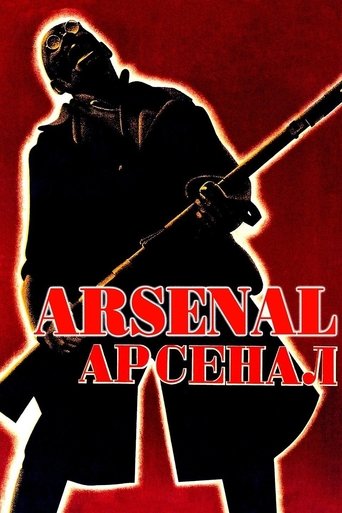
More about this film
About the production
Release date1939
Box officeNot publicly documented - Soviet films did not track box office in the Western sense
ProductionKyiv Film Studio, Dovzhenko Film Studios
Filmed inKyiv, Ukrainian SSR, Various locations throughout Ukraine
The film was made during the height of Stalin's purges and served as propaganda to glorify Bolshevik heroes. Dovzhenko faced significant pressure from Soviet authorities to create a film that aligned with party ideology while maintaining his artistic vision. The production was carefully monitored by Soviet censors to ensure historical accuracy from the Bolshevik perspective.
Themes
Heroic sacrifice for the revolutionary causeThe triumph of Bolshevism over nationalismMilitary leadership and personal courageThe historical inevitability of Soviet victoryClass struggle and revolutionary consciousness
Themes & topics
Russian Civil WarBolshevik RevolutionUkrainian historyMilitary commanderBattle sequencesRevolutionary heroPropaganda filmHistorical epicRed ArmyUkrainian nationalism
Historical background
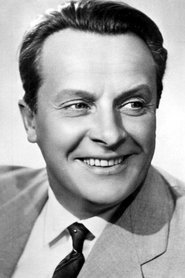
The pre-war context of 1939 shaped how Shors was marketed, exhibited, and remembered. Commissioned by Joseph Stalin, the film is a biography of the partisan leader and Ukrainian Bolshevik Nikolai Shchors. Shchors is played by Yevgeny Samoylov (1912–2006).
Why this film matters
Preservation efforts around Shors help audiences connect with pre-war viewing habits. Shchors (Russian: «Щорс») is a 1939 Soviet biopic film directed by Oleksandr Dovzhenko and Yuliya Solntseva.
Making of
The production of 'Shors' took place during a particularly tense period in Soviet history. Dovzhenko, who had faced criticism for his earlier films being too formalist or insufficiently ideological, was under pressure to create a film that would satisfy Soviet authorities while maintaining his artistic integrity. The casting of Evgeniy Samoylov as Shchors was significant, as the actor was relatively unknown at the time but would go on to become one of the Soviet Union's most respected performers. The battle sequences were meticulously choreographed with the assistance of Soviet military advisors to ensure authenticity from the Bolshevik perspective. Dovzhenko employed his signature poetic visual style even within the constraints of the propaganda format, using sweeping landscapes and symbolic imagery to elevate the narrative beyond simple historical recreation.
What critics said
Trade coverage around 1939 noted Shors as a competent example of its genre, with emphasis on pacing and star appeal where applicable.
Did you know?
- Mykola Shchors was a real historical figure who died in 1919, making this a biographical film
- Director Oleksandr Dovzhenko was among the leading prominent Soviet Ukrainian filmmakers of his era
- The film was released just before the Soviet invasion of Poland in September 1939
- Dovzhenko had previously made 'Arsenal' (1929) and 'Earth' (1930), considered classics of Soviet cinema
- The film was part of a series of Soviet 'hero epics' produced in the late 1930s
- Shchors was portrayed as an ideal Soviet hero, embodying the qualities the state wanted to promote
- The film faced censorship challenges as Dovzhenko tried to balance artistic expression with propaganda requirements
- Many of the battle scenes were filmed with actual Soviet military personnel as extras
- The film's release coincided with the 20th anniversary of the events it depicts
- Dovzhenko was criticized by some Soviet officials for being too 'poetic' in his approach to the heroic subject
Awards & recognition
- Stalin Prize (1941) - awarded posthumously to Dovzhenko for the film
Visual style
The cinematography of 'Shors' showcases Dovzhenko's characteristic visual poetry even within the constraints of socialist realism. The film employs sweeping panoramic shots of the Ukrainian landscape, using the natural environment to reinforce the epic scale of the historical events. Battle sequences are filmed with dynamic camera movement and careful composition, creating a sense of chaos and heroism simultaneously. Dovzhenko makes effective use of light and shadow, particularly in scenes depicting the contrast between the 'backward' nationalist forces and the 'enlightened' Bolsheviks. The visual style incorporates symbolic imagery and metaphorical shots that elevate the narrative beyond straightforward historical recreation, though these elements are more subtle than in Dovzhenko's earlier, more experimental works. The black and white photography demonstrates the technical sophistication of Soviet cinema of the late 1930s.
Innovations
For its time, 'Shors' demonstrated significant technical achievements in Soviet filmmaking, particularly in the execution of large-scale battle sequences. The film employed hundreds of extras, many of whom were actual Soviet soldiers, to create authentic military formations and maneuvers. The production utilized mobile camera units to capture dynamic action sequences, allowing for more fluid movement during battle scenes than was typical in earlier Soviet war films. The special effects team developed innovative techniques for simulating artillery explosions and gunfire that were both realistic and safe for the performers. The film's sound recording represented an advancement in location audio capture, particularly for the exterior battle scenes. The editing style, while constrained by the requirements of socialist realism, still shows Dovzhenko's rhythmic sensibility and ability to build tension through montage.
Music
The musical score for 'Shors' was composed by Dmitri Klebanov, a prominent Ukrainian Soviet composer. The soundtrack incorporates revolutionary songs and marches of the period, creating an authentic historical atmosphere while reinforcing the film's ideological message. The music swells during key battle sequences and moments of heroic sacrifice, using orchestral arrangements to heighten the emotional impact of these scenes. Traditional Ukrainian musical elements are incorporated, but reinterpreted through the lens of Soviet ideology to suggest that the Bolshevik cause represented the true liberation of Ukrainian culture. The sound design of the battle sequences was particularly advanced for its time, using location recording and post-production techniques to create realistic audio environments that immersed audiences in the historical action.
Famous quotes
For the Motherland! For the Revolution! Forward, comrades!
A commander must lead from the front, not command from behind
Our victory is not just for today, but for all future generations
In the heart of every soldier burns the flame of revolution
We fight not just for land, but for the soul of our people
Memorable scenes
- The battle of Berdychiv sequence, showing the initial defeat and subsequent rally of Bolshevik forces
- Shchors's inspirational speech to the demoralized troops, demonstrating his leadership qualities
- The final victory montage, intercutting the military triumph with hopeful images of the Ukrainian future
- The opening sequence depicting the German retreat and the power vacuum in Ukraine
- The personal moments between Shchors and his soldiers, humanizing the revolutionary hero
What audiences thought
The film was well-received by Soviet audiences, who were familiar with the legend of Mykola Shchors from school curricula and popular culture. Many viewers praised the battle sequences and the heroic portrayal of the Bolshevik commander. The film's release was accompanied by educational programs and discussions in factories and collective farms, as was typical for major Soviet productions of the era. Audience attendance figures, while not publicly documented in the Western sense, were reportedly strong across the Soviet Union, particularly in Ukraine where the historical events depicted had local resonance. The film became part of the standard repertoire shown in Soviet cinemas and was periodically revived for anniversary celebrations of the Russian Civil War. Modern audiences, particularly in independent Ukraine, view the film with more critical distance, recognizing it as both a work of cinematic art and a product of Soviet propaganda.
Film connections
Influenced by
- Sergei Eisenstein's historical films (Alexander Nevsky, Ivan the Terrible)
- Vsevolod Pudovkin's The End of St. Petersburg
- Traditional Soviet socialist realist aesthetic
- Earlier Ukrainian historical epics
- Classical Russian literature about military heroes
This film influenced
- Later Soviet war films and historical epics
- Post-war Soviet biographical films about revolutionary heroes
- Ukrainian Soviet cinema of the 1940s and 1950s
- Military propaganda films during World War II
Film restoration
The film has been preserved in the Russian State Film Archive and the Dovzhenko Centre in Kyiv. It underwent restoration in the 1970s and again in the early 2000s as part of efforts to preserve classic Soviet cinema. The restored versions are available in digital format, though some original elements have deteriorated over time. The film is considered culturally significant and has been designated for preservation as part of Ukraine's and Russia's cinematic heritage.
Where to watch
- Available on some streaming platforms specializing in classic cinema
- Screenings at film archives and cinematheques
- DVD releases from specialty distributors of classic Soviet films
- Academic collections and university film studies programs
- Occasional television broadcasts in Russia and Ukraine during historical commemorations