

Shy Guy
"Building radios record players."
Keys: Space play/pause · ←/→ 10s · F fullscreen · M mute · </> speed
About this film
His dad notices that he has no friends, and tells him that, like the electronic parts he assembles, "you have to fit in with all hte other parts." Realizing that the reason he has no friends is because he's not one of the "crowd," Phil studies the most popular kids at school, in order to see what traits they admire most, so he can be like them and fit in. Phil, a student who recently transferred into his high school, keeps to himself a lot, spending time in his basement building radios and record players.
Cast & crew
More Drama films
View all →






More from Ted Peshak
View all →
More about this film
About the production
Release date1947
ProductionCoronet Films
Filmed inChicago, Illinois
This was a social guidance film produced for classroom use, typical of the post-war educational film boom. The film was shot on 16mm film to be affordable for school districts. The production utilized actual high school locations rather than studio sets to increase authenticity for student viewers. The film's runtime was specifically designed to fit within a standard class period, allowing for discussion time after viewing.
Themes
Social conformityTeenage anxietyPeer pressureIdentity formationFather-son relationships
Themes & topics
high schoolsocial isolationpeer acceptancefatherly adviceradio buildingconformityteenage problemseducational film
Historical background
Released around 1947, Shy Guy reached audiences while exhibitors were still shaping program length and star promotion.
Why this film matters
Archivists revisit Shy Guy (1947) for performance styles and craft choices that later releases refined or replaced.
Making of
The production was typical of Coronet Films' approach to educational filmmaking - low budget, high impact, and focused on delivering clear social messages. Director Ted Peshak was known for his ability to work with non-professional actors and create naturalistic performances. The film was shot quickly over a few days to keep costs down. Mike Wallace, then a young radio announcer, was hired for his clear, authoritative voice which was thought to lend credibility to the film's message. The basement workshop set was created using actual electronic components donated by a local radio shop. The school scenes were filmed during actual class hours, with real students serving as extras, adding to the film's authenticity.
What critics said
Modern retrospectives screen Shy Guy for craft context—pacing, performance, and camera choices of 1947.
Did you know?
- This was one of Mike Wallace's earliest film appearances before he became famous as a broadcast journalist
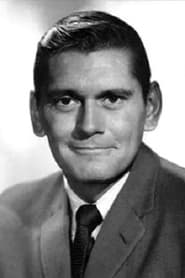
- Dick York, who plays Phil, would later become famous as Darrin Stephens in the TV series 'Bewitched'
- The film was part of a series of social guidance films produced by Coronet Films in the late 1940s
- Director Ted Peshak was a prolific director of educational films, making over 200 shorts during his career
- The film was shown in thousands of American high schools throughout the late 1940s and 1950s
- The radio building scenes were authentic, using actual radio components of the era
- The film's message reflected post-war concerns about social adjustment and conformity
- It was one of the first educational films to address teenage social anxiety directly
- The film's distribution was primarily through educational film libraries rather than theatrical release
- Many of the 'popular students' in the film were actual high school students from the Chicago area
Visual style
The film employed straightforward documentary-style cinematography typical of educational productions of the era. The camera work was functional rather than artistic, using medium shots and close-ups to clearly show character interactions and emotions. The basement scenes used dramatic lighting to create a sense of isolation, while the school scenes were brighter to represent social connection. The cinematography emphasized clarity over style, ensuring the educational message would be easily understood by student viewers.
Innovations
While not technically innovative, the film represented the standard quality of 16mm educational production in the late 1940s. It used synchronized sound effectively for its budget level and maintained consistent audio quality throughout. The film's editing was straightforward but effective in conveying its educational message clearly. The production demonstrated how educational filmmakers could create compelling content with limited resources, a model that would influence educational filmmaking for decades.
Music
The film featured a simple musical score typical of educational productions, using stock music to underscore emotional moments. The soundtrack included light, optimistic music during successful social interactions and more melancholic themes during Phil's isolation scenes. No original songs were composed for the film; instead, it used library music that was common in low-budget productions. The sound quality was basic but clear, prioritizing dialogue intelligibility for classroom viewing.
Famous quotes
You have to fit in with all the other parts
Like electronic parts, people work better when they're connected
Being popular isn't about being someone else, it's about finding where you belong
Memorable scenes
- The opening sequence showing Phil alone in his basement workshop surrounded by radio parts
- The father-son conversation where the electronics analogy is explained
- Phil's systematic observation of popular students in the school cafeteria
- The final scene showing Phil successfully interacting with classmates while still maintaining his interest in electronics
What audiences thought
The film was primarily shown to high school students in classroom settings, where it generally received positive responses from teachers who found it sparked useful discussions about social skills. Student reactions were mixed, with some finding the message helpful while others considered it preachy or out of touch with their actual experiences. The film was particularly effective with younger high school students who were still navigating the social dynamics of adolescence. Many former students from the 1940s and 1950s have recalled the film in memoirs and oral histories as a memorable part of their educational experience.
Film connections
Influenced by
- Earlier social guidance films of the 1930s
- Documentary film movement
- Psychological theories of social development popular in the 1940s
This film influenced
- Subsequent Coronet Films social guidance series
- Later educational films about teenage social problems
- Modern anti-bullying educational materials
Film restoration
The film has been preserved by various educational film archives and is available through the Internet Archive and Prelinger Archives. Multiple 16mm prints survive in university and museum collections. The film has been digitized in 4K resolution by some archives, ensuring its continued availability for study and viewing.
Where to watch
- Internet Archive (free)
- Prelinger Archives
- YouTube (various educational channels)
- University film libraries
- Museum of Modern Art's film collection