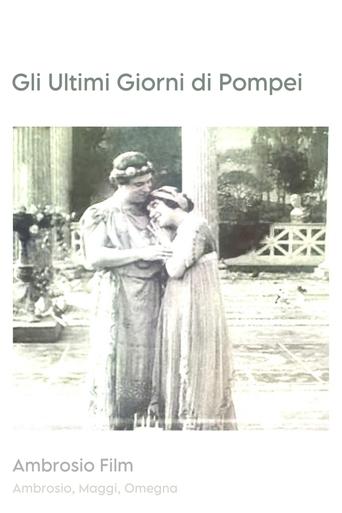
The Capture of Roma
"Porta Pia falls; Italy unites."
Keys: Space play/pause · ←/→ 10s · F fullscreen · M mute · </> speed
About this film
Italian troops storm Rome in September 1870 as the camera restages the breach of Porta Pia and the fall of papal rule. The short actuality dramatizes the final step toward national unification for patriotic audiences.
Cast & crew
More films like this


More History films
View all →



More from Filoteo Alberini
View all →
More about this film
About the production
Release dateSeptember 1905
BudgetNot documented - typical for films of this era
Box officeNot documented - box office tracking was not standardized in 1905
ProductionAlberini & Santoni
Filmed inRome, Italy, Studio locations in Rome
was one of the first historical epics produced in Italy and was created using the innovative techniques of early cinema. Filoteo Alberini, considered one of the pioneers of Italian cinema, used location shooting in Rome to capture authentic historical settings. The film employed hundreds of extras to recreate the military scenes, which was ambitious for its time. The production used actual military uniforms and equipment from the period to enhance historical accuracy. The battle sequences were staged using practical effects including smoke and simulated artillery explosions, which were technically advanced for 1905.
Themes
Themes & topics
Italian UnificationRisorgimentoBattleHistorical RecreationMilitaryRomePapacy19th CenturyWarNationalismSiegeVictoryHistoryPatriotic
Historical background
Released around 1905, the film rode public enthusiasm for the Risorgimento barely a generation after the events it depicted.
Why this film matters
The Capture of Roma belongs to early Italian historical re-enactments that turned recent politics into screen spectacle.
Making of
The making of The Capture of Roma represented a significant undertaking for early Italian cinema. Filoteo Alberini, who had previously worked as a photographer and inventor, brought his technical expertise to this ambitious project. The production involved coordinating hundreds of extras, many of whom were actual soldiers or military personnel who provided authenticity to the battle sequences. The film crew faced considerable technical challenges, including the need to transport heavy camera equipment to the historical filming locations at Porta Pia. The battle scenes required careful choreography and timing, as the limited film capacity of early cameras meant each shot had to be precisely planned. The production also had to navigate the sensitive political nature of depicting recent historical events involving the Papacy, which still held significant influence in Italy at the time.
What critics said
Exhibitors marketed it as living history; historians now study it as proto-nationalist cinema.
Did you know?
- This was one of the first historical films ever produced in Italy, establishing the country's early reputation for historical epics.
- The film was released just 35 years after the actual events it depicted, making it a near-contemporary account of Italian unification.
- Director Filoteo Alberini was also an inventor who created one of Italy's first film projectors, the 'Kinetograph'.
- The film was produced by Alberini & Santoni, one of Italy's first film production companies founded in 1905.
- The battle scenes at Porta Pia were filmed at the actual location where the historical events took place.
- is considered lost, with no known surviving copies existing today.
- The film's success helped establish the historical epic as a dominant genre in early Italian cinema.
- It was one of the first films to use large-scale crowd scenes with hundreds of extras.
- The film was part of a wave of nationalist cinema that emerged in Europe in the early 1900s.
- Alberini used innovative camera techniques for the time, including moving shots to capture the scale of the battle scenes.
Visual style
The cinematography of The Capture of Roma employed the techniques and limitations of early 1900s filmmaking. The film was shot in black and white using hand-cranked cameras, likely on 35mm film stock which was becoming the industry standard. Alberini utilized both static wide shots to establish the scale of the battle scenes and medium shots to focus on key dramatic moments. The camera work included some movement, which was innovative for the period, particularly in following troop movements and battle action. The cinematography made effective use of natural light in the outdoor location scenes at Porta Pia. The visual composition emphasized the grandeur of the historical events, with careful attention to framing the large crowd scenes and military formations. The film's visual style helped establish the epic scale that would become characteristic of Italian historical cinema.
Innovations
The Capture of Roma represented several technical achievements for its time. The film's use of location shooting at the actual historical site of Porta Pia was innovative, as most films of this era were shot entirely in studios or on constructed sets. The production employed sophisticated special effects for the battle sequences, including practical pyrotechnics to simulate artillery explosions and smoke effects to create the atmosphere of combat. The coordination of hundreds of extras in complex military formations demonstrated advanced production management capabilities for 1905. The film also utilized multiple camera setups to capture different angles of the battle scenes, which was technically challenging with early film equipment. These technical innovations helped establish new possibilities for historical filmmaking and influenced subsequent productions in Italy and internationally.
Music
As a silent film, The Capture of Roma would have been accompanied by live musical performance during theatrical screenings. The typical accompaniment for such films in 1905 would have included a pianist or small orchestra performing popular classical pieces, patriotic songs, and improvised music matched to the on-screen action. For a historical epic like this, the musical selections likely included Italian patriotic songs such as 'Il Canto degli Italiani' (the Italian national anthem) and classical works by Italian composers like Verdi. The music would have been synchronized with the dramatic moments, with faster tempos during battle scenes and more solemn melodies for reflective moments. The exact musical selections used during original screenings are not documented, as was typical for films of this era.
Famous quotes
No recorded dialogue survives from this silent film
Memorable scenes
- The recreation of the artillery bombardment of Porta Pia, which used actual pyrotechnic effects to simulate the historical battle
- The scene depicting Italian troops breaching the walls of Rome, which featured hundreds of extras in authentic military uniforms
- The final sequence showing the Italian flag being raised over Rome, symbolizing the completion of Italian unification
What audiences thought
The Capture of Roma was reportedly very successful with Italian audiences upon its release in 1905. Contemporary accounts suggest that viewers were deeply moved by seeing recent national history depicted on screen, with many expressing patriotic emotions during screenings. The film's depiction of Italian unification resonated strongly with audiences who had either lived through these events or heard about them from their parents. The battle sequences and historical recreations were particularly popular, drawing crowds to theaters across Italy. The film's success helped demonstrate that cinema could be more than just a novelty attraction, establishing it as a medium capable of addressing serious historical and national themes. Audience enthusiasm for the film encouraged other producers to create similar historical epics, launching a trend that would define early Italian cinema.
Film connections
Influenced by
- Historical paintings of the Risorgimento period
- Contemporary newspaper accounts of the 1870 events
- Earlier French historical films
- Stage melodramas about Italian history
- Nationalist literature of the period
This film influenced
- Cabiria (1914)
- The Last Days of Pompeii (1908)
- Nerone (1908)
- Quo Vadis (1913)
- Other Italian historical epics of the 1900s-1910s
Film restoration
The film is considered lost - no known copies or fragments survive today. Like many films from the early 1900s, particularly those produced on highly flammable nitrate film stock, it has not survived the passage of time. Film historians and archives continue to search for any surviving materials, but the film is officially listed as lost.
Where to watch
- No viewing options available - the film is considered lost. However, historical descriptions and still photographs may be found in film history books and archives specializing in early cinema.