Films
3 films
About Ubaldo Maria Del Colle
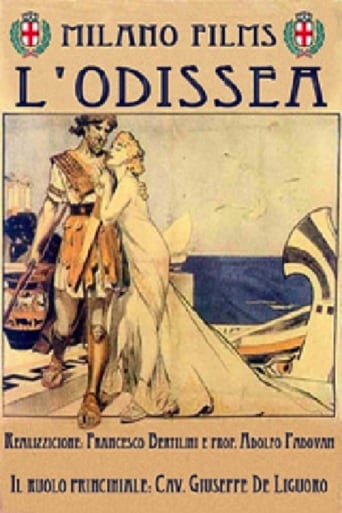
Italian actor who worked during the years of cinema, appearing in some of the earliest narrative films produced in Italy. His the formative period of 1905 to 1911, when cinema was transitioning from novelty to art form. Del Colle participated in the birth of Italian epic cinema, notably appearing in 'L'Odissea' (1911), one of the earliest feature-length adaptations of classical literature. His work in 'The Capture of Roma' (1905) places him among the very first actors to appear in Italian historical films. Though his filmography is brief by modern standards, his contributions came at a crucial time when cinematic techniques and storytelling methods were being established. Del Colle's career coincided with the rise of Italian cinema as a major international force, particularly in historical and mythological epics. His performances helped establish the dramatic style that would characterize Italian silent cinema throughout the 1910s.
The Craft
On Screen
As an early silent film actor, Ubaldo Maria Del Colle would have employed the exaggerated gestures and theatrical expressions typical of the period, where actors needed to convey emotion and story without dialogue. His performances in historical and mythological subjects would have required the grand, declamatory style popular in early Italian epics.
Milestones
- Appeared in 'The Capture of Roma' (1905), one of Italy's earliest narrative films
- Starred in 'L'Odissea' (1911), a Italian epic adaptation
- Participated in the birth of Italian cinema during its formative years
- Contributed to the development of early film acting techniques
Best Known For
Iconic Roles
Must-See Films
Working Relationships
Worked Often With
Studios
Why They Matter
Impact on Culture
Ubaldo Maria Del Colle's contribution to cinema lies in his participation during the crucial formative years of film. His work in early Italian epics helped establish the dramatic conventions and storytelling techniques that would influence cinema worldwide. As one of the first actors to appear in Italian narrative films, he was part of the generation that transformed cinema from a technological curiosity into an art form.
Lasting Legacy
While not widely remembered by name today, Ubaldo Maria Del Colle's legacy is preserved in the early films that survive as important artifacts of cinema history. His performances in 'The Capture of Roma' and 'L'Odissea' represent the early development of film acting and the birth of Italian cinema's epic tradition. These films are studied by film historians as examples of early cinematic storytelling techniques.
Who They Inspired
As an early cinema pioneer, Ubaldo Maria Del Colle influenced subsequent generations of Italian actors through his work in establishing dramatic conventions for silent film performance. His participation in early epics helped create the template for the grand, theatrical style that would characterize Italian cinema throughout the silent era.
Off Screen
Very little is documented about Ubaldo Maria Del Colle's personal life, which is common for actors from the very early silent era. His brief active years covered only six years during cinema's infancy, a time when performers were not yet celebrities in the modern sense.
Did You Know?
- Appeared in 'L'Odissea' (1911), which was over an hour long and considered a feature film at a time when most films were much shorter
- Worked during the period when Italy was establishing itself as a leader in epic film production
- His career ended just as Italian cinema was entering its golden age of the 1910s
- Participated in films that were among the first to adapt classical literature for the screen
- Worked before the star system was established, when actors were often uncredited
- His film 'L'Odissea' was an Italian-French co-production, showing early international collaboration in cinema
- Appeared in films during the same period that D.W. Griffith was making his first American films
- His work helped establish Italy as a major force in international cinema before World War I
Frequently Asked Questions
Who was Ubaldo Maria Del Colle?
Italian with credits in this catalog. He appeared in Italian films including 'The Capture of Roma' (1905) and 'L'Odissea' (1911), contributing to the birth of Italian cinema during its formative period.
What films is Ubaldo Maria Del Colle best known for?
Titles linked here include The Capture of Roma (1905), L'Odissea (1911).
When was Ubaldo Maria Del Colle born and when did he die?
Specific birth and death dates for Ubaldo Maria Del Colle are not documented, which is common for actors from the very early silent era. He was active as an actor from 1905 to 1911 during the years of Italian cinema.
What awards did Ubaldo Maria Del Colle win?
No awards or honors are documented for Ubaldo Maria Del Colle, which is typical for actors from the very early silent era when formal recognition systems for film achievements had not yet been established.
What was Ubaldo Maria Del Colle's acting style?
As an early silent film actor, Del Colle would have employed the exaggerated gestures and theatrical expressions typical of the period. His performances in historical and mythological subjects required the grand, declamatory style popular in early Italian epics, where actors needed to convey emotion without dialogue.
How did Ubaldo Maria Del Colle contribute to early cinema?
Del Colle contributed to early cinema by participating in the development of Italian film during its infancy. His work in early epics helped establish dramatic conventions and storytelling techniques that would influence cinema worldwide, particularly in the historical and mythological genres.
Why is Ubaldo Maria Del Colle significant in film history?
Del Colle is significant as one of the actors who helped establish Italian cinema during its formative years. His participation in early feature films like 'L'Odissea' represents the transition from short novelty films to longer narrative works that would become the standard for cinema.