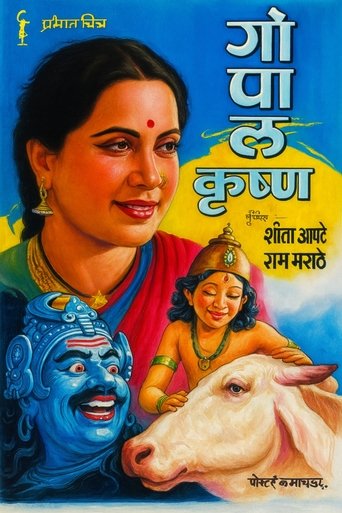
The Childhood of Krishna
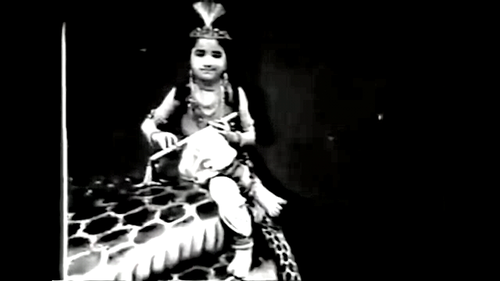
"The playmates of Krishna are insulted by a female villager who splashes water on them."
Keys: Space play/pause · ←/→ 10s · F fullscreen · M mute · </> speed
About this film
They take revenge by stealing butter from her house. When they are beaten up by the woman, they again take revenge with the aid of Krishna. He receives a gift of fruit for his help but gives it It contains Marathi subtitles.
Cast & crew
More films like this
More Fantasy films
View all →




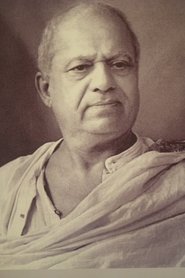
More from Dhundiraj Govind Phalke
View all →
More about this film
About the production
Release date1919
BudgetNot documented in historical records
Box officeBox office figures not preserved from this era
ProductionPhalke Films
Filmed inNashik, Maharashtra, India
Filmed during the early silent era of Indian cinema, this production faced significant technical challenges including limited camera equipment, natural lighting constraints, and the need to create elaborate mythological settings with minimal resources. Dadasaheb Phalke personally oversaw every aspect of production from set design to costume creation, often using local artisans and family members to keep costs manageable.
Themes
Divine childhood and innocencePlayful mischief and divine interventionCommunity and social dynamicsParental challenges in raising a divine childKarma and moral justice
Themes & topics
Krishnamythologychildhoodmischiefbutter stealingdivine interventionrevengepranksvillage lifeHindu mythologysilent eraIndian cinema
Historical background
Made in 1919, in British Raj, under Dadasaheb Phalke, The Childhood of Krishna belongs to silent filmmaking amid the silent era's rapid stylistic experiments. Kaliya Mardan is a 1919 Indian silent film directed by Dadasaheb Phalke.
Why this film matters
Within silent history, Dadasaheb Phalke's name attaches to the work; surviving prints help researchers study silent-era craft; 1919 film by Dadasaheb Phalke.
Making of
The production of The Childhood of Krishna was typical of Dadasaheb Phalke's meticulous approach to mythological filmmaking. Phalke, who had previously worked as a photographer and lithographer, brought his artistic sensibility to every frame. The casting process was challenging, as professional actors were scarce in early Indian cinema. Many roles were filled by theater performers, amateurs, and sometimes Phalke's own family members. The sets were constructed using a combination of painted backdrops and physical props, creating a theatrical yet cinematic aesthetic. Special effects were achieved through in-camera techniques, multiple exposures, and clever editing. The film was shot outdoors whenever possible to utilize natural light, as artificial lighting equipment was primitive and expensive. Phalke was known for his hands-on approach, often working as cinematographer, editor, and sometimes even appearing in his films. The post-production process involved hand-developing the film negatives and creating intertitles, as automatic titling machines were not yet available in India.
What critics said
Contemporary reviews of The Childhood of Krishna are sparse in open sources; later catalog entries chiefly summarize plot and credits.
Did you know?
- This film was directed by Dadasaheb Phalke, widely regarded as the father of Indian cinema, who made over 90 films during his career
- The film features Mandakini Phalke, Dadasaheb Phalke's daughter, in one of the early roles, showcasing the family's involvement in his productions
- During the silent era, Indian films like this one relied heavily on visual storytelling and intertitles, with live music often provided by orchestras in theaters
- The butter-stealing scenes became iconic representations of Krishna's childhood mischief and were later recreated in numerous Indian films and television shows
- Phalke's mythological films were particularly popular because they were familiar stories that resonated with Indian audiences while showcasing native culture
- The film was shot on hand-cranked cameras, requiring incredible stamina from the cinematographer who had to manually maintain consistent speed
- Many of the costumes and props were created using traditional Indian crafts techniques, with some reportedly taking weeks to complete
- The film was released just two years after the Russian Revolution and during the final stages of World War I, though India was relatively removed from direct conflict
- Phalke often imported film stock from Europe and had to time his productions carefully due to shipping disruptions during the war years
- The merchant's beard-tying scene became among the leading referenced sequences in early Indian cinema discussions
Visual style
The cinematography of The Childhood of Krishna reflects the technical limitations and artistic innovations of early Indian cinema. Shot on hand-cranked cameras with fixed focal length lenses, the film utilized static compositions typical of the era. The cinematographer, likely Phalke himself or a close associate, had to carefully plan each shot as film was expensive and editing options were limited. Natural lighting was predominantly used, with scenes often filmed outdoors or in sets with large openings to admit daylight. The visual style incorporated elements of traditional Indian painting and theater, with careful attention to costume details and set decoration. Camera movement was minimal due to equipment constraints, but creative use of angles and composition helped create visual interest. The film employed basic special effects techniques such as multiple exposure for supernatural elements and careful editing for action sequences.
Innovations
The Childhood of Krishna showcased several technical achievements for its time and place in Indian cinema history. The film demonstrated sophisticated use of multiple exposure techniques for creating supernatural effects, particularly in scenes depicting Krishna's divine powers. The production employed elaborate set design and construction techniques that were innovative for the Indian film industry of 1919. Costume design and makeup were particularly noteworthy, with careful attention to traditional depictions of Krishna and other characters from Hindu mythology. The film utilized in-camera editing techniques and creative transitions between scenes. Special effects for the beard-tying sequence required precise timing and coordination between actors and camera work. The production also demonstrated advances in location shooting and the use of natural lighting to create atmospheric effects. These technical innovations, while primitive by modern standards, were significant achievements in the context of early Indian cinema.
Music
As a silent film, The Childhood of Krishna had no recorded soundtrack. However, during theatrical screenings, live musical accompaniment was typically provided. This often included traditional Indian instruments such as harmonium, tabla, and sitar, along with Western instruments like piano or violin depending on the theater's resources. The music was usually improvised by local musicians who would watch the film and create appropriate mood-enhancing scores. Some theaters employed narrators or commentators who would explain the on-screen action and provide additional context for the audience. The intertitles in the film were presented in regional languages, primarily Marathi or Hindi, to ensure accessibility to local audiences. The lack of synchronized sound meant that performances had to be particularly expressive and visually clear to convey emotions and narrative without dialogue.
Famous quotes
As a silent film, The Childhood of Krishna contained no spoken dialogue. The narrative was conveyed through visual storytelling and intertitles that described key plot points and character motivations.
Memorable scenes
- The iconic butter-stealing sequence where Krishna and his friends sneak into the villager's house, showcasing the children's clever planning and execution of their plan. The scene became a template for how Krishna's mischief would be depicted in Indian cinema for decades to come.
- The nighttime prank where Krishna ties the merchant's beard to his wife's hair, demonstrating the divine child's supernatural abilities and playful nature. This scene was particularly memorable for its comedic timing and visual inventiveness within the technical constraints of 1919 cinema.
- The scene where Krishna gives away his gift of fruit to others, highlighting his divine generosity and selflessness even as a child, providing a moral lesson amidst the playful antics.
What audiences thought
The Childhood of Krishna was reportedly popular with audiences of its time, particularly in regions where Krishna's stories were part of the cultural fabric. The film's depiction of familiar tales made it accessible and relatable to viewers who might have been intimidated by the new medium of cinema. Audience members often responded emotionally to the devotional elements, with some reports of viewers treating the film screenings as religious experiences. The playful scenes of Krishna's mischief, especially the butter-stealing sequences, were particularly beloved by children and adults alike. The film's success contributed to the growing acceptance of cinema as a legitimate form of entertainment and cultural expression in India, helping to overcome initial resistance from conservative elements who viewed moving pictures with suspicion.
Film connections
Influenced by
- Traditional Indian temple art and sculpture
- Classical Indian dance and theater traditions
- Bhagavata Purana and other Hindu religious texts
- Traditional Indian storytelling methods
- Early European silent films
- Marathi and Hindi folk theater
This film influenced
- Numerous later Indian films depicting Krishna's childhood
- The mythological film genre in Indian cinema
- Devotional cinema in India
- Later Phalke Films productions
- Regional cinema adaptations of Krishna stories
Film restoration
The preservation status of The Childhood of Krishna is precarious, as with most Indian films from the silent era. Only fragments of the film are believed to survive, with no complete known print in existence. Some surviving footage may be held in the National Film Archive of India (NFAI) or in private collections, but it has not been fully restored or made widely available. The film is considered partially lost, a common fate for early Indian cinema due to the unstable nature of early film stock and inadequate preservation facilities in the early 20th century. Some scenes or stills may survive in photographic form or as part of compilation films about early Indian cinema.
Where to watch
- Due to its partially lost status, The Childhood of Krishna is not currently available for viewing through conventional channels. Film enthusiasts may be able to access surviving fragments through specialized film archives such as the National Film Archive of India, academic film studies programs, or rare film screenings at classic cinema festivals. Some clips or stills might be available in documentaries about Dadasaheb Phalke or the history of Indian cinema. The film is not available on commercial streaming platforms or home video formats.