
The Copper Beeches
"Copper Beeches without Watson"
Keys: Space play/pause · ←/→ 10s · F fullscreen · M mute · </> speed
About this film
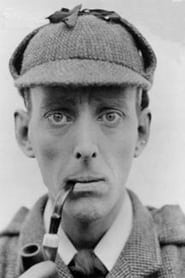
Sherlock Holmes adapts Copper Beeches without Watson as a father schemes for his daughter's money. An adaptation of the Sherlock Holmes story about a father trying to gain control of his daughter's inheritance does not include Watson.
Cast & crew
More films like this
More about this film
About the production
Release date1912
Box officeUnknown
ProductionÉclair
Filmed inFrance (likely Paris studios)
This film was part of a series of Sherlock Holmes adaptations produced by Éclair starring Georges Tréville, made during the early boom of detective films in France. The production utilized the limited but effective techniques of early cinema, including location shooting and dramatic lighting to create mystery. As with many films of this era, it was likely shot quickly and on a modest budget, relying on the popularity of the Sherlock Holmes character to attract audiences.
Themes
Deception and disguiseParental control and inheritanceJustice and moral rightClass and social dynamicsFemale autonomy and agency
Themes & topics
Historical background
1912 placed The Copper Beeches within France cinema as Éclair navigated wartime markets, immigration audiences, and the shift from intertitles to sound.
Why this film matters
Archivists revisit The Copper Beeches (1912) for Adrien Caillard style, genre norms at Éclair, and the exhibition context of Approximately 15-20 minutes (typical for short films of the era) programming.
Making of
The production of 'The Copper Beeches' took place during a fascinating period in French cinema history when detective stories were becoming increasingly popular on screen. Georges Tréville, already an established stage actor, was cast as Holmes due to his resemblance to Sidney Paget's original illustrations. The film was likely shot on interior sets at Éclair's studios in Épinay-sur-Seine, with some possible location work for exterior scenes. The absence of Dr. Watson was a practical decision common in early adaptations, allowing for tighter storytelling and reduced casting costs. The film would have been accompanied by live musical accompaniment during theatrical showings, with a pianist or small orchestra providing mood-appropriate music. The production team would have used the relatively new technology of artificial lighting to create the mysterious atmosphere essential to the Holmes stories.
What critics said
Retrospective writing on The Copper Beeches stresses craft by Adrien Caillard, print survival, and repertory value rather than opening-week gross alone.
Did you know?
- This is one of the earliest film adaptations of a Sherlock Holmes story, predating the more famous American adaptations by years
- Georges Tréville was among the first actors to portray Sherlock Holmes on screen, appearing in multiple French adaptations between 1911-1913
- Notably, this adaptation omits Dr. Watson entirely, a common practice in early Holmes films to simplify the narrative
- The film was produced during the golden age of French cinema before World War I devastated the European film industry
- Éclair was one of France's major film production companies in the early 1910s, competing with Pathé and Gaumont
- Like many films of this period, it was likely tinted by hand for dramatic effect
- The original French title was probably 'Les Hêtres Rouges' (The Red Beeches), following the French translation convention
- This film represents an early example of the detective genre that would become enormously popular in cinema
- The Copper Beeches story was particularly popular for early adaptation due to its Gothic elements and dramatic reveals
- Silent films of this era often used elaborate intertitles to convey dialogue and plot points, which would have been crucial for this complex mystery
Visual style
The cinematography of 'The Copper Beeches' would have employed the techniques typical of French cinema in 1912. The film likely used static camera positions with occasional pans to follow action, as mobile cameras were not yet common. Lighting would have been primarily natural or basic artificial illumination, with creative use of shadows to enhance the mysterious atmosphere. The cinematographer would have employed medium shots for dialogue scenes and close-ups for dramatic moments, though close-ups were still relatively new and used sparingly. The visual style would have emphasized the Gothic elements of the story through composition and lighting, creating the sense of unease essential to the mystery. Hand-tinting might have been used for certain scenes to add color and emotional impact.
Innovations
While 'The Copper Beeches' was not groundbreaking in technical terms, it utilized the established techniques of early cinema effectively. The film would have been shot on 35mm film using hand-cranked cameras, with the cinematographer controlling exposure and frame rate manually. The production likely employed some location shooting alongside studio work, demonstrating the increasing mobility of film crews. The use of intertitles to convey dialogue and plot points was standard but crucial for telling this complex mystery story. Any special effects would have been achieved through in-camera techniques rather than post-production. The film represents the solid craftsmanship of the French film industry at its peak, before the technical disruptions of World War I.
Music
As a silent film, 'The Copper Beeches' would have been accompanied by live musical performance during theatrical exhibitions. The typical score would have been performed by a pianist or small orchestra, using popular classical pieces and original compositions appropriate to the mood of each scene. Mystery films of this era often used dramatic, suspenseful music during investigation scenes and more romantic themes for emotional moments. The music would have been cued by the film's projectionist using cue sheets provided by the studio. The soundtrack would have been crucial in establishing atmosphere and guiding audience emotional responses, especially given the limited visual effects available in 1912.
Famous quotes
No recorded dialogue survives from this silent film adaptation
Memorable scenes
- The dramatic confrontation at Copper Beeches where Holmes reveals the truth about Rucastle's scheme
- Violet Hunter's initial consultation with Holmes about the mysterious governess position
- The discovery of the imprisoned Alice Rucastle in the mansion
- Holmes's deduction scene where he pieces together the clues about the inheritance plot
What audiences thought
Audiences in 1912 France responded positively to Tréville's Holmes films, which capitalized on the character's established popularity from literature and stage adaptations. The mystery genre was particularly appealing to early cinema audiences, who enjoyed the puzzle-solving aspects and dramatic reveals. The film's relatively short running time (typical for the era) made it suitable for the varied programming of cinemas, which often showed multiple short films in one session. French audiences of the period were sophisticated filmgoers who appreciated adaptations of literary works they knew well. The success of this and other Holmes adaptations led to the production of more films in the series, demonstrating audience appetite for the character.
Film connections
Influenced by
- Arthur Conan Doyle's original Sherlock Holmes stories
- Sidney Paget's illustrations for The Strand Magazine
- Earlier French detective films
- Stage adaptations of Sherlock Holmes
- Gothic literature tradition
This film influenced
- Subsequent Sherlock Holmes adaptations
- French mystery films of the 1910s
- Early detective cinema
- Later Éclair productions
Film restoration
This film is considered lost, as are the vast majority of films from this era. No known copies of 'The Copper Beeches' (1912) survive in any film archive or private collection. The loss is typical of films from the early 1910s, with estimates suggesting over 90% of silent films are lost due to the unstable nature of early film stock and lack of preservation efforts. Only written records, production stills (if any survive), and contemporary reviews provide evidence of the film's existence.
Where to watch
- This film is not available for viewing as it is considered lost. No known copies exist in any archive or collection. Film historians can only study it through written records and contemporary documentation.