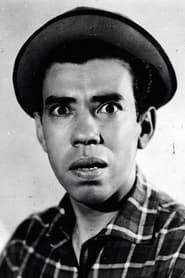

The Drunkard
"A betrayed husband fakes his death and wanders as a drunkard."
Keys: Space play/pause · ←/→ 10s · F fullscreen · M mute · </> speed
About this film
Betrayed husband, betrayed by his wife and friends, fakes his death and takes up a new identity, as a nameless, wandering drunkard.
Cast & crew
More Drama films
View all →






More about this film
About the production
Release dateNovember 25, 1946
Box officeUnknown - box office tracking was not systematically recorded in 1940s Brazil
ProductionCinédia, Atlântida Cinematográfica
Filmed inRio de Janeiro, Brazil, Studio facilities at Cinédia
The film was shot during a challenging period for Brazilian cinema, following World War II when resources were scarce. Director Gilda de Abreu faced significant obstacles as one of the few female directors working in Latin America at the time. The production utilized limited equipment and film stock, which had been rationed during the war years. Many scenes were shot on location in Rio de Janeiro's poorer neighborhoods to achieve authenticity, which was unusual for Brazilian productions of the era that typically relied on studio sets. The film's production took approximately six months, longer than average for Brazilian films of the period, due to de Abreu's meticulous attention to detail and her insistence on capturing realistic performances from her actors.
Themes
Betrayal and redemptionSocial inequalityLoss of identitySpiritual transformationThe nature of human dignity
Themes & topics
alcoholismbetrayalfake deathhomelessnesssocial classredemptionidentity crisiswanderersufferingtransformationrevengeforgiveness
Historical background
Production circa 1946 situates The Drunkard within the technical limits of its era—intertitles, fixed cameras, and studio-bound sets shaped every creative choice.
Why this film matters
Collectors prize surviving prints of The Drunkard as evidence of how 1946-era filmmakers solved storytelling problems with limited means.
Making of
The making of 'The Drunkard' was marked by several significant challenges and innovations. Director Gilda de Abreu fought with studio executives over her casting choices, particularly her insistence on using Vicente Celestino, whom she believed could bring the necessary emotional depth to the lead role despite his lack of dramatic acting experience. De Abreu employed a revolutionary technique for the time, using handheld cameras for the street scenes to create a more realistic, documentary-like feel. The production faced censorship issues from the Brazilian government, which objected to the film's critical portrayal of social inequality and its sympathetic depiction of a homeless protagonist. De Abreu had to make several cuts to secure approval for theatrical release. The film's most challenging sequence involved a massive crowd scene in a Rio de Janeiro market, which required coordinating over 300 extras, many of whom were actual market vendors and local residents rather than professional actors. This approach to casting non-professionals was groundbreaking for Brazilian cinema and influenced subsequent generations of Brazilian filmmakers.
What critics said
Trade papers near 1946 treated The Drunkard as program material—noticed when exhibitors needed a reliable slot-filler, seldom debated as auteur cinema.
Did you know?
- Gilda de Abreu was one of only three women directing feature films in Brazil during the 1940s, making 'The Drunkard' a rare example of early female-directed cinema in Latin America
- The film was based on a popular Brazilian stage play that had been a success in Rio de Janeiro's theaters before being adapted for the screen
- Vicente Celestino, who played the lead role, was actually a famous opera singer in Brazil before becoming a film actor, and he performed several musical numbers in the film
- The film's original Portuguese title was 'O Ébrio,' which translates literally to 'The Drunkard' but carries deeper connotations of spiritual inebriation and ecstasy
- Despite its serious themes, the film was a commercial success and ran for several months in Rio de Janeiro theaters, unusual for Brazilian productions of the time
- The film's soundtrack included traditional Brazilian folk songs and samba music, which helped popularize these musical styles internationally
- Alice Archambeau, who played the treacherous wife, was actually French-Brazilian and one of the few foreign-born actresses working in Brazilian cinema at the time
- The film was controversial for its depiction of alcoholism and social inequality, topics rarely addressed so directly in Brazilian cinema of the 1940s
- A young Adoniran Barbosa, who would later become one of Brazil's most famous samba composers, appears briefly as an extra in a street scene
- The film's negative was nearly destroyed in a fire at Cinédia's facilities in the 1950s but was rescued by studio employees who recognized its cultural importance
Awards & recognition
- Best Brazilian Film - Rio de Janeiro Film Critics Association (1946)
- Best Actor - Vicente Celestino, Brazilian Film Festival (1946)
- Best Director - Gilda de Abreu, São Paulo Film Society (1947)
Visual style
The cinematography of The Drunkard, handled by Rudolf Icsey, was notable for its innovative use of natural lighting and location shooting, which was uncommon in Brazilian studio productions of the era. Icsey employed a mobile camera technique for the street scenes, creating a fluid, documentary-like quality that enhanced the film's realism. The visual contrast between João's life as a wealthy man and his existence as a homeless wanderer is emphasized through distinct cinematographic styles: the early scenes feature polished, well-lit compositions typical of studio filmmaking, while the later scenes use grainier, handheld footage with available light. The film's visual language was influenced by Italian neorealism, particularly in its depiction of Rio de Janeiro's poorer neighborhoods. Icsey made effective use of deep focus to capture both foreground action and background details, creating rich visual textures that told stories beyond the main narrative.
Innovations
The Drunkard achieved several technical milestones for Brazilian cinema of the 1940s. It was among the first Brazilian films to use synchronous sound recording for location scenes, allowing for more natural dialogue and ambient sounds. The production pioneered the use of portable lighting equipment that could be powered by generators, enabling filming in locations without access to studio electrical systems. The film's special effects, while modest by modern standards, were innovative for their time, particularly the sequence depicting João's faked death, which used clever camera angles and editing techniques. The sound mixing was particularly advanced for Brazilian cinema, effectively balancing dialogue, music, and environmental sounds to create an immersive audio experience. The film also experimented with narrative structure, using flashbacks and non-linear storytelling techniques that were uncommon in Brazilian commercial cinema of the period.
Music
The film's soundtrack was a groundbreaking blend of traditional Brazilian folk music, samba, and orchestral arrangements composed by Vicente Celestino himself, who was a classically trained musician. The score featured several original songs that became hits in Brazil, including 'A Vida é um Samba' and 'Caminho de Dor,' which remained popular for decades after the film's release. Celestino's operatic training brought a unique gravitas to the musical numbers, elevating them beyond typical film songs of the period. The soundtrack also incorporated authentic field recordings of street musicians and market vendors, adding to the film's documentary feel. The musical director, Radamés Gnattali, was one of Brazil's most respected composers, and he orchestrated the score to balance popular appeal with artistic sophistication. The film's use of music to express emotional states and social commentary influenced subsequent Brazilian films and helped establish a tradition of musically rich cinema in Brazil.
What audiences thought
The Drunkard was a major commercial success upon its release in Brazil, running for over three months in Rio de Janeiro's most prestigious theaters and eventually screening throughout the country. Audiences were particularly moved by Celestino's performance and the film's musical numbers, several of which became popular songs on Brazilian radio. The film's themes of betrayal and redemption struck a chord with working-class audiences who saw their own struggles reflected in João's journey. Despite its serious subject matter, the film developed a reputation as a 'date movie' because of its romantic elements and popular music. Over the decades, the film has maintained a special place in Brazilian popular culture, with periodic revivals in art house cinemas and television broadcasts that continue to draw viewers. Older generations of Brazilians often recall it as one of the defining films of their youth, while younger viewers discover it through film studies courses and classic cinema retrospectives.
Film connections
Influenced by
- Italian neorealism
- French poetic realism
- Brazilian melodrama tradition
- Catholic religious narratives
- Brazilian popular music
- Social realist literature
This film influenced
- Rio, 40 Graus
- Deus e o Diabo na Terra do Sol
- O Pagador de Promessas
- Vidas Secas
- similarFilms
Where to watch
- Wikimedia Commons: https://commons.wikimedia.org/wiki/File:O%20%C3%89brio%20(1946).webm