The Emperor of Russia's Arrival in Elsinore
"Romanovs at Elsinore"
Keys: Space play/pause · ←/→ 10s · F fullscreen · M mute · </> speed
About this film
Newsreel records Tsar Nicholas II arriving at Elsinore during a Danish royal visit, documenting monarchs on ceremonial tour. Actualité preserves imperial diplomacy on film.
Cast & crew
More films like this
More Documentary films
View all →


More from Peter Elfelt
View all →
More about this film
About the production
Release dateSeptember 1901
Box officeNot commercially released for public exhibition - likely shown privately or in special presentations
ProductionPeter Elfelt Film
Filmed inElsinore (Helsingør), Denmark, Kronborg Castle area
Filmed using Peter Elfelt's own camera equipment, likely a French or German-made camera of the period. The production was challenging due to the need to position the camera appropriately to capture the royal arrival without obstructing official ceremonies. Elfelt had to obtain special permission from both the Russian and Danish royal courts to film the event, which was highly unusual for the time. The film was shot on 35mm film, probably using celluloid nitrate stock, which was standard but highly flammable.
Themes
Royal ceremonyDiplomacyFamily connectionsHistorical documentationMonarchy
Themes & topics
Historical background
The Emperor of Russia's Arrival in Elsinore (1901) belongs to royal visit films popular in European news programs.
Why this film matters
Royal actualities functioned as diplomatic media before mass newsreel networks.
Making of
Peter Elfelt, a Copenhagen-based photographer turned filmmaker, received special permission to document this royal event. The filming required careful coordination with Danish and Russian authorities, as capturing royalty on film was still a novelty and potentially controversial. Elfelt had to position his bulky hand-cranked camera at a vantage point that would not interfere with the formal ceremonies while still capturing clear images of the imperial couple. The filming likely took place over several hours, but given the limitations of early film cameras, only brief segments could be captured. The camera had to be manually cranked at a consistent speed to ensure proper exposure, requiring considerable skill. Elfelt's background as a royal photographer likely helped him secure access and understand the protocols of filming such a high-profile event.
What critics said
Court photographers prized such records; historians use them for uniform and ceremony study.
Did you know?
- This is one of the earliest surviving films to feature a reigning monarch (Nicholas II) in motion
- Peter Elfelt is considered the father of Danish cinema, having made Denmark's first film in 1897
- The film was shot during Nicholas II's annual visit to Denmark, which he made almost every year until 1914
- Nicholas II was particularly fond of Denmark as it was his mother's homeland - Empress Maria Feodorovna (formerly Princess Dagmar of Denmark)
- the production represents one of the earliest examples of royal documentary filmmaking in Europe
- The original film negative was likely lost, but copies survived in Danish film archives
- Elsinore (Helsingør) was chosen as the arrival point due to its strategic location on the Øresund strait between Denmark and Sweden
- The film was made just 6 years after the first public film screening by the Lumière brothers
- Peter Elfelt was also a professional photographer, which influenced his documentary approach to filmmaking
- This is one of only a handful of surviving films showing Nicholas II before the 1905 Russian Revolution
Visual style
The cinematography reflects the technical limitations and practices of early cinema. The camera was likely stationary, as moving cameras were not yet practical. The composition would have been simple and direct, focusing on capturing the royal arrival clearly rather than artistic composition. The black and white footage would have had the characteristic high contrast and occasional flicker of early film stock. The camera work would have been steady but basic, prioritizing documentation over aesthetic considerations. The short runtime reflects the limitations of early film cameras, which could only capture brief sequences before needing to be reloaded.
Innovations
While not technically innovative for its time, the film represents Peter Elfelt's mastery of early documentary filmmaking techniques. The successful capture of a royal event demonstrated the potential of cinema as a documentary medium. The film's survival is itself a technical achievement, given the fragility of early nitrate film stock. The use of 35mm film was standard for professional productions of the era, and Elfelt's ability to obtain and operate such equipment in Denmark was notable for the time.
Music
Silent film - no original soundtrack. Contemporary screenings would have been accompanied by live music, typically a pianist or small ensemble playing appropriate classical or popular pieces of the era. The music would have been chosen to match the solemn and prestigious nature of the royal event being depicted.
Memorable scenes
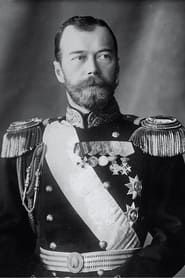
- The disembarkation of Emperor Nicholas II and Empress Alexandra from their vessel, showing the imperial couple in full royal regalia being formally greeted on Danish soil - a rare moving image of Russia's last Tsar during his reign.
What audiences thought
The film was likely shown to select audiences rather than general public screenings, as was common with early documentary films of royal events. Those who did see it would have been amazed by the technology of moving images capturing living royalty, something that had been impossible just a few years earlier. The film would have been particularly fascinating to Danish audiences who had a strong connection to their royal family and its Russian relatives. Today, the film is primarily of interest to film historians, royal historians, and archival researchers rather than general audiences.
Film connections
Influenced by
- Lumière brothers' actuality films
- Early documentary tradition
- Royal photography traditions
This film influenced
- Later royal documentary films
- Danish newsreels
- Royal event documentation
Film restoration
Preserved in the Danish Film Institute archives. While the original negative may be lost, copies of the film survive and have been digitized for historical preservation. The film is considered an important part of Denmark's cinematic heritage and is carefully maintained by film archivists.
Where to watch
- Danish Film Institute archives
- European Film Gateway
- Specialized film history collections
- Academic film archives
- Some online film history platforms may feature clips