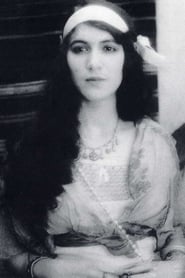

The Girl from Carthage
"A minaret singer defies a rich suitor"
Keys: Space play/pause · ←/→ 10s · F fullscreen · M mute · </> speed
About this film
Tunisian film written by Haydée Tamzali and directed by Albert Samama Chikly. has music composed by Mark Smythe.
Cast & crew
More Drama films
View all →






More from Albert Samama Chikly
View all →
More about this film
About the production
Release date1924
ProductionSociété Anonyme Cinématographique Tunisienne
Filmed inCarthage, Tunisia, Tunis, Tunisia
This was one of the first feature films produced in Tunisia and the entire North African region. The production faced significant challenges including limited technical equipment, lack of local film infrastructure, and the need to train local actors who had no previous film experience. Director Albert Samama Chikly, who was also a pioneering photographer, had to improvise many technical solutions. The film was shot on location in actual Carthaginian ruins, lending it an authentic historical atmosphere that would have been impossible to recreate in a studio.
Themes
Social class conflictForbidden loveTradition versus modernityColonial resistanceFemale agency
Themes & topics
love trianglesocial classfamily oppositioncultural traditionreligious dutyminaretCarthageforbidden romancewealth versus povertyarranged marriage
Historical background
The Girl from Carthage (1924) emerged during late silent cinema and the transition toward sound, when exhibition habits and national film industries were still taking shape.
Why this film matters
The Girl from Carthage remains accessible through digital archives, giving modern viewers a direct link to 1924 screen culture.
Making of
The production of 'The Girl from Carthage' was a remarkable achievement given the limitations of filmmaking in 1920s Tunisia. Albert Samama Chikly, having previously worked as a photographer for the Bey of Tunis, used his connections to secure funding and permissions. The casting process was particularly challenging as there were no professional actors in Tunisia at the time. Chikly discovered his daughter Hayde's talent during informal screen tests and decided to cast her in the lead role. The film crew had to be assembled from scratch, with many members learning their craft on the job. Shooting on location in the ruins of Carthage presented unique challenges, including transporting heavy equipment across uneven terrain and dealing with extreme weather conditions. The director's background in photography influenced the film's visual style, with careful attention to composition and lighting that was unusual for the period.
What critics said
Where contemporary reviews survive, The Girl from Carthage is discussed in terms of audience appeal at release; later criticism often reframes it through archive restoration and festival programming.
Did you know?
- This is considered the first feature-length narrative film made in Tunisia and one of the earliest in all of Africa
- Director Albert Samama Chikly was a pioneering Tunisian photographer who transitioned to filmmaking
- The lead actress Hayde Chikly was the director's daughter, making this a family production
- The film was shot using a hand-cranked camera, requiring precise manual operation throughout filming
- Only one incomplete print of the film is known to exist today, held in the Tunisian National Film Archive
- The film was originally titled 'Zohra' in Arabic before being marketed internationally as 'The Girl from Carthage'
- It was one of the first films to feature Arabic dialogue intertitles alongside French ones
- The production used local non-professional actors for many supporting roles to maintain authenticity
- The film's premiere was attended by the French colonial authorities, who initially viewed it with suspicion
- The minaret calls featured in the film were recorded live during filming rather than added in post-production
Visual style
The cinematography of 'The Girl from Carthage' was remarkably sophisticated for its time and place. Director Albert Samama Chikly's background as a professional photographer is evident in the film's careful composition and use of natural light. The film makes extensive use of the dramatic landscapes around Carthage, with wide shots of ancient ruins creating a sense of historical grandeur. Interior scenes demonstrate an understanding of chiaroscuro lighting techniques that were advanced for the period. The camera work includes several tracking shots that would have been technically challenging to execute with the equipment available in 1920s Tunisia. The film's visual style blends documentary-like realism with dramatic flourishes, creating a distinctive aesthetic that influenced later Tunisian filmmakers.
Innovations
The film represents several significant technical achievements for its time and place. It was one of the first films to be processed and developed locally in Tunisia, as most previous films had to be sent to France for development. The production team developed innovative techniques for filming in bright Tunisian sunlight, creating makeshift diffusion screens to control exposure. The film's use of location shooting was groundbreaking, as most contemporary films preferred the controlled environment of studios. The editing demonstrates a sophisticated understanding of continuity and narrative pacing that was unusual for a first feature. Perhaps most significantly, the film proved that high-quality cinema could be produced with limited resources outside the major European and American studio systems.
Music
As a silent film, 'The Girl from Carthage' did not have a recorded soundtrack, but it would have been accompanied by live music during theatrical screenings. The score likely combined traditional Tunisian music with contemporary European classical pieces, a common practice for films of this era. The film's intertitles appeared in both Arabic and French, reflecting Tunisia's multilingual reality. The sound of the minaret calls was an important diegetic element, though these were likely suggested through visual cues rather than actual sound recording. In modern restorations, contemporary Tunisian musicians have composed new scores that attempt to recreate the musical atmosphere of 1920s Tunisia.
Famous quotes
My heart beats to the call of the minaret, not to the jingle of gold coins
In the shadow of ancient Carthage, new love blooms like desert flowers after rain
Some walls are higher than those of Carthage - the walls between hearts
The voice that calls me to prayer is the same voice that calls me to love
Memorable scenes
- The opening sequence showing the protagonist watching the minaret crier from her balcony, establishing their forbidden connection through longing glances across the cityscape
- The dramatic confrontation scene where the father discovers his daughter's secret meetings with the minaret crier in the ruins of Carthage
- The climactic scene where the protagonist must choose between the wealthy suitor's lavish gifts and the minaret crier's simple declaration of love
What audiences thought
The film was well-received by local Tunisian audiences who were excited to see their own culture and language represented on screen for the first time. The screenings in Tunis reportedly drew enthusiastic crowds, with many viewers expressing emotional connection to the story and characters. However, the film's distribution was limited to major urban centers due to the lack of cinema infrastructure in rural areas. The film's themes of social class and romantic love resonated particularly strongly with urban youth who were grappling with similar tensions between traditional expectations and modern desires. The film developed a cult following among intellectuals and artists in Tunis, who saw it as evidence of Tunisia's cultural sophistication.
Film connections
Influenced by
- European melodramatic cinema of the 1920s
- Arabic literary traditions
- Tunisian oral storytelling
- Egyptian silent cinema
- French poetic realism
This film influenced
- Later Tunisian feature films of the 1930s-1950s
- Post-independence Tunisian cinema of the 1960s
- Contemporary Tunisian art house cinema
- North African neorealist films
Film restoration
The film is partially preserved with only one incomplete nitrate print surviving in the Tunisian National Film Archive. Approximately 45 minutes of the original 78-minute film remain. The surviving footage has been digitally restored but significant portions are still missing. The film is considered critically endangered by film preservationists. Efforts are ongoing to locate any additional prints or fragments in private collections or European archives. The surviving footage has been screened at several international film festivals and is occasionally shown at the Tunisian Cinémathèque.
Where to watch
- Available for viewing at the Tunisian National Film Archive by appointment
- Screened occasionally at the Cinémathèque Tunisienne during special retrospectives
- Selected restored sequences available through the African Film Heritage Project
- Academic institutions with film studies programs may have access through special collections