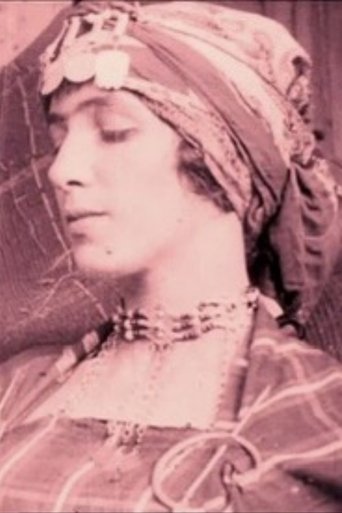
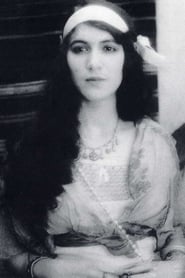
Films
3 films
About Hayde Chikly
Starred in some of the earliest films produced in North Africa during the silent era. She was the daughter of Albert Samama Chikly, a Tunisian filmmaker of Jewish descent who is credited with creating some of the first motion pictures in Tunisia. Hayde made her remarkable film debut in 'Zohra' (1922), directed by her father, which is widely recognized as the first feature-length narrative film produced in Tunisia and one of the earliest in the Arab world. She followed this success with 'The Girl from Carthage' (1924), another significant early Tunisian production that further established her as a figure in Arab cinema. Her performances were culturally as she was among the first Arab women to appear in narrative cinema, challenging the social conventions of early 20th century North African society. Although her film career appears to have been brief, spanning only these two known productions, her contribution to establishing cinema in Tunisia and the broader Arab world was substantial and historically significant.
The Craft
On Screen
As a silent film actress in the early 1920s, Hayde Chikly's acting style would have been characteristic of the era, emphasizing expressive facial gestures and body language to convey emotion without dialogue. Her performances in both 'Zohra' and 'The Girl from Carthage' demonstrated a naturalistic approach that was relatively progressive for the period, particularly for an Arab woman in cinema during a time of strict social conventions.
Milestones
- Starred in 'Zohra' (1922), the first Tunisian feature film
- Appeared in 'The Girl from Carthage' (1924), another early Tunisian production
- One of the first Arab women to star in narrative cinema
- Daughter of Tunisian filmmaker Albert Samama Chikly
- Helped establish the foundation for North African cinema
Best Known For
Iconic Roles
Must-See Films
Accolades
Special Recognition
- Recognized as a figure in Tunisian and Arab cinema history
- Honored as one of the first women in North African film
Working Relationships
Worked Often With
Studios
Why They Matter
Impact on Culture
Hayde Chikly's cultural impact extends far beyond her brief filmography, as she represents a crucial milestone in the history of Arab and African cinema. As one of the first Arab women to star in narrative films, she challenged prevailing social norms and helped pave the way for future generations of women in North African and Middle Eastern cinema. Her performances in 'Zohra' and 'The Girl from Carthage' demonstrated that Arab stories and performers could succeed in the emerging medium of cinema, contributing to the development of a distinct regional film identity. Her work, though produced nearly a century ago, continues to be studied by film historians as evidence of the sophisticated early film culture that existed in Tunisia before the dominance of European and American cinema in the region.
Lasting Legacy
Hayde Chikly's legacy is that of a trailblazer who helped establish the foundation for cinema in Tunisia and the broader Arab world. Her two surviving films are considered priceless artifacts of early Arab cinema, providing insight into the cultural and artistic aspirations of North African society in the 1920s. She is remembered in film history as a symbol of the early cosmopolitan culture of Tunis, where Jewish, Muslim, and European communities collaborated in artistic endeavors. Her brief but significant career serves as an important reminder that women were present and influential in Arab cinema from its very beginnings, challenging modern assumptions about the historical role of women in the region's film industry.
Who They Inspired
Hayde Chikly's influence on subsequent generations of Tunisian and Arab filmmakers is primarily symbolic and inspirational. While her direct influence on specific artists is difficult to trace due to the limited documentation of early Arab cinema, her status has inspired contemporary Tunisian filmmakers to explore and celebrate their country's rich film history. Modern Tunisian women filmmakers often cite early pioneers like Chikly as evidence of Tunisia's long-standing tradition of women's participation in cinema. Her work has influenced academic studies of early Arab cinema and contributed to a more nuanced understanding of the role women played in establishing film industries across the Middle East and North Africa.
Off Screen
Hayde Chikly was born into the family of Albert Samama Chikly, a Tunisian filmmaker who was instrumental in introducing cinema to North Africa. Her father's Jewish background and multicultural connections in Tunisian society likely provided her with unique opportunities in the emerging film industry. Growing up in a household dedicated to the new art form of cinema, she was exposed to filmmaking from an early age, which naturally led to her involvement in her father's productions.
Did You Know?
- 'Zohra' (1922) is considered the first feature film made in Tunisia
- Her father Albert Samama Chikly was one of the first people to bring a movie camera to Tunisia
- She was among the first Arab women to appear in narrative cinema
- Both of her films were silent productions with intertitles
- Her films were made during the French colonial period in Tunisia
- The Chikly family was part of Tunisia's Jewish community, which played a significant role in the country's cultural development
- Her films are considered extremely rare and are preserved as important cultural artifacts
- The exact dates of her birth and death remain unknown to film historians
- Her acting career appears to have lasted only two years
- Her work predates the establishment of major film industries in other Arab countries like Egypt
Frequently Asked Questions
Who was Hayde Chikly?
Tunisian silent film actress who starred in 'Zohra' (1922) and 'The Girl from Carthage' (1924), considered among the first feature films made in Tunisia and the Arab world. She was the daughter of filmmaker Albert Samama Chikly and one of the first Arab women to appear in narrative cinema.
What films is Hayde Chikly best known for?
Titles linked here include Zohra (1922), The Girl from Carthage (1924).
When was Hayde Chikly born and when did she die?
The exact birth and death dates of Hayde Chikly are unknown to film historians, though she was active in Tunisian cinema during the early 1920s. She was born in Tunis, Tunisia, but specific biographical details from this early period of Arab cinema remain scarce.
What awards did Hayde Chikly win?
Hayde Chikly did not receive formal awards during her lifetime, as she worked in the very early days of Tunisian cinema before award systems were established. However, she is posthumously recognized as a figure in Arab and African cinema history.
What was Hayde Chikly's acting style?
As a silent film actress of the 1920s, Hayde Chikly employed the expressive acting style typical of the era, using gestures and facial expressions to convey emotion. Her performances were noted for their naturalistic quality, which was progressive for the time and region.