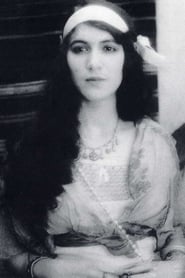
Zohra
"Shipwreck and a North African chief"
Keys: Space play/pause · ←/→ 10s · F fullscreen · M mute · </> speed
About this film
Saved from shipwreck, a little girl is taken into the protection of the North-African tribal chief and named "Zohra".
Cast & crew
More films like this
More Drama films
View all →







More from Albert Samama Chikly
View all →More about this film
About the production
Release date1922
Box officeUnknown - limited distribution primarily in Tunisia and France
ProductionAlbert Samama Chikly Productions
Filmed inTunis, Tunisia, Carthage, Tunisia, Sidi Bou Said, Tunisia
Filmed using a hand-cranked camera with natural lighting, the production faced significant challenges including the lack of established film infrastructure in Tunisia. Director Albert Samama Chikly, a pioneering filmmaker and photographer, used his personal collection of equipment and modified many devices to suit the North African environment. The film was shot on location with authentic tribal settings and costumes, revolutionary for its time in depicting indigenous North African life authentically rather than through European exoticism.
Themes
Cultural identity and hybridityColonialism and resistanceFamily and belongingTradition versus modernityGender roles in transitional societies
Themes & topics
shipwreckorphanadoptioncultural assimilationtribal lifecolonialismidentity crisiscoming of agecultural conflictNorth AfricaTunisiasilent film
Historical background
Programmers in 1922 slotted Zohra from Albert Samama Chikly Productions beside newsreels, cartoons, and serial chapters.
Why this film matters
Repertory houses screen Zohra to show how 1922 filmmakers staged saved from shipwreck, a little girl is taken into the protection of the north-african trib.
Making of
The making of Zohra was a remarkable achievement in early cinema history. Albert Samama Chikly, a wealthy Tunisian businessman of Turkish-Italian descent, was passionate about the new medium of film and invested heavily in equipment from Europe. He converted part of his family estate into a makeshift studio and workshop. The production faced numerous technical challenges, including the extreme heat which affected the film stock, and the need to transport heavy equipment across difficult terrain to reach authentic filming locations. Hayde Chikly, despite having no acting experience, was coached intensively by her father and delivered a performance that was groundbreaking for its naturalism. The tribal scenes were filmed with the cooperation of local communities, who were initially suspicious of the filming process but eventually became enthusiastic participants. Chikly's innovative use of natural light and authentic locations set new standards for regional cinema, though the film's limited distribution meant these techniques had little immediate influence beyond Tunisia.
What critics said
Repertory notes on Zohra highlight survival of the print more than 1922 box-office records.
Did you know?
- Zohra is widely considered the first feature-length narrative film made in Tunisia and one of the first in the entire Arab world.
- The film starred Hayde Chikly, the director's daughter, making her one of the first North African women to star in a feature film.
- Albert Samama Chikly was not only a filmmaker but also an inventor who built his own cameras and projection equipment.
- The film was shot without a script, with Chikly improvising scenes and dialogue as they went along.
- Zohra was one of the first films to use non-professional local actors rather than imported European performers.
- The original negative was thought lost for decades until a damaged copy was discovered in the French film archives in the 1960s.
- Chikly used his personal fortune to finance the film, as no established film industry existed in Tunisia at the time.
- The film premiered at the Omnia Pathé cinema in Tunis, one of the first movie theaters in North Africa.
- Despite its historical importance, the film was banned in several European colonies due to its sympathetic portrayal of indigenous North African culture.
- The shipwreck scene was filmed using real boats in the Mediterranean Sea, with the crew risking their equipment and safety to capture authentic footage.
Visual style
The cinematography of Zohra, while limited by the technology of 1922, showed remarkable innovation and artistry. Albert Samama Chikly employed natural lighting techniques that captured the harsh beauty of the North African landscape, using the intense Mediterranean sun to create dramatic contrasts that European filmmakers struggled to achieve. The film features sweeping shots of the Tunisian coastline and desert landscapes, demonstrating Chikly's understanding of the power of location shooting. Close-ups of Hayde Chikly reveal a sophisticated understanding of emotional expression through facial expression, while wide shots of tribal gatherings convey the communal aspects of North African society. The shipwreck sequence, filmed in actual waters, shows remarkable technical ambition for its time, with the camera capturing the chaos of the storm from multiple angles. Chikly's background as a photographer is evident in the film's careful composition and attention to visual detail, particularly in the depiction of traditional costumes, architecture, and rituals.
Innovations
Zohra achieved several technical milestones for its time and location. Albert Samama Chikly developed special camera housings to protect the equipment from sand and heat, innovations that were particularly advanced for the era. The film utilized location shooting extensively, which was rare in 1922, especially outside of major film production centers. Chikly also experimented with multiple camera angles and movement, including tracking shots that followed characters through the narrow streets of Tunis's medina. The shipwreck sequence featured some of the earliest examples of underwater filming in narrative cinema, achieved using specially designed waterproof camera housings. The film's editing techniques, particularly its use of cross-cutting between European and North African characters, demonstrated sophisticated narrative techniques that were still developing in mainstream cinema. These technical achievements were all the more remarkable given the lack of established film infrastructure in Tunisia at the time.
Music
As a silent film, Zohra originally featured live musical accompaniment during screenings, typically performed by local musicians using traditional Tunisian instruments including the oud, darbuka, and ney. The musical selections varied by venue, with urban theaters often employing European-style orchestral arrangements while rural screenings featured more traditional North African musical styles. In some screenings, particularly in Tunis, a hybrid approach was used, combining Western classical music with traditional Tunisian melodies to reflect the film's cultural themes. When the film was restored in the 1990s, a new score was commissioned that attempted to recreate the likely original musical experience, blending period-appropriate Western classical pieces with authentic Tunisian folk music. The restored version also features sound effects and limited dialogue intertitles, though these were not part of the original 1922 release.
Famous quotes
In naming her Zohra, we give her not just a name, but a destiny" - Tribal Chief
The sea that took your old life has given you a new one" - Tribal Chief
I am torn between two worlds, belonging fully to neither" - Zohra
Your blood may be European, but your heart is now African" - Tribal Chief
Memorable scenes
- The dramatic shipwreck opening sequence, filmed in actual Mediterranean waters with real boats and storm conditions
- Zohra's ceremonial adoption into the tribe, featuring authentic tribal rituals and costumes
- The emotional confrontation scene where Zohra must choose between her European heritage and adopted North African family
- The sweeping landscape shots of the Tunisian coastline and desert, showcasing the beauty of the region
- The final scene where Zohra makes her definitive choice, captured in a close-up that became iconic in early Arab cinema
What audiences thought
Initial audience reception in Tunisia was enthusiastic, with local viewers excited to see their culture and landscapes represented on screen for the first time. The film's premiere at the Omnia Pathé cinema in Tunis drew large crowds, including many who had never before seen a moving picture. European expatriate audiences were divided, with some praising the film's authenticity while others criticized it for deviating from the exoticized depictions they expected. In subsequent years, as political tensions increased under colonial rule, the film gained underground popularity as a symbol of cultural resistance. Modern audiences, particularly in Tunisia and across the Arab world, have embraced Zohra as a cultural treasure, with screenings at film festivals and retrospectives drawing enthusiastic responses. The film's themes of cultural identity and resistance continue to resonate with contemporary viewers dealing with post-colonial identity issues.
Film connections
Influenced by
- European colonial travelogues
- Arab oral storytelling traditions
- French realist literature of the period
- Early Italian neorealist cinema
- Traditional Tunisian theater forms
This film influenced
- Early Egyptian feature films of the 1920s and 1930s
- Subsequent Tunisian cinema
- Post-colonial African cinema
- Films dealing with cultural hybridity and identity
Film restoration
Zohra was considered a lost film for several decades until a damaged but viewable print was discovered in the French Cinémathèque archives in 1964. The discovered print was incomplete and in poor condition, with significant deterioration and missing scenes. In the 1990s, a major restoration effort was undertaken by the Tunisian National Film Archive in collaboration with the French Cinémathèque, using advanced digital techniques to stabilize and enhance the surviving footage. While approximately 15-20 minutes of the original film remains lost, the restored version represents the most complete version currently available. The restored film has been preserved in both digital and 35mm formats and is periodically screened at film festivals and special retrospectives. Additional fragments continue to be sought in private collections and lesser-known archives.
Where to watch
- The restored version is occasionally screened at film festivals specializing in classic and silent cinema
- Available for viewing at the Tunisian National Film Archive in Tunis
- Special screenings at the French Cinémathèque in Paris
- Selected university film studies programs with access to archival prints
- Occasionally broadcast on specialized film channels such as TCM (Turner Classic Movies) during silent film retrospectives
- Digital copies available through some academic film archives and libraries
- Included in the Criterion Collection's streaming service during special programming of early world cinema