The House Is Black
"Poetry and compassion meet inside an Iranian leper colony."
Keys: Space play/pause · ←/→ 10s · F fullscreen · M mute · </> speed
About this film
Set in a leper colony in the north of Iran, The House is Black juxtaposes "ugliness," of which there is much in the world as stated in the opening scenes, with religion and gratitude.
Cast & crew
More films like this
More Documentary films
View all →
More about this film
About the production
Release date1962
BudgetMinimal budget for independent documentary production
Box officeNot applicable for documentary film
ProductionGolestan Films
Filmed inTabriz leper colony, northwestern Iran
Filmed over several weeks with Farrokhzad living among the residents to gain their trust. The production faced challenges including the sensitive nature of the subject matter and the technical limitations of filming equipment in 1960s Iran. Ebrahim Golestan provided technical support and equipment for the production.
Themes
Themes & topics
leprosyleper colonydocumentarypoetryIransocial stigmahuman sufferingredemptionfaithisolationcommunitymedical treatmentchildrendeathrebirth
Historical background
The House Is Black (1962) survives in catalogs and archives as a record of the post-studio era.
Why this film matters
Scholars and collectors reference The House Is Black when discussing how the post-studio era filmmakers addressed popular themes.
Making of
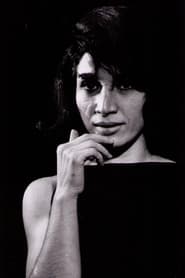
The making of The House Is Black was deeply personal for Forugh Farrokhzad, who approached the project not as a detached documentarian but as a poet seeking to capture human dignity in the face of suffering. She spent weeks living in the Tabriz leper colony, building relationships with residents and gaining their trust before filming began. The production was technically challenging, using available equipment and often shooting in difficult conditions. Farrokhzad's then-partner, filmmaker Ebrahim Golestan, provided technical expertise and equipment, while Farrokhzad wrote the poetic narration that would become the film's soul. The film's editing was innovative for its time, juxtaposing images of physical deformity with moments of joy, religious devotion, and human connection, creating a powerful emotional rhythm that transcended traditional documentary conventions.
What critics said
Where contemporary reviews survive, The House Is Black is read against the tastes of 1962; revival screenings keep it in circulation.
Did you know?
- This was the only film ever directed by Forugh Farrokhzad, who was primarily known as one of Iran's most important modern poets
- Farrokhzad adopted a young boy named Hossein Mansouri from the leper colony after filming was completed
- The film was banned in Iran for many years due to its controversial subject matter and frank depiction of suffering
- The title comes from a line in Farrokhzad's poetry, reflecting her belief that ugliness exists in the world but beauty can be found within it
- Shot with handheld camera equipment, giving the film an intimate, immediate quality that was revolutionary for its time
- The film was considered lost for many years before being rediscovered and restored in the 1990s
- Abbas Kiarostami cited this film as a major influence on his work, particularly its poetic documentary style
- Farrokhzad lived in the leper colony for several weeks to gain the trust and cooperation of the residents
- The film combines documentary footage with poetic narration written and recited by Farrokhzad herself
- Despite its short length, it won awards at several international film festivals and is considered among the pivotal Iranian films ever made
- The film was made with the support of the Iranian Society for Assistance to Lepers
- Farrokhzad died in a car accident just three years after completing this film, at age 32
Awards & recognition
- Grand Prize, Oberhausen International Short Film Festival (1963)
- Best Documentary, Gijón International Film Festival (1963)
- Special Mention, Locarno International Film Festival (1963)
Visual style
The film's black-and-white cinematography, shot primarily on handheld 16mm film, creates an intimate and immediate visual style that was revolutionary for its time. The camera work alternates between observational distance and close proximity to subjects, capturing both the physical reality of leprosy and the humanity of those affected. The visual composition often frames deformity alongside beauty, creating powerful juxtapositions that reinforce the film's central themes. The use of natural light and shadow creates a stark, almost biblical quality to many scenes, while the handheld camera movement conveys both vulnerability and authenticity. The cinematography avoids exploitation or sensationalism, instead treating its subjects with dignity and respect while not shying away from the difficult reality of their condition.
Innovations
The House Is Black pioneered several technical and formal innovations in documentary filmmaking. Its use of handheld 16mm cameras created a level of intimacy and immediacy that was uncommon in documentaries of the era. The film's editing technique, which juxtaposes disparate images to create poetic associations, influenced the development of essay film as a genre. Farrokhzad's integration of poetic narration with documentary footage established a new model for personal documentary filmmaking. The film also demonstrated how short-form documentary could achieve the depth and impact of feature-length works, challenging prevailing assumptions about documentary duration and scope. Its restoration in the 1990s also set standards for preserving and restoring historically important short films.
Music
The film's soundtrack is minimalist but powerful, combining ambient sounds from the leper colony with traditional Iranian music and Farrokhzad's poetic narration. The music includes religious chants and folk songs that emerge naturally from the documented scenes, creating an organic audio landscape. Farrokhzad's voice, reciting her own poetry in Persian, serves as the film's primary narrative thread, her tone alternating between clinical observation and emotional resonance. The sound design emphasizes the everyday sounds of the colony—children's laughter, medical treatments, religious ceremonies—creating an immersive experience that grounds the film's poetic elements in lived reality.
Famous quotes
There is ugliness in the world, and there is ugliness in the heart that cannot see beauty
I looked at the faces in the leprosarium and saw not disease but the face of God
If you could see their faces, you would understand that ugliness is not in the body but in the soul
The house is black, but inside there is light
We are all lepers in our own way, isolated by our fears and prejudices
Memorable scenes
- The opening sequence showing deformed hands and faces juxtaposed with Farrokhzad's poetic narration about ugliness and beauty
- Children with leprosy playing together, their laughter contrasting with their physical condition
- A religious ceremony where patients pray together, showing their faith despite suffering
- A mother bathing her child with leprosy, demonstrating unconditional love and care
- The final sequence showing a wedding in the colony, celebrating life and hope amid suffering
What audiences thought
Initial audience reception was limited due to the film's experimental nature and controversial subject matter, particularly in Iran where it was banned for many years. However, among international art film audiences and festival-goers, the film created a powerful impression, with many viewers reporting that its 22-minute runtime left an indelible impact. In later years, as the film became more accessible through restorations and screenings at retrospectives, audiences have come to regard it as a deeply moving experience. The film's emotional power continues to resonate with contemporary viewers, many of whom are struck by its timeless message about human dignity and its innovative cinematic techniques that still feel fresh decades later.
Film connections
Influenced by
- Neorealism
- French New Wave
- Poetic documentary tradition
- Persian poetry
This film influenced
- Close-Up
- Taste of Cherry
- Ten
- The Wind Will Carry Us
- A Taste of Cherry
- Through the Olive Trees
- The Color of Paradise
Film restoration
The film was considered lost for many years before being rediscovered and restored in the 1990s. It has since been preserved by several international film archives including The Criterion Collection and the Iranian Film Archive. The restored version is now available in high quality for scholarly and public viewing.
Where to watch
- The Criterion Collection streaming service
- MUBI
- Kanopy (with library access)
- The Criterion Collection Blu-ray/DVD release
- Museum of Modern Art film screenings
- Various film festival retrospectives